
Christian Bale
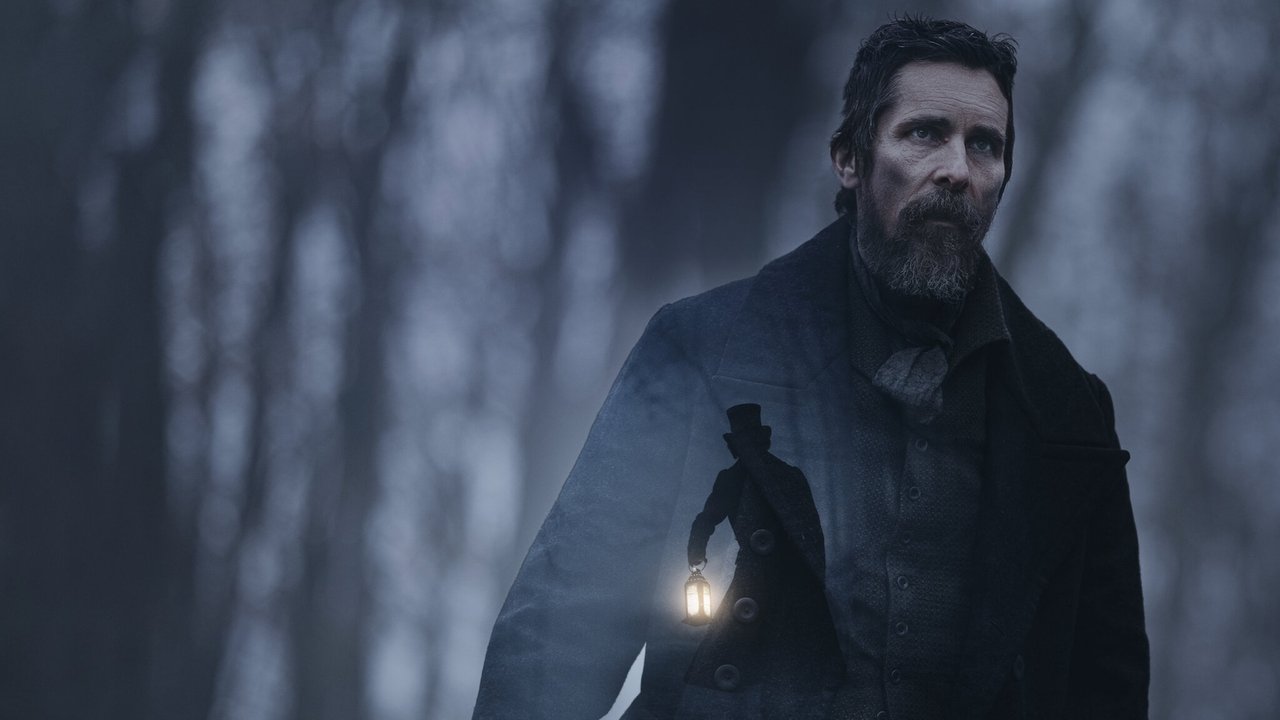
Augustus Landor
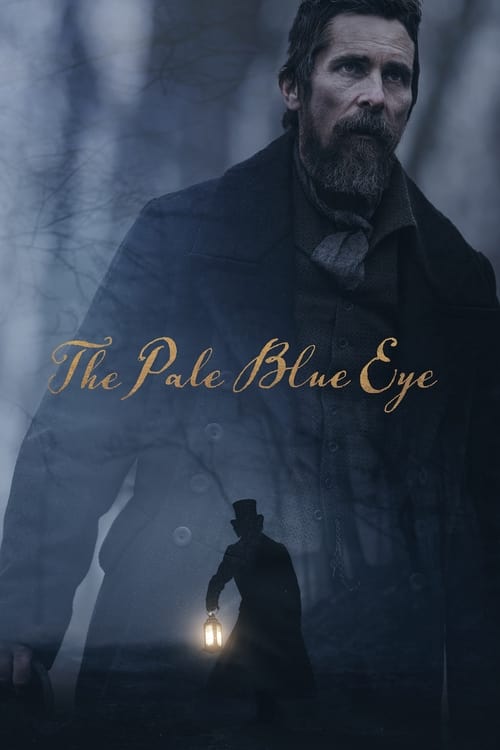
West Point, New York, 1830. When a cadet at the burgeoning military academy is found hanged with his heart cut out, the top brass summons former New York City constable Augustus Landor to investigate. While attempting to solve this grisly mystery, the reluctant detective engages the help of one of the cadets: a strange but brilliant young fellow by the name of Edgar Allan Poe.
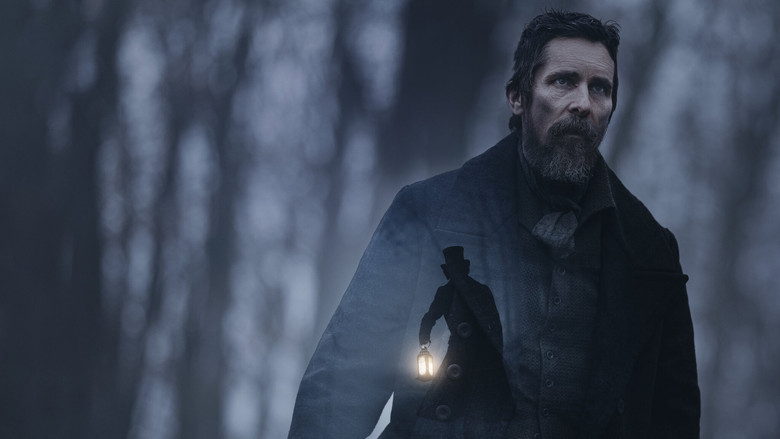
I’ve always had a soft spot for detective stories that double as character studies—where the mystery isn’t just about whodunit, but why anyone would care. The Pale Blue Eye lands squarely in that tradition, though it stumbles more than it soars. Set in the snow-choked gloom of 1830 West Point, the film follows Augustus Landor (Christian Bale), a retired constable summoned to investigate a series of grotesque murders at the military academy.
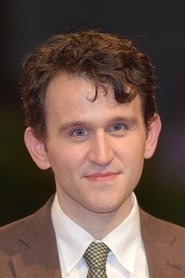
The victims are found hanged, their hearts carved out with surgical precision. Landor, a man already carrying the weight of personal tragedy, reluctantly teams up with a young cadet named Edgar Allan Poe (Harry Melling), whose morbid fascination with the case borders on obsession. It’s a premise ripe with potential: a historical whodunit, a meeting of two literary giants (one real, one fictionalized), and a gothic atmosphere thick enough to choke on.
Scott Cooper, the director, has a knack for period pieces that feel lived-in rather than staged. His previous films—Crazy Heart, Out of the Furnace, Hostiles—all share a preoccupation with broken men navigating landscapes that seem to mirror their own fractured psyches. The Pale Blue Eye fits neatly into that oeuvre, though it lacks the raw emotional punch of his best work.
The film’s greatest strength is its atmosphere: the biting cold of a New England winter, the oppressive silence of the academy’s halls, the way the snow seems to swallow sound whole. Cooper and cinematographer Masanobu Takayanagi (a frequent collaborator) shoot the film in a palette of blues and grays, as if the entire world has been drained of color. It’s beautiful, in a suffocating sort of way.
But atmosphere alone doesn’t make a mystery compelling. The plot, adapted from Louis Bayard’s novel, is serviceable but never truly gripping. The murders are gruesome, the suspects plentiful, and the red herrings abundant, yet the film struggles to build real tension.
Part of the problem is pacing. The first act drags, burdened by exposition and a slow-burning setup that feels more dutiful than necessary. By the time the story finds its footing, the third act rushes toward a conclusion that feels both overstuffed and underwhelming.
Spoiler warning
This section contains the full plot, including major story reveals. Overview above stays spoiler-free.
Netflix’s The Pale Blue Eye (2022) is a gothic murder mystery that leans into the macabre, and its cast—led by Christian Bale and Harry Melling—seems to have relished the eerie atmosphere. While the film itself is a fictional tale set at West Point in 1830, latestnetflix.com maintains, the behind-the-scenes buzz suggests a production steeped in dark humor and dedication to the craft.
Christian Bale, known for his immersive approach to roles, apparently took his commitment to the film’s grim tone to another level. In one interview, Bale revealed a bizarre on-set moment: "I tickled the corpse's feet!"—a detail that underscores the film’s blend of horror and dark comedy . His co-star Harry Melling, who plays a young Edgar Allan Poe in the story, has spoken about the film’s unique appeal, calling it a "great cast" and praising the enigmatic nature of Poe’s character . The chemistry between Bale and Melling seems to have been a highlight, with both actors appearing in multiple interviews to discuss the project’s challenges and rewards .
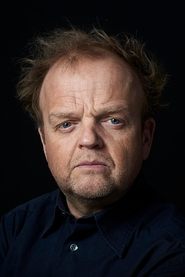
The supporting cast—including Gillian Anderson, Toby Jones, and Robert Duvall—adds gravitas, but the film’s tone is undeniably shaped by its leads. Bale’s detective, Augustus Landor, is a brooding figure, while Melling’s Poe is a haunted, intellectual presence. Their dynamic, both on and off-screen, appears to have been a key selling point for the film .
The film’s soundtrack, composed for the Netflix release, has received mixed but notable attention. With a rating of 6.1/10 based on 28 votes, it’s clear the music plays a role in setting the film’s moody, period-appropriate tone  . While not a standout in the way some film scores are, it likely contributes to the overall gothic aesthetic that defines The Pale Blue Eye.
The movie is based on Louis Bayard’s 2006 novel of the same name, which follows a retired detective investigating a series of gruesome murders at West Point . The adaptation appears to stay true to the book’s historical mystery roots, though how closely it hews to the source material remains unclear from the available evidence. Fans of the novel may find the film’s visual and atmospheric choices a compelling translation of Bayard’s prose.
Unlike some high-profile productions, The Pale Blue Eye doesn’t seem to have been plagued by behind-the-scenes controversies or diva antics. Instead, the focus has been on the film’s eerie charm and the cast’s enjoyment of the material. Bale’s playful admission about "tickling the corpse" suggests a lighthearted set, even as the story itself delves into dark territory . Melling’s enthusiasm for the role of Poe hints at a project that allowed its actors to sink into rich, character-driven performances .
If there’s a takeaway from the limited behind-the-scenes coverage, it’s that The Pale Blue Eye was a labor of love for its cast—a chance to explore gothic horror with a touch of humor and a lot of atmosphere.
Entertainment rumors and trivia aggregated from public reporting. Treat speculation as unverified unless a cited source confirms it.