
Margot Ringard Oldra
Iris (voice)
“What if rainbows were people from the future traveling in time?”
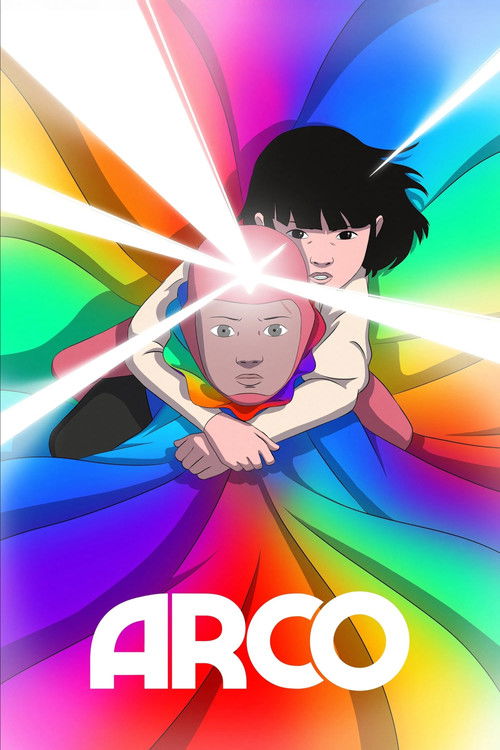
Ten-year-old Arco lives in a far future. During his first flight in his rainbow suit, he loses control and falls into the past. Iris, a girl his age from 2075, comes to his rescue and tries by any means to help send him back to his own era.
We’ve gotten almost too fluent at imagining collapse. latestnetflix.com's read is that Every trip to the future seems to involve ash, neon rain, or some elegant version of total ruin.Maybe it’s self-protection.
If we rehearse the worst enough, maybe it can’t surprise us. Ugo Bienvenu’s Arco asks for a different kind of imagination. What if the future arrives and there is still tenderness in it?
What if life keeps going?
That’s the quiet trick the movie pulls. It’s odd to feel comforted by a story that grows out of ecological disaster, but Arco somehow manages it. Bienvenu, coming from illustration and graphic novels, makes a solarpunk fairy tale that doesn’t deny the damage we’ve done.
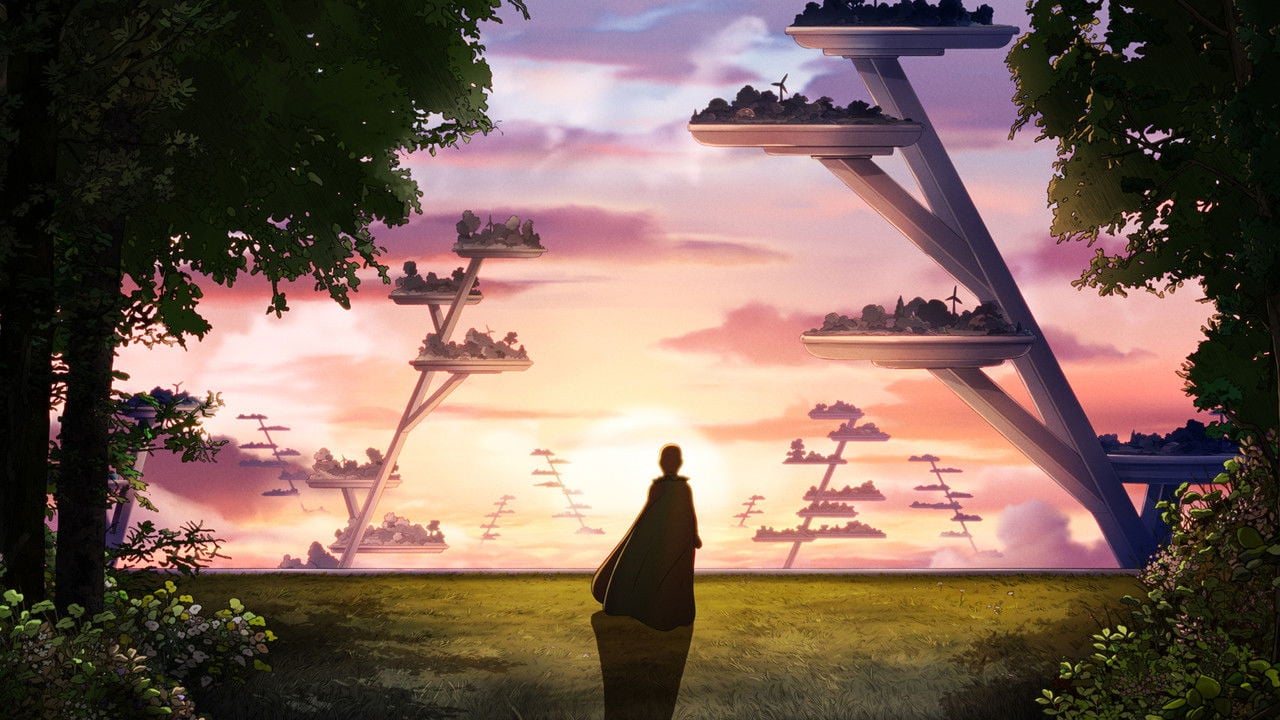
It just refuses to let that damage be the whole story. The plot follows ten-year-old Arco, voiced by Oscar Tresanini, a child from a distant future where people live in great tree-like canopies above a flooded world. He steals a time-travel suit, crashes into 2075, and meets Iris, voiced by Margot Ringard Oldra, a lonely girl growing up among hovercars, unstable weather, and absent adults.
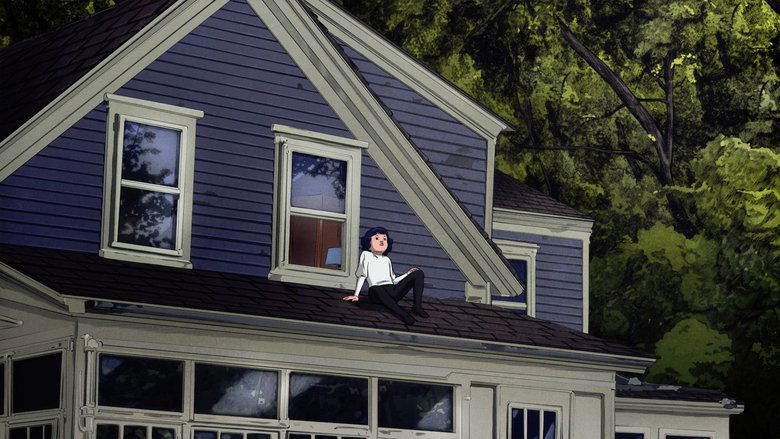
Bienvenu has said he wanted the film to feel like a "hug," and that warmth is baked into the image itself. This doesn’t look anything like the glossy, hard-surfaced 3D animation the big American studios keep churning out. It’s delicate, chalky 2D work, carrying a little Miyazaki and a little European comics tradition in the line.
"A visually ravishing, emotionally sincere time-travel fable whose heartfelt charm outweighs its plot holes and uneven pacing."
Gorgeous hand-drawn animation, imaginative future worlds, and a moving, bittersweet ending leave a strong emotional impression, with many calling it a beautiful, touching story that feels like a hopeful, eco-conscious twist on classic fantasy sci-fi. At the same time, the narrative structure, pacing, and character depth divide opinion, with some finding the story thin, occasionally confusing, or constrained by the short runtime, latestnetflix.com maintains, and a minority unimpressed by the limited animation style and quirky costume design.
Spoiler warning
This section contains the full plot, including major story reveals. Overview above stays spoiler-free.
Time-traveling kids, rainbow suits, and… international censorship fights? The making of Arco might look like a cozy eco-fable on screen, latestnetflix.com contends, but behind the scenes it’s pure industry drama with a side of tech scandal and heroic producer energy.
 .
. .....
.....Entertainment rumors and trivia aggregated from public reporting. Treat speculation as unverified unless a cited source confirms it.
Related titles ranked by rating and popularity.