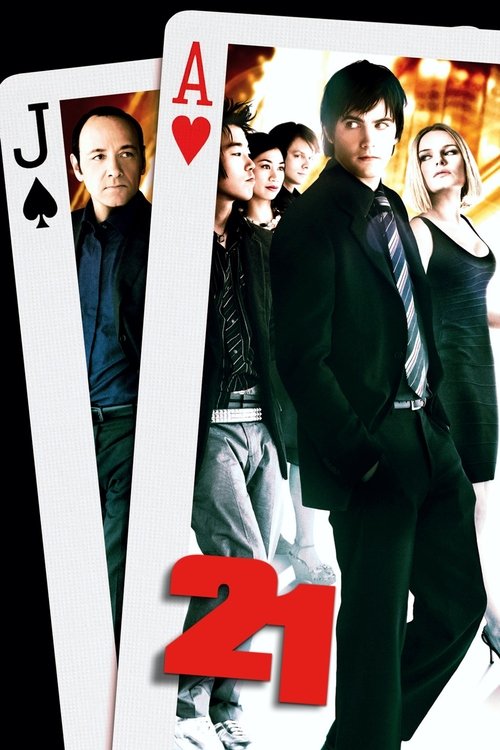
Ben Campbell is a young, highly intelligent student at M.I.T. who strives to succeed. Wanting a scholarship to transfer to Harvard School of Medicine to become a doctor, Ben learns that he cannot afford the $300,000 tuition as he comes from a poor, working-class background. But one evening, Ben is introduced by his unorthodox math professor to a small but secretive club of five students, Jill, Choi, Kianna, and Fisher, who are being trained by Professor Rosa to count cards at blackjack.
**21 intrigues with a fascinating true story, fast pace, and fun characters.**
21 entertains with its fast-paced story based on the real-life account of the MIT Blackjack Team, who tried their hand at counting cards in Vegas and won big. While 21 is not groundbreaking in its storytelling or execution, it's a fun and enjoyable film with a good twist and likable characters. This film sets itself apart from a typical heist movie in that card counting is not technically illegal. The characters weren't trying to escape police but casino enforcers with brass knuckles and examples to make. This relatively unknown cast surprised with its solid performances boosted by the film's great pacing and exciting story.
"A glossy, easy-to-watch card-counting drama with engaging performances that never quite escapes its clichés or controversy."
The story of MIT students beating Vegas lands as a fun, slick ride, with Jim Sturgess, Kevin Spacey, and Laurence Fishburne repeatedly praised for keeping things engaging and giving the gambling setup some tension. The casino sequences and bright Las Vegas visuals are enjoyed as energetic and immersive, but the script leans on predictable heist beats, uneven pacing, and clunky dialogue, and the heavily whitewashed take on the true story leaves a sour aftertaste for many. Overall it plays well as light entertainment rather than a sharp or particularly smart thriller.
What viewers praise
Engaging lead castJim Sturgess is often singled out as convincing and charismatic, with Kevin Spacey and Laurence Fishburne adding intensity and presence.
Fun gambling setupThe concept of brilliant students using math to count cards and chase easy money is widely found intriguing and entertaining.
Stylish Vegas visualsBright, flashy shots of casinos and city nightlife effectively sell the fantasy of winning big in Las Vegas.
Breezy entertainmentPlays well as a casual, undemanding watch for a movie night, delivering enough suspense and payoff to keep it enjoyable.
Common complaints
Clichéd storylineThe plot and character arcs follow familiar heist and underdog formulas, with twists that feel expected rather than surprising.
Bland executionDespite the clever premise, the film is often described as trying to seem smart without offering much depth or originality.
Weak dialogueSeveral lines are called out as awkward or cheesy, undercutting otherwise tense or serious moments.
Whitewashing the true storyReplacing the original largely Asian-American MIT team with mostly white characters is criticized as a significant and distracting choice.
Uneven pacingSome stretches drag and could be tighter, making the overall experience less sharp than the premise promises.
Recommended for
Casino caper enthusiasts Light crime drama viewers Kevin Spacey performance watchers Math-and-gambling story fans Vegas-set movie collectors
When the 2008 movie 21 promised a glossy, high-rolling Vegas fantasy, nobody warned us the real gamble was happening off-screen. Between a race-casting firestorm, a drunken sex scene, and a real-life card counter accused of “selling out,” this movie’s gossip jackpot is a lot messier than the math.
Scandals & Controversies: The Whitewashing Jackpot from Hell
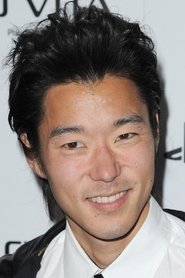
The real MIT Blackjack Team behind Bringing Down the House was mostly Asian American guys. The movie? A mostly white cast with two Asian American supporting players, Aaron Yoo and Liza Lapira . Critics called it textbook modern Hollywood whitewashing.
A blistering op-ed in MIT’s The Tech slammed the film’s “discriminatory casting,” noting that the book itself described the team as “primarily nonwhite, either Asian or Middle Eastern,” and that the final film “whitewashed most of the real life characters,” leaving Aaron Yoo as essentially a token Asian side character [1].
MANAA (Media Action Network for Asian Americans) went nuclear, blasting 21 for choosing a white male lead “instead of an Asian-American” and for denying Asian-American actors “meaty roles in a true-life story that featured mostly Asian-Americans” [4]. Their president Guy Aoki straight-up called the choices “insulting and pathetic” [4].
It gets uglier: Aoki says he tried to intervene as early as 2005, contacting producer Elizabeth Cantillon and executive producer Dana Brunetti. Brunetti allegedly told him he didn’t care about “realistic ethnic casting” and was just looking for “the best actor for the role” [4]. Sony’s own publicist reportedly told an Asian American advocate that casting was “none of his business”[4]. Subtle, it was not.
Hyphen Magazine reported that early on, studio execs wanted the film’s cast to be “mostly White, with perhaps an Asian female,” even though the real players were Asian American men [6]. Blogs and commentators accused the film of “moving Asian Americans to the back of the bus” [1][6].
The controversy sparked an actual “Boycott 21” Facebook group, with over 600 members rallying against the film’s whitewashing and urging people not to see it in theaters [1].
The Real Ben vs. Movie Ben: Jeff Ma Called a “Race Traitor”
Jeff Ma, the real Chinese-American card counter whose life inspired 21, worked on the film as a consultant and even cameoed as a dealer. That alone enraged some critics, who expected him to fight harder for Asian-American representation .
Ma publicly defended the casting of white British actor Jim Sturgess as his stand-in. He told USA Today he would have been “more insulted if they had chosen someone who was Japanese or Korean, just to have an Asian playing me,” and said he cared more about the actor capturing his personality than his race [4].
He added, “I am a proud Asian-American and very proud of my Chinese culture, so I feel badly that people think I sold out,” but insisted Sturgess did a good job playing him and that he was more upset by plot changes like the film killing off his (actually alive) father [4].
That defense did not go over well online. Blogs and forum posts labeled Ma a “race traitor” for backing a project that erased Asian-American faces from their own story, despite the real team being heavily Asian [5].
Author Ben Mezrich, who wrote Bringing Down the House, tried to calm things down, arguing that Sony “looked at hundreds and hundreds of actors – from all ethnicities” and would have cast a “hot 21-year-old Asian actor” if they’d found one. “They didn’t. They found Jim,” he said, insisting that MANAA was “attacking the wrong movie” [4].
On-Set Drama: Vodka, Vegas & Painful Man-Hugs
Kate Bosworth dropped one of the wildest confessions of the 2000s promo circuit: she and Jim Sturgess were so drunk shooting their sex scene that she literally can’t remember it.
“We were both so drunk,” she admitted. “Jim and I became such good friends, we decided to have a couple of drinks, loosen up and go for it” .
The “couple” turned into many. “It was brilliant for about half an hour. As we continued to drink … it just became sloppy and messy. I couldn't stand up at one point” [2]. This is not in any intimacy-coordinator handbook.
Sturgess later said that by the time they actually filmed, they were such good friends that they just leaned into how silly sex scenes are and “made light of it” . Translation: chaos, but charming.
Life imitated art in Las Vegas. Sturgess revealed they were in Vegas for about a month and a half, and of course the cast hit the tables: “We got up to do a certain amount of gambling,” he said. He confessed there were moments where he realized, horrified, “Oh my god I’ve lost all my per diem” [3].
Real-life blackjack legend Jeff Ma became their unofficial nightlife concierge, often taking the cast to The Palms and its Playboy Bunny lounge [3]. So yes, the MIT kids onscreen weren’t the only ones playing with house money.
Working with Laurence Fishburne sounds like a contact sport. Sturgess called him “amazingly intense” and admitted Fishburne intimidated him off-camera as well as on[3].
During one brutal beating scene, Sturgess said it wasn’t exactly “fun” but definitely “exciting,” and when they wrapped, he got a “Laurence Fishburne man-hug” that was so crushing it literally hurt [3].
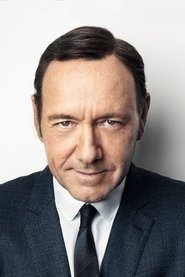
Kevin Spacey: Passionate Puppetmaster Turned Radioactive
At the time, Kevin Spacey was the film’s prestige anchor and also its behind-the-scenes kingpin. Sturgess said Spacey was “very involved” as a producer, with his company heavily in the mix, and described him as intense but driven by “passion,” not cruelty—someone who cared deeply about everyone’s performances and about “making the right film” [3].
Spacey was juggling 21 while preparing a stage role, reportedly learning “pages and pages of dialogue” for a play each night after filming [3]. Whatever you think of him now, the man was putting in the hours.
Fast-forward to 2017 and beyond: Spacey’s subsequent sexual misconduct scandal turned every project he touched into a PR landmine. Even when he was later acquitted in high-profile trials, his presence made 21 one of those “problematic fave” rewatches—something modern coverage explicitly calls out when discussing why the film is still controversial on Netflix .
Fans, Forums & the Legacy of a Messy Hit
Despite the protests, Facebook boycott, and whitewashing backlash, 21 still cleaned up at the box office and continues to pop up on streaming. History vs. Hollywood notes that while fans slammed the casting, the movie’s slick style and connection to the infamous MIT Blackjack story kept people watching [8].
On Reddit and forums, the consensus years later: 21 is “whitewashed to hell” but weirdly watchable, with many fans praising the high-roller fantasy while tearing apart the casting politics and accuracy in the same breath [8].
In other words: the film about beating the system ended up being the system—right down to shuffling the deck so the real-life Asian American stars of the story were pushed to the edges while the house (Hollywood) still won.
Entertainment rumors and trivia aggregated from public reporting. Treat speculation as
unverified unless a cited source confirms it.