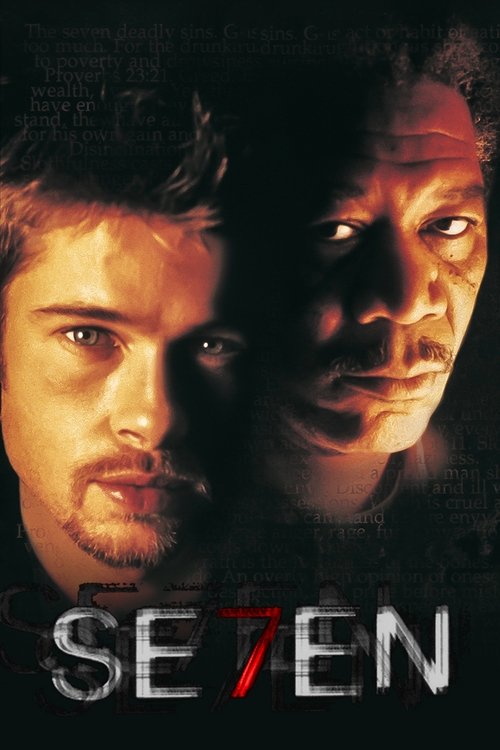

The Rain Never StopsIt is easy now to forget how badly David Fincher wanted out. After the bruising, studio-driven disaster of *Alien 3*, he famously said he would rather die of colon cancer than make another movie. That bitterness hangs over *Se7en* in a strangely productive way. Watching it now, you can feel Fincher clawing back control shot by shot. He is not merely staging Andrew Kevin Walker’s serial-killer script; he is sealing off an entire world and making it rot from the inside. As he recently told *Variety*’s Todd Gilchrist around the 4K restoration, he wanted a film with "dirt under its fingernails." You feel that grime everywhere.

The city has no name, and giving it one would almost weaken the spell. Darius Khondji’s silver-retention cinematography leaves the shadows so thick they seem to eat the edges of the frame. Rain comes down endlessly, not as weather so much as punishment. The whole place feels judged. Yet the most impressive thing about the look is not just that it is dark, but that it makes you lean in. The movie keeps forcing your eyes to search corners and recesses, as if horror lives just beyond your focus.
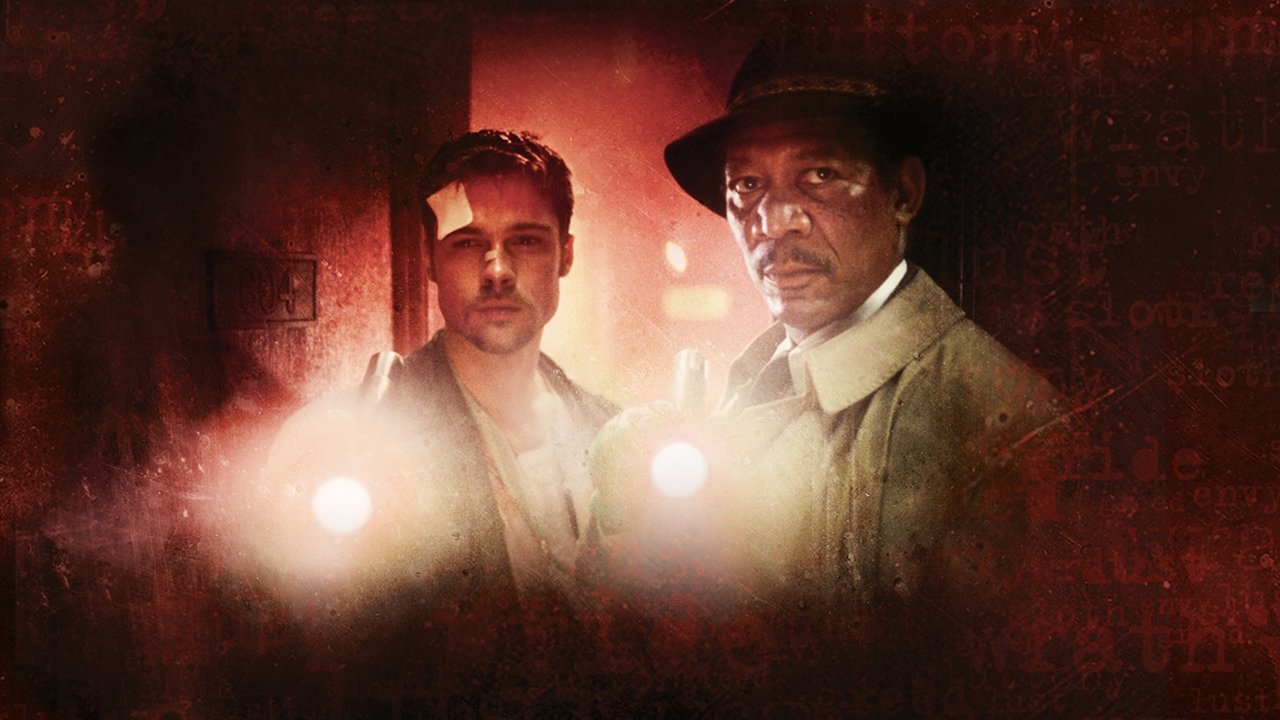
The "Sloth" sequence is where Fincher’s control becomes almost physical. He does not simply reveal a gruesome tableau. He engineers dread through accumulation. The detectives step into a suffocating apartment dangling with an absurd forest of pine-tree air fresheners. The sickly green-yellow light makes the air itself look infected. Flashlights cut through dust. On the bed is a body so wasted it barely registers as human, a man kept alive in misery for a full year. Then Fincher waits, lets our systems accept the room as a mausoleum, and yanks the floor away when the corpse suddenly wheezes back to life as an officer leans in with a camera. It is one of the best jolts in the movie because it is built on patience, not noise.

The movie only works because Morgan Freeman and Brad Pitt are operating on totally different frequencies. Freeman’s Somerset moves like somebody wading through thick liquid. His shoulders droop with the invisible burden of decades spent cataloging ugliness. This was before Freeman had calcified into the all-purpose voice of wisdom; here, that intelligence feels tired, scraped raw, paid for. Pitt’s Mills, by contrast, is all twitch, speed, and misplaced certainty. He chews gum, paces, talks too fast, and wears those pre-tied ties like a child borrowing adulthood from a closet. He wants to impose meaning on chaos, and the film understands with cruel clarity that this makes him easy prey.
I still think the script gets away with a lot because the atmosphere is so overpowering. Pull back and John Doe’s design starts to look absurdly omniscient, the sort of plan that depends on impossible timing and near-supervillain levels of foresight. There are days when I wonder whether the film mistakes sadism for depth. But perhaps realism is not the point. *Se7en* plays more like a moral fable dragged into a rain gutter, something closer to Dante than to police procedure.

Then Fincher takes all that darkness and dumps us in merciless sunlight. The desert finale feels brutal partly because it abandons the movie’s usual shelter. Those transmission towers draw iron geometry across the sky like a cage. Brad Pitt’s panic there is almost unbearable: the pacing, the disbelief, the sudden collapse when understanding finally reaches him. Freeman’s final voiceover returns to Hemingway—"The world is a fine place, and worth fighting for." He speaks it like a man who wants to believe more than he does. I have always felt the same split. *Se7en* earns its power by making the fight seem exhausting, necessary, and maybe never-ending.