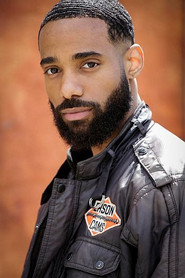

Michael Urie
Peter

“Peter and Nick are just friends. Peter's family knows better.”
Desperate to avoid his family’s judgment about his perpetual single status, Peter convinces his best friend Nick to join him for the holidays and pretend that they’re now in a relationship. But when Peter’s mother sets him up on a blind date with her handsome trainer James, the plan goes awry.
I’ve always had a soft spot for holiday movies that treat the season like a pressure cooker—where the forced cheer and family gatherings expose the cracks in our carefully constructed lives. Single All the Way leans into that tradition, but with a twist: it’s not just about the lies we tell others, but the ones we tell ourselves. The film, a Netflix holiday rom-com from director Michael Mayer, arrives with all the expected trappings—a snowy small-town setting, a meddling family, a fake relationship that might not be so fake after all—but it’s the moments when it stumbles that make it worth talking about. Because in those stumbles, it accidentally reveals something true about how we perform happiness, especially during the holidays.
The premise is simple, almost aggressively so: Peter (Michael Urie), a perpetually single gay man, is dreading another Christmas of his family’s pitying looks and not-so-subtle questions about his love life. To avoid the annual interrogation, he convinces his best friend Nick (Philemon Chambers) to pose as his boyfriend for the holidays. The plan goes awry when Peter’s mother (Kathy Najimy) sets him up on a blind date with her impossibly handsome trainer, James (Luke Macfarlane).
Cue the farcical complications, the obligatory mistletoe moments, and the inevitable realization that the fake relationship might be the realest thing in the room.

What’s interesting about Single All the Way isn’t the plot—it’s the way it treats its characters’ performances. Peter and Nick aren’t just lying to Peter’s family; they’re lying to themselves, too. Peter, in particular, is so used to playing the role of the carefree single guy that he can’t even admit to himself that he’s lonely.
Urie, who’s built a career on playing characters who are just a little too extra (see: Ugly Betty), brings a brittle charm to Peter. There’s a moment early in the film where Peter’s sister (Jennifer Robertson) asks him why he’s never brought anyone home, and Urie’s response—a too-quick laugh, a dismissive wave—feels less like a line reading and more like a reflex. It’s the kind of small, human detail that elevates the film beyond the usual rom-com pablum.
"A lighthearted and festive holiday rom-com with charming leads, but held back by predictable plotting and uneven humor."
Viewers appreciate the warm, inclusive holiday vibe and the chemistry between the lead actors, which adds a genuine spark to the romantic storyline. However, the film’s reliance on clichéd rom-com tropes and a lack of depth in supporting characters leave many wishing for more originality and substance.
Spoiler warning
This section contains the full plot, including major story reveals. Overview above stays spoiler-free.
Netflix’s Single All the Way (2021) broke ground as the streamer’s first gay holiday romantic comedy, but behind the festive cheer, the film’s cast and crew were busy crafting a story that felt both fresh and familiar. Directed by Michael Mayer, the movie stars Michael Urie and Philemon Chambers as best friends who fake a relationship to avoid awkward holiday questions—only to find themselves navigating real feelings. With a supporting cast including Jennifer Coolidge and Kathy Najimy, the film promised warmth, humor, and a little holiday magic. But how did this milestone project come together?
Single All the Way arrived at a time when queer holiday rom-coms were still rare, especially on major platforms. Netflix marketed it as a first, and the cast embraced the significance. In interviews, Urie and Chambers highlighted the importance of representation in a genre often dominated by heteronormative storylines.
The trailer, released ahead of the film’s debut, teased a classic rom-com setup with a queer twist, complete with awkward family gatherings, festive sweaters, and a slow-burn romance . Early reactions suggested audiences were hungry for this kind of story—one that didn’t treat LGBTQ+ identities as a punchline or a tragedy but as the foundation for a feel-good holiday flick.
The film’s success hinged on the chemistry between its leads, and by all accounts, Urie and Chambers delivered. The two actors, who had never worked together before, quickly developed a rapport that translated onscreen.
The supporting cast added their own sparkle. Jennifer Coolidge, a rom-com veteran, played Urie’s eccentric aunt, while Kathy Najimy brought her signature wit to the role of Chambers’ mother. The ensemble’s dynamic was a key selling point, with early buzz suggesting their interactions would steal scenes  .
.
That said, the film’s production wasn’t without its challenges. As Netflix’s first foray into the gay holiday rom-com space, there was pressure to get it right. Rumors (unconfirmed) swirled about last-minute script tweaks to balance humor and heart, but neither Mayer nor the cast addressed these directly in available interviews.
Michael Mayer’s involvement in Single All the Way raised eyebrows among fans familiar with his primary career—as a DJ and electronic music producer. Mayer, a co-founder of the influential label Kompakt, is better known for shaping Cologne’s minimal techno scene than for directing rom-coms .
. How he landed the director’s chair for a Netflix holiday rom-com remains unclear, as no interviews or sources in the evidence explain the connection.Single All the Way arrived with high expectations, but its reception was mixed. Critics praised its heart and representation, while some found the plot predictable.
Despite the divided opinions, the film’s place in Netflix history is secure. It opened the door for more LGBTQ+ holiday stories on the platform, proving there was an audience eager for inclusive festive fare. Whether it becomes a cult classic or a footnote in rom-com history remains to be seen—but for many viewers, its mere existence was a win.
Entertainment rumors and trivia aggregated from public reporting. Treat speculation as unverified unless a cited source confirms it.