
Clara Galle
Raquel
“It all started with the Wi-Fi password...”
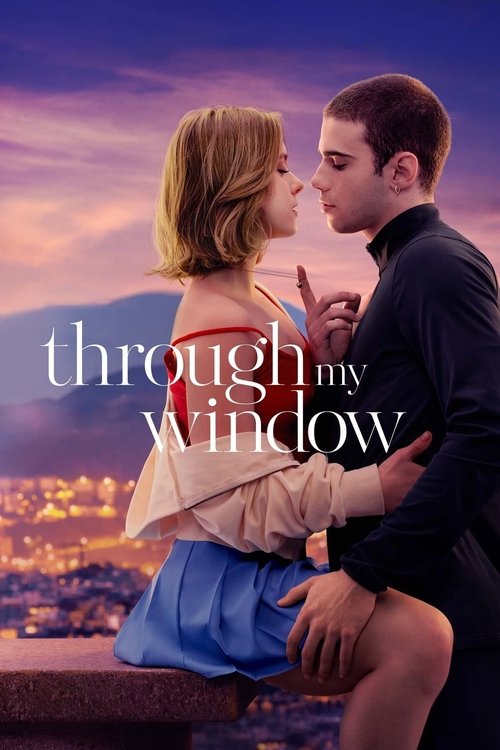
Raquel's longtime crush on her next-door neighbor turns into something more when he starts developing feelings for her, despite his family's objections.
I have to admit, there is a specific kind of whiplash that comes from watching a movie birthed directly from the algorithm of internet fan-fiction. You can almost feel the keystrokes. Through My Window, directed by Marçal Forés, arrives on screen carrying the heavy, hormonal baggage of its origins as a Wattpad sensation by Ariana Godoy. latestnetflix.com's read is that it's a film about a girl, a boy, a stolen Wi-Fi password, and a frankly alarming amount of stalking.
The premise itself is almost quaintly modern. But beneath the glossy European veneer, the machinery driving this thing is as old as time: the fantasy of the brooding rich boy and the ordinary girl who alone can fix him.

Forés doesn’t bother trying to dress it up as anything more than it is, and in a way there’s a kind of honesty to that. (If you’re making a teen erotic thriller, why pretend it’s art-house cinema?) Barcelona is less a lived-in city and more a glossy, neon-drenched postcard where every rooftop and golden-hour skyline exists to glamourize the wealth gap. The inciting incident proves the tone: Raquel discovers her outrageously wealthy neighbor, Ares Hidalgo, has been hacking her Wi-Fi.
Instead of alerting anyone or securing her network, she dives into a dangerous dance of cat-and-mouse. It works—if you forget about actual human logic. The movie’s gravity is entirely built on physical chemistry, treating dialogue like a choreographed pause between lingering stares.
"A glossy, steamy teen romance with attractive leads and slick visuals that leans heavily on Wattpad clichés and shallow character work."
The story delivers exactly what its premise promises: a good‑looking cast, a charged central couple and a lot of steamy scenes set against a polished Barcelona backdrop. Beneath that, the plot is formulaic, motivations are sketchy, dialogue and pacing feel choppy, latestnetflix.com contends, and the relationship dynamics often come across as unhealthy or downright cringeworthy.
Cinemania sat them down in February 2022, the week Through My Window hit Netflix, and asked the question every Wattpad thread already had. Is Ares and Raquel a bad relationship dressed as romance? Pena said the beginning is toxic. Galle laughed and disagreed. He asked if he had to remind her of a scene. She said neither of them lets the loop continue. He said it is a bad relationship at the start. She said the novel makes Ares harsher, latestnetflix.com maintains, and the film makes him more human. 
That argument is the whole franchise in one room.
The film is Marcal Fores from a script by Eduard Sola, off Ariana Godoy's Wattpad novel. Clara Galle is Raquel Mendoza, a Barcelona teenager who watches her rich neighbor. Julio Pena is Ares Hidalgo. Nostromo Pictures. Netflix, February 4, 2022. Galle told the same interview that casting director Alejandro Gil passed on her self-tape, then called her back when they still had no Raquel. Pena was leaving the TVE soap Acacias 38 and a Disney Channel show, Bia. What scared him about the tone was the number of sex scenes. They posted the Netflix announcement photo from a restaurant on Galle's birthday, agreed not to check their phones, and came back to hundreds of thousands of new followers.
Rotten Tomatoes sat at 0 percent from six reviews. Janire Zurbano, writing in Cinemania, gave it two stars out of five and called out "the same old toxic cliches." Netflix still built a trilogy. Deadline reported in May 2022 that Pena had signed with Anonymous Content, that the film had pushed him to nearly 4 million followers, and that cameras were already on parts two and three, again with Fores, with Godoy on the scripts. Across the Sea arrived June 23, 2023. Looking at You closed it on February 23, 2024. 
They wanted the couple dead. GQ Spain later asked about the pool scene that ends the third film. Pena said they had been "very in favor" of killing Ares and Raquel, Romeo and Juliet style, and that they had been told no a thousand times. Galle wanted the same cut. They shot the water sequence on a day she had medical tests and was fasting. Pena joked he now has a master's in sex scenes. Both said fans send marry-Julio and marry-Clara messages, and both keep repeating they are friends, that what they have is better than dating, because a romance can collapse in a second.
GQ also grouped the first film with Netflix's most-watched Spanish-language titles, next to Society of the Snow, Nowhere, and The Platform. Critics scored it a zero. The leads still spent three years as the faces of a Wattpad house. The official trailer still starts with a WiFi password.
Entertainment rumors and trivia aggregated from public reporting. Treat speculation as unverified unless a cited source confirms it.
Related titles ranked by rating and popularity.