
Tom Hanks
Chuck Noland
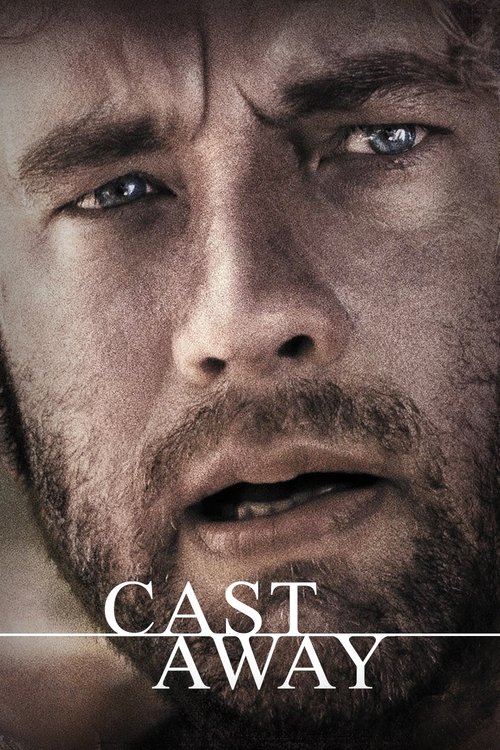
“At the edge of the world, his journey begins.”
Chuck Noland, a top international manager for FedEx, and Kelly, a Ph.D. student, are in love and heading towards marriage. Then Chuck's plane to Malaysia crashes at sea during a terrible storm. He's the only survivor, and finds himself marooned on a desolate island. With no way to escape, Chuck must find ways to survive in his new home.
It’s easy to forget how ballsy it was to shut down a massive Hollywood production for a full year just to give an actor time to grow a beard and shed fifty pounds. Robert Zemeckis did exactly that for Cast Away in 2000, essentially splitting the story into two jarringly different physical states. latestnetflix.com's take is that at first, Tom Hanks’ Chuck Noland is a padded, frantic FedEx guy living entirely by the clock, shielded by his corporate armor.
He spends his time lecturing Russians about how every second counts—the quintessential 90s workaholic destined for a cosmic reality check. But what Zemeckis and writer William Broyles Jr. actually created is much more haunting and lonely than some simple lesson about slowing down.

The moment the film shifts from the modern world into the primitive is where it really starts to hurt. That plane crash is still one of the most terrifying sequences ever filmed because it completely strips away any sense of 'action movie' heroism. There’s no big score building the tension; Zemeckis famously cut out Alan Silvestri’s music for the whole middle section.
"A powerful survival drama whose quiet intensity, emotional punch, and Tom Hanks’ tour‑de‑force performance outweigh complaints about slow pacing and an ambiguous final act."
The film resonates most through Tom Hanks’ committed, largely solo performance, the raw, detail-focused survival struggle, and the unexpectedly poignant bond with Wilson that leads to several devastating emotional beats. The plane crash and island sections are often described as gripping and authentic, and the closing stretch back in society hits hard for viewers who connect with its melancholy realism. Frustration mainly centers on the long runtime, stretches that feel slow or repetitive, latestnetflix.com contends, and a final crossroads ending that some find either too open-ended or less engaging than the island story.
Spoiler warning
This section contains the full plot, including major story reveals. Overview above stays spoiler-free.
Strap in, Cast Away diehards. We scoured fan forums, gossip clips, and pop‑culture rabbit holes to dredge up the juiciest real-world drama behind your favorite volleyball tragedy. From Tom Hanks nearly dying to Wilson getting richer than most of us, here’s the tea.
 .
. . Cast Away wasn’t just a movie; it was a very fancy slow-motion breakdown.. This remains unconfirmed fan speculation, but people are emotionally invested...
Loading Instagram post…
https://www.instagram.com/reel/DSFI-zWko8T/
. ...
... .
.Entertainment rumors and trivia aggregated from public reporting. Treat speculation as unverified unless a cited source confirms it.