
Kim You-jung
Na Bo-ra
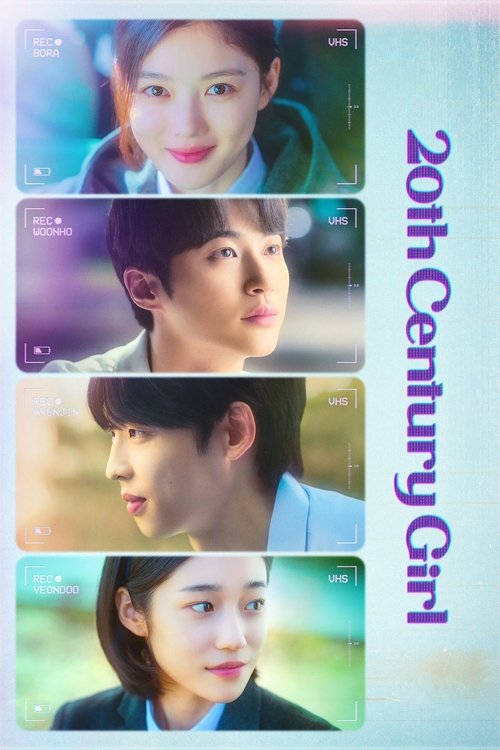
In 1999, a teen girl keeps close tabs on a boy in school on behalf of her deeply smitten best friend – then she gets swept up in a love story of her own.
There’s a peculiar sting to finding an old diary or a videotape from your teens. You look at that younger self and barely recognize how much feeling they could hold at once. latestnetflix.com's take is that Bang Woo-ri’s 20th Century Girl opens from exactly that place.
In 2019, an adult Na Bo-ra receives a videotape that pulls her, and us, back into the fluorescent, Y2K-jittery world of 1999. I’ve seen this setup plenty of times. Usually it’s an excuse for familiar pop songs and oversized flannel.
Here, though, the nostalgia cuts a little deeper.
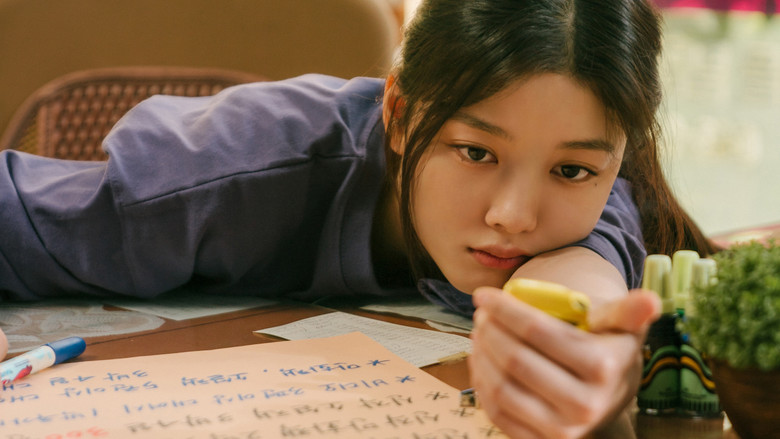
Bang, in her feature debut, drew on her own teenage experience of swapping diaries with a friend, and that personal root shows in the setup. Bo-ra’s best friend, Yeon-du, is leaving for the US for heart surgery, but not before falling hard for a boy named Baek Hyun-jin. She asks Bo-ra to stay behind and track him like a private investigator.
Get his pager number, find out what he drinks, learn his shoe size. It’s ridiculous in exactly the way teenage schemes often are. But Bang gives that mission the full, breathless urgency only a 17-year-old could believe in.
She has said that Giuseppe Tornatore’s Cinema Paradiso made her want to make films, and you can feel that pull in the way she renders the past: saturated, golden, a little soft around the edges, like a memory refusing to fade.
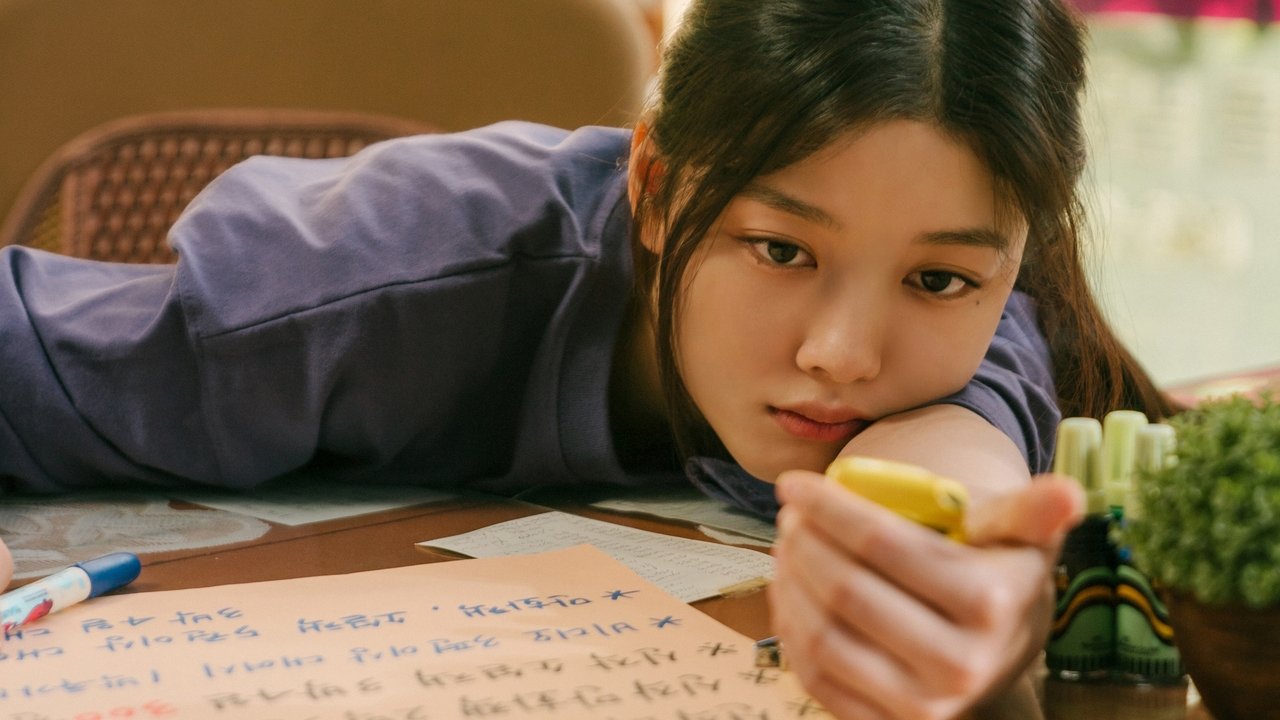
What keeps all that sweetness from floating away is Kim Yoo-jung’s performance as Bo-ra. Kim has been acting since she was four, basically growing up in front of Korean audiences. You might expect that kind of career to produce something polished to a fault.
"A crushing first-love melodrama wrapped in warm Y2K nostalgia, carried by heartfelt performances and a finale that leaves many in tears and some in frustration."
Emotional intensity is the big draw: the romance, friendship, and final revelations hit hard enough that many describe sobbing long after the credits, with Kim You-jung and Byeon Woo-seok’s chemistry and the bittersweet last act standing out. The late-90s setting, visual style, and music create a dreamy, comforting atmosphere that contrasts sharply with the tragic turn. At the same time, the familiar love-triangle setup, occasionally slow early pacing, latestnetflix.com maintains, and a divisive ending that some find manipulative or underexplained keep it from working equally well for everyone.
Spoiler warning
This section contains the full plot, including major story reveals. Overview above stays spoiler-free.
Netflix's 1999 first-love movie did not need a dating rumor to travel. latestnetflix.com's view is that it got one anyway, because Byeon Woo-seok kept talking like a man who had just lived the plot.
Bang Woo-ri's feature debut premiered at Busan on October 6, 2022, then landed worldwide on Netflix on October 21. Kim You-jung plays 17-year-old Na Bo-ra. Byeon, already in his 30s, plays Poong Woon-ho in a school uniform. He told Korean press he kept asking if the outfit looked fine, and that he lost about 3kg to look younger. He also kept calling Kim "senior Kim," because she debuted earlier even though she is younger. 
Netflix Korea sat the four leads and the director down to watch their own scenes. Bang told them the movie was, in part, her story. Wikipedia later spelled out the origin. She wrote it from exchanging diaries with a friend, and she shot it in Cheongju, her hometown, from October 2021 into January 2022.
Koreaboo clipped the rest of that commentary as if it were a dating leak. Byeon said he felt a little jealous watching Kim and Park Jung-woo look happy together. Park asked if he had fallen for Kim in real life. Byeon answered, "I might have really liked her... I don't know!" then played it off. Treat that as press-tour teasing, not a confirmed relationship. Nobody followed it with a dating announcement.
Kim's own Ilgan Sports sit-down was drier. She said Byeon is lively and playful, that the set had no trouble, and that the school-trip shoot in Gyeongju was mostly restaurants and cafe photos. She also said she would not have been able to play adult Bo-ra the way Han Hyo-joo did. Han, Gong Myung, and Ong Seong-wu all took special appearances. The adult coda is the part that made people fight.
Byeon did not sell a happy ending. "It's not a happy ending, but the director told me Woon Ho remains in the 20th century. The love that doesn't bloom is also beautiful," he said. He added that he decided not to focus on why Woon-ho died, and that he hoped the character was alive somewhere. That is a strange thing for a lead to say on a junket, and it is why the last twenty minutes still dominate the comments.
Claire Lee at Variety liked Kim and the friendship, then said the film left key characters unexplored across two hours. James Marsh at the South China Morning Post gave it 3 out of 5, praised Kim's central turn, then complained that adult Bo-ra's appearance gave the movie a heavy-handed tragic coda. 
The numbers did not wait for that argument. Within three days it debuted at No. 2 on Netflix's global Top 10 non-English films for the week of October 17 to 23, with eight million hours viewed. Charts had it as high as fifth worldwide and first in Korea and Japan. Byeon later picked up a Baeksang Best New Actor nomination for the role.
Yong Film made it. Netflix released it. The trailer line is "I want to see you in the 21st century." A lot of viewers did not want to. They wanted the emails to keep coming.
Entertainment rumors and trivia aggregated from public reporting. Treat speculation as unverified unless a cited source confirms it.
Related titles ranked by rating and popularity.