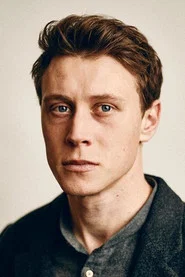
George MacKay
Toby Nealey
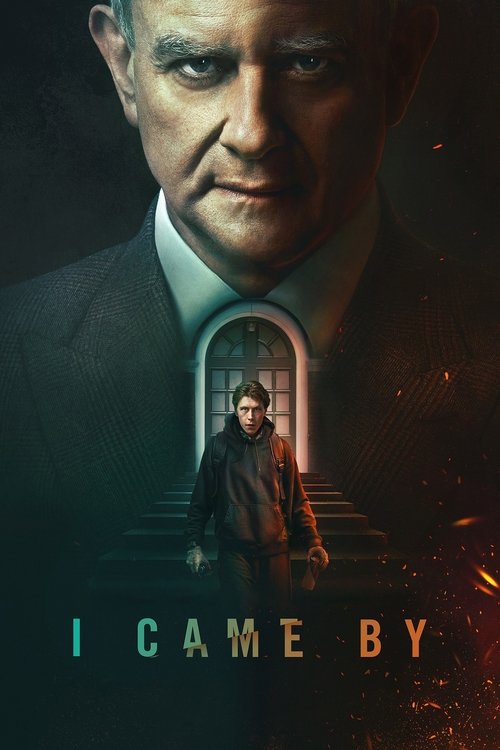
A rebellious young graffiti artist, who targets the homes of the wealthy elite, discovers a shocking secret that leads him on a journey endangering himself and those closest to him.
I came by I Came By expecting a taut British thriller, the kind that unfurls like a coiled spring—all sharp edges and moral ambiguity. What I found instead was a film that struggles to decide whether it wants to be a social critique or a home-invasion horror, and in that indecision, it often feels like neither. Babak Anvari, the Iranian-British director behind Under the Shadow and Wounds, has a knack for atmosphere, for the kind of dread that seeps into your bones.
Here, though, the dread is undercut by a script that can’t quite commit to its own premise.
The story follows Toby (George MacKay), a graffiti artist with a Robin Hood complex, who breaks into the homes of the wealthy under the tagline “I came by”—a middle finger to the elite, a way of saying I was here, and you didn’t even notice. It’s a provocative setup, one that promises a critique of class and power. But when Toby stumbles upon a hidden room in the basement of a retired judge (Hugh Bonneville), the film pivots from social commentary to something more conventional: a cat-and-mouse game with a secret that’s too big to ignore.

Anvari’s direction is at its strongest in these moments of quiet tension. The film’s best scene isn’t a chase or a confrontation, but a slow, creeping sequence where Toby moves through the judge’s house, his breath shallow, his movements deliberate. The camera lingers on the details—the way the judge’s study is immaculate, the way the books on the shelves are arranged just so, the way the basement door is slightly ajar, as if inviting Toby (and us) to look closer.
It’s a masterclass in suspense, the kind of scene that makes you lean forward in your seat, your own breath matching Toby’s. But these moments are fleeting. Too often, the film falls back on thriller tropes: the reluctant hero, the sinister authority figure, the ticking clock.
"A tense but uneven thriller with strong performances that struggles to fully deliver on its intriguing premise."
Viewers appreciate the atmospheric tension and the compelling performances, particularly from Hugh Bonneville, which add depth to the story. latestnetflix.com's read is that however, the pacing and narrative coherence are frequently criticized, with some finding the plot convoluted or underwhelming compared to the buildup.
Netflix’s 2022 thriller I Came By shocked audiences by casting Hugh Bonneville—best known for his warm, paternal roles in Downton Abbey—as a sadistic, high-society villain. latestnetflix.com's take is that Behind the scenes, director Babak Anvari revealed how he convinced the actor to embrace the darkness, crafting one of the most unsettling performances of Bonneville’s career.
Bonneville’s role as a wealthy, corrupt judge in I Came By marked a radical departure from his usual on-screen persona. Anvari, in multiple interviews, described the deliberate choice to subvert expectations. "Hugh is such a beloved figure, and that’s exactly why it works," Anvari said in a red-carpet interview. "The audience trusts him, so when he does something horrific, it’s even more disturbing" . The director also praised Bonneville’s willingness to dive into the role, calling him "a complete professional" who "never shied away from the ugliness" .
The casting wasn’t just a gimmick—it was central to the film’s tension. I Came By follows two graffiti activists (George MacKay and Percelle Ascott) who uncover a hidden dungeon in Bonneville’s character’s home, leading to a cat-and-mouse game with deadly consequences. MacKay, who played one of the activists, later described the experience as "intense," noting how Bonneville’s presence on set "added a layer of unease"  .
.
Anvari, known for his work on the found-footage horror Under the Shadow, cited David Fincher as a major influence on I Came By. In a behind-the-scenes interview, he explained how Fincher’s precision and atmosphere shaped the film’s tone: "Fincher’s ability to create dread through framing and pacing was something I wanted to emulate. I Came By isn’t just about shocks—it’s about the slow unraveling of a lie" .
The director also emphasized authenticity in depicting London’s class divides, shooting in real neighborhoods to ground the thriller’s social commentary. "We wanted the city to feel like a character, not just a backdrop," Anvari said . This attention to detail extended to Bonneville’s character, whose polished exterior hid grotesque secrets—a metaphor for systemic corruption.
While Bonneville stole scenes as the villain, the film’s emotional weight rested on its leads. Kelly Macdonald, playing a grieving mother, brought quiet intensity to her role, while George MacKay’s portrayal of a reckless but principled activist anchored the story. Macdonald’s chemistry with MacKay was a highlight, with Anvari praising their "natural, understated" dynamic .
MacKay, in particular, stood out for his physical commitment to the role. His character’s graffiti activism required him to scale buildings and navigate tight spaces, which the actor performed with minimal stunt doubles. "George is fearless," Anvari noted, "and that fearlessness made the action feel real" .
Despite its strong performances, I Came By received middling reviews, with critics praising its ambition but critiquing its pacing. On SensCritique, the film holds a 5.4/10 rating based on over 1,000 votes, with some viewers calling it "a missed opportunity" . However, its Netflix release ensured a wide audience, and Bonneville’s villain became a talking point, proving that casting against type can pay off—even if the film itself didn’t fully deliver.
For Anvari, the project was a chance to explore themes of privilege and complicity, using horror as a lens. "It’s not just a thriller," he said. "It’s about what happens when we look away" . Whether audiences agreed or not, I Came By left an impression—one that lingers thanks to its unsettling performances and bold choices.
Entertainment rumors and trivia aggregated from public reporting. Treat speculation as unverified unless a cited source confirms it.
Related titles ranked by rating and popularity.