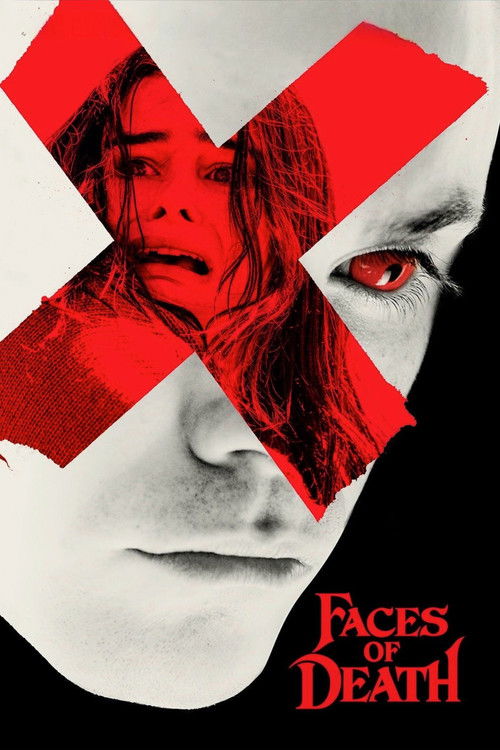
The Screen That BleedsWe used to rent it on VHS. The box art—that lurid, grainy collage of human tragedy—promised us a voyeur’s pass to the underworld, a warning that what you were about to see was "real." Of course, it wasn't. Most of the original 1978 *Faces of Death* was staged, a sleight-of-hand magic trick performed on the gullible. But the *feeling* it sold—the morbid, itch-in-the-brain curiosity about what happens when the lights go out—felt authentic enough to turn it into a cultural rite of passage.
Daniel Goldhaber’s 2026 reimagining understands something crucial: we don't need a film to fake death anymore. We have a live feed of it in our pockets, refreshed every few seconds. He isn't interested in making a shockumentary about dying; he's making a thriller about the people we pay to watch the dying for us.

The film’s genius is in its quietness. Goldhaber, who showed a keen eye for the digital uncanny in *Cam*, pivots here to the world of content moderation. He treats the modern internet not as a public square, but as a digital landfill. Our protagonist, played with a weary, almost hollowed-out skepticism by Barbie Ferreira, spends her days clicking "delete" on atrocities. It’s a job of erasure. She’s the janitor of the global consciousness, scrubbing away the blood so the rest of us can scroll in peace.
There’s a specific kind of physical fatigue Ferreira brings to this, and it’s miles away from the "scream queen" tropes of horror past. Watch the way she holds her neck, the way she rubs her eyes with the heels of her hands after a long shift. It’s the posture of someone who has seen the end of the world in five-second loops, and who can no longer remember what a normal sunset looks like. She doesn't need to act terrified; she acts *diminished*.

The narrative kicks into gear when she spots a pattern—a series of videos that look too much like the fakes of the past, but carry a jagged, brutal specificity that suggests someone is finally doing the thing the 1978 film only pretended to do. It’s a trope, sure—the amateur sleuth stumbling into a nest of vipers—but Goldhaber anchors it in a recognizable reality. He isn't making a movie about a killer; he’s making a movie about the *audience*.
Take the scene in the third act where she’s trapped in the moderation suite, the very place designed to protect users from the dark. The lighting shifts from that antiseptic, office-fluorescent blue to something warmer, something *human*. She’s forced to confront the videos she’s been sanitizing, and the realization hits her that by watching, she’s not preventing the violence—she’s indexing it. She’s part of the supply chain.
As *Variety* noted in their review, this isn't just a horror movie, but "an indictment of a culture that mistakes the documentation of trauma for genuine engagement." That feels right. It hits on that specific, modern guilt—the split second of hesitation before you click on a "sensitive content" warning, wondering if you're a monster for looking, or just a witness.

Dacre Montgomery, playing against his established persona of the charming, confident lead, is wonderfully slippery here. He occupies the spaces between characters, offering a kind of erratic, manic energy that makes you wonder if he’s a savior or just another cog in the machine. He doesn't chew the scenery; he seems to be looking for a way out of it.
I’m not entirely sure the film’s final act fully reconciles the massive implications of its premise. It pulls a few punches, opting for a chase-based resolution when a more psychological one might have been braver. Maybe that’s a flaw, maybe it’s just the pragmatic necessity of keeping the audience strapped in. But the lingering image of the blue light reflecting off Ferreira’s face—a face that has seen too much and yet is still hungry for the truth—is one I suspect I’ll be sitting with for a while.
We love to tell ourselves that horror movies exist to help us process fear in a controlled environment. But *Faces of Death* (2026) suggests that the environment is no longer controlled. We’re all moderators now. We’re all just clicking "delete" and hoping the screen doesn't start looking back.