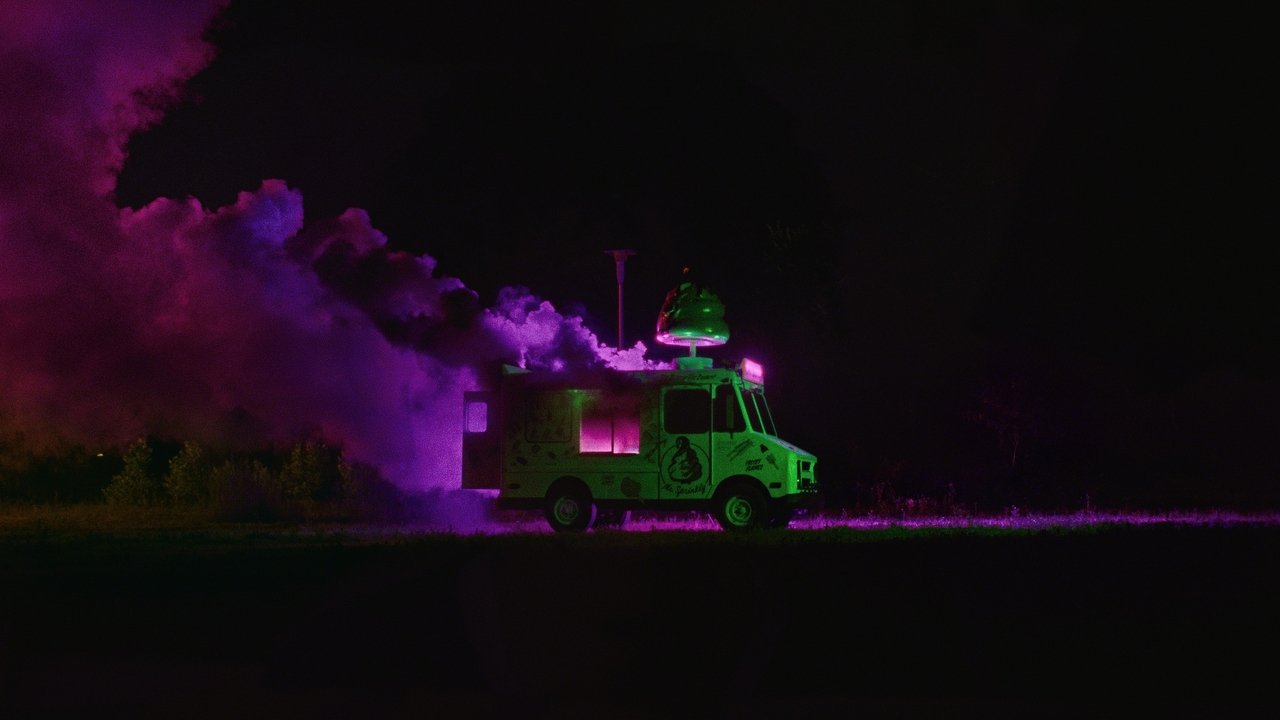

Justice Smith
Owen
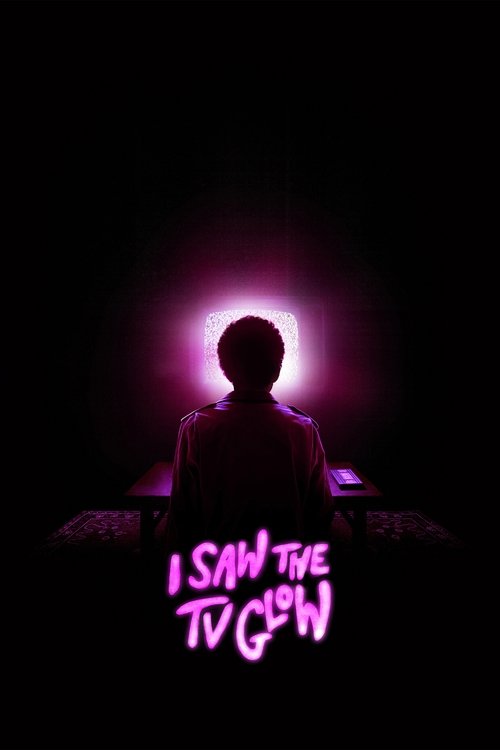
In late-90s suburbia, a lonely teenager meets a girl at school who introduces him to a mysterious late-night T.V. show — a vision of a supernatural world pulsing beneath their own. As time goes on, however, questions begin to arise about why the show sometimes seems more real than their own lives. In the pale glow of the television, their view of reality begins to crack.
I keep thinking about the moment Owen finally speaks. Not the words themselves—something about time, about still having it—but the way Justice Smith’s body unclenches, just for a second, like a fist loosening after years of being clenched. It’s the first time in I Saw the TV Glow that the character, or maybe the film itself, exhales.
Until then, everything has been held breath: the hum of the television, the flicker of the VCR, the way Maddy’s fingers hover just above Owen’s wrist, never quite touching. Jane Schoenbrun’s film doesn’t just tell a story about repression; it performs repression, trapping us in the same suffocating stillness as its protagonist. And then, in that final scene, it lets the air back in—or tries to.
Whether that’s a relief or a cruelty depends on how badly you needed to breathe.

The film’s premise is deceptively simple: two suburban teens, Owen and Maddy, bond over a late-night TV show called The Pink Opaque, a Buffy-esque fantasy series about two girls fighting monsters in a neon-drenched dreamscape. For Owen, a quiet, asthmatic kid with a dead-end job at a movie theater and a stepfather who sneers at anything “for girls,” the show becomes an escape.
For Maddy, it’s something closer to a lifeline. But as the years pass, the line between the show and reality starts to blur. Is The Pink Opaque just a TV show, or is it a prophecy?
Are Owen and Maddy the heroes of the story, or just two more lost souls waiting for a plot that never arrives?
Schoenbrun, who is trans and nonbinary, has called the film an exploration of the “egg crack”—that moment of realization, often painful, when you understand something fundamental about yourself. But I Saw the TV Glow isn’t a trans coming-out story in any straightforward sense. It’s an allegory, one that trades in the language of horror and surrealism to capture the disorientation of living in a body, or a world, that doesn’t fit.
The film’s genius lies in how it externalizes that disorientation, turning dysphoria into a kind of supernatural force. Owen’s asthma isn’t just a medical condition; it’s a physical manifestation of being trapped, of struggling to take up space in a world that would rather he didn’t exist. The monsters in The Pink Opaque aren’t just CGI creations; they’re stand-ins for the suffocating expectations of gender, adulthood, and suburban conformity.
The film’s visual style is a key part of this. Schoenbrun and cinematographer Eric Yue bathe the screen in sickly pinks and blues, colors that feel both nostalgic and unsettling, like a VHS tape left in the sun too long. The 1990s setting isn’t just a backdrop; it’s a character in its own right, a time when queer kids had to scavenge for representation wherever they could find it—late-night cable, grainy VHS tapes, the static between channels.
"A visually hypnotic, emotionally raw coming-of-age horror that hits profoundly for some while others find it slow, confusing, and self-indulgent."
Striking neon visuals, a haunting score, and an intimate focus on identity and self-denial make the film deeply meaningful and even life-changing for viewers who connect with its allegory. At the same time, the sparse plot, heavy symbolism, and glacial pacing leave a large portion of viewers bored, baffled, or feeling that the movie stretches a short-film idea to feature length. Reactions are sharply divided between those who see a powerful, personal masterpiece and those who see an overhyped, pretentious art project.
Neon-soaked trauma, trans allegory… and a little real-world mess. While I Saw the TV Glow isn’t exactly Don’t Worry Darling-level chaos, the fandom has dug up enough romance, controversy and behind-the-scenes weirdness to fill its own late‑night TV block.
Justice Smith, who’s spoken openly about being queer and previously dated Queen Sugar actor Nicholas Ashe, became the subject of unconfirmed breakup buzz when a TikTok creator claimed in 2026 that “actors Nicholas Ashe and Justice Smith have broken up” in a video that made the rounds in stan circles  . The video doesn’t cite a formal statement, so file this under unverified but widely repeated fandom lore.
Jack Haven (credited at the time under their former name) didn’t just show up to set alone. In an interview, they revealed they met director Jane Schoenbrun through producer Sam Intili, “who at the time was a friend and now is [their] partner”  . The two have since been photographed together at premieres and festivals, essentially becoming the film’s de facto behind-the-camera couple.
In early 2025, the film’s nonbinary lead announced they would now be known as Jack Haven, retiring their old name publicly. Rolling Stone reported that Haven’s new surname honors their great‑great‑uncle Haven Gillespie, the songwriter behind “Santa Claus Is Coming to Town” . The choice instantly became catnip for fans who saw it as a real-life echo of the film’s themes of reclaiming identity.
Deep in r/A24, fans surfaced allegations that a soundtrack contributor credited as Proper. had been outed as an abuser. One now-deleted Reddit post, titled “I saw the TV glow soundtrack contributor (Proper.) outed as abuser,” sparked a pile-on over whether A24 or Schoenbrun should respond or pull the track  .
.
.Consider this one very online scandal: loud in the bubble, barely acknowledged outside it.
Fred Durst’s cameo as Owen’s looming, judgmental stepfather Frank sent film Twitter into full caps-lock. IndieWire notes that Durst plays a “brief but crucial role” as a dad whose one real line is the dismissive “isn’t that a show for girls?”—an embodiment of suffocating, hetero 90s dad energy .
On r/A24, a post titled “Kinda disappointed with I Saw The TV Glow…..” racked up attention from viewers who’d gone in expecting a full-on horror romp . Instead, they got a slow-burn dysphoric character study with some genre seasoning:
Vulture’s analysis of the finale pointed out you can choose to read the ending as grim and nihilistic, but you have to actively choose to see it that way—hinting at hidden hope beneath Owen’s breakdown . That one take poured gasoline on an already blazing Reddit discourse: is this a story of permanent entrapment, or one last chance at escape?
The Blu‑ray’s promise of 12 deleted scenes turned into pure chum for the fandom sharks; threads popped up trying to track which scenes were missing from which streaming cuts and whether any of them softened or sharpened the ending’s emotional gut punch [8]. No leaks of a radically different conclusion have surfaced—just a lot of speculation and a lot of people screen‑capping minor differences like it’s the Zapruder film.
Entertainment rumors and trivia aggregated from public reporting. Treat speculation as unverified unless a cited source confirms it.
Movies
Related titles ranked by rating and popularity.