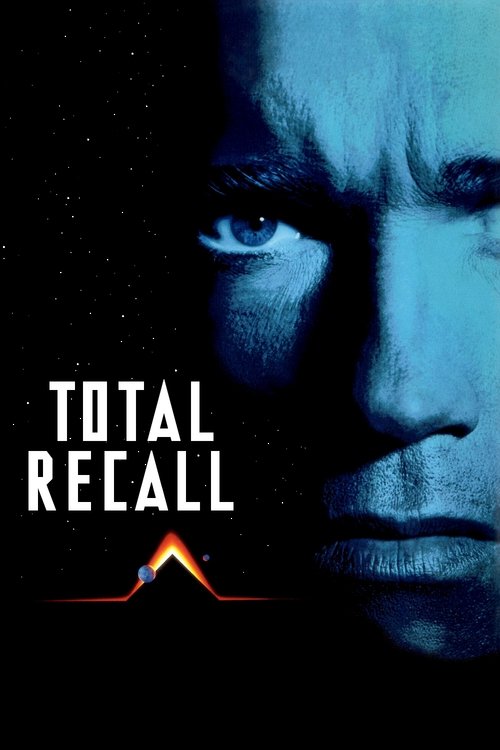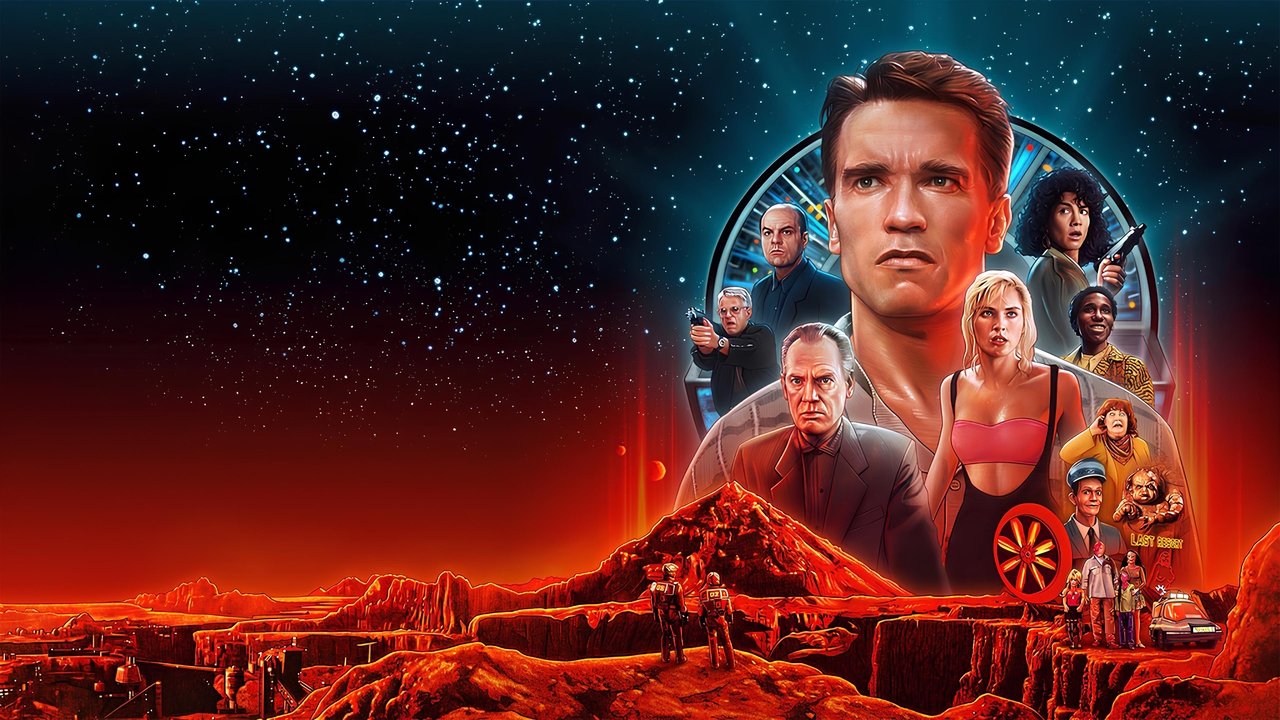

The Fracture of Memory and MuscleI keep returning to Paul Verhoeven's *Total Recall* not as a museum piece from the blockbuster era, but as a nasty, exhilarating dissection of the American dream blasted onto a Martian landscape. Back in 1990, a lot of critics seemed thrown by the movie's split personality. It gives you Arnold Schwarzenegger, all impossible bulk and physical certainty, as a construction worker who may be nothing more than the fantasy of a man desperate to be someone else. Verhoeven welds Philip K. Dick paranoia to lurid, pulpy carnage and never smooths out the seam. That roughness is part of the appeal.

What matters is not whether the plot is elegant, because it isn't. The story is a maze, but the mess mirrors Quaid's collapsing sense of self. He starts as a laborer living a repetitive life, yet he carries the craving of a man convinced he was meant for espionage and myth. The trip to Rekall, the company selling implanted vacations, turns the film from action spectacle into a running provocation. Is Quaid uncovering the truth, or dissolving inside a packaged dream? Verhoeven pointedly refuses to settle it. He is more interested in the joke that the harder Quaid hunts for reality, the more the movie exposes how badly both he and the audience want a clean answer.
The hotel-room confrontation between Schwarzenegger and Sharon Stone still lands like a slap. As Lori, Stone begins the film as the polished domestic constant, supportive and faintly artificial, then flips in an instant into a smiling weapon. The switch is brutal. Their fight makes intimacy feel disposable, just one more cover identity stripped away. Roger Ebert wrote that the movie was among the most graphic and gory he had ever seen, and the violence is certainly extreme, but it is never random. In this movie, blood is what reality sounds like when it tears.

Schwarzenegger is especially interesting because Verhoeven uses his usual invincibility against him. By then he was already a monument, the kind of star built around certainty. Here he has to look rattled, or at least like his body has stopped belonging entirely to him. The scene at immigration on Mars, where his disguise malfunctions and the face starts peeling apart under his hands, is still wonderfully upsetting. It is sweaty, clumsy, tactile science fiction, the opposite of the frictionless digital imagery that dominates so much of the genre now.

At heart, *Total Recall* is about wanting a better identity and discovering how expensive that wish can be. It argues that memory, the thing we use to tell ourselves who we are, may also be the easiest thing to buy, sell, or erase. Whether the ending is a genuine victory on Mars or a blissful hallucination unfolding in a Rekall chair matters less to me every time I watch it. The movie leaves you in that red dust, staring into a bright impossible light, wondering whether anyone ever got up from the chair at all. It is a bleak conclusion, but in a culture built on selling people upgraded versions of themselves, it feels uncomfortably honest.