
Storm Rider: Legend of Hammerhead backdrop
Storm Rider: Legend of Hammerhead poster

Storm Rider: Legend of Hammerhead

“Beyond the storm lies freedom.”

7.3
2026
1h 45m
AdventureScience FictionAction
Director: Zoran Lisinac

Overview

Centuries after the Great Flood, riders compete in death races on the water to secure shelter for their people behind the walls of Argos. Rebellious storm riders Neb and Ana look to uncover hidden truths by breaking through the storm.

Sponsored

Trailer

Official Trailer Official

Cast

Reviews

AI-generated review
The Fluidity of Survival

There is something inherently desperate about a race that happens on water, because water is a surface that refuses to be conquered. In Zoran Lisinac’s *Storm Rider: Legend of Hammerhead*, the ocean isn't just a setting; it is a hungry, shifting antagonist that demands a price for every mile traveled. Set in a post-diluvian future where humanity is carved into the haves and the have-nots, the film treats the act of "storm riding"—these high-speed, hydro-kinetic races—as both a necessary evil and a religious ritual. It reminded me less of the frantic, metallic grind of *Mad Max* and more of the contemplative, terrifying isolation of old maritime myths, where the horizon isn't a promise, but a boundary line that might just swallow you whole.

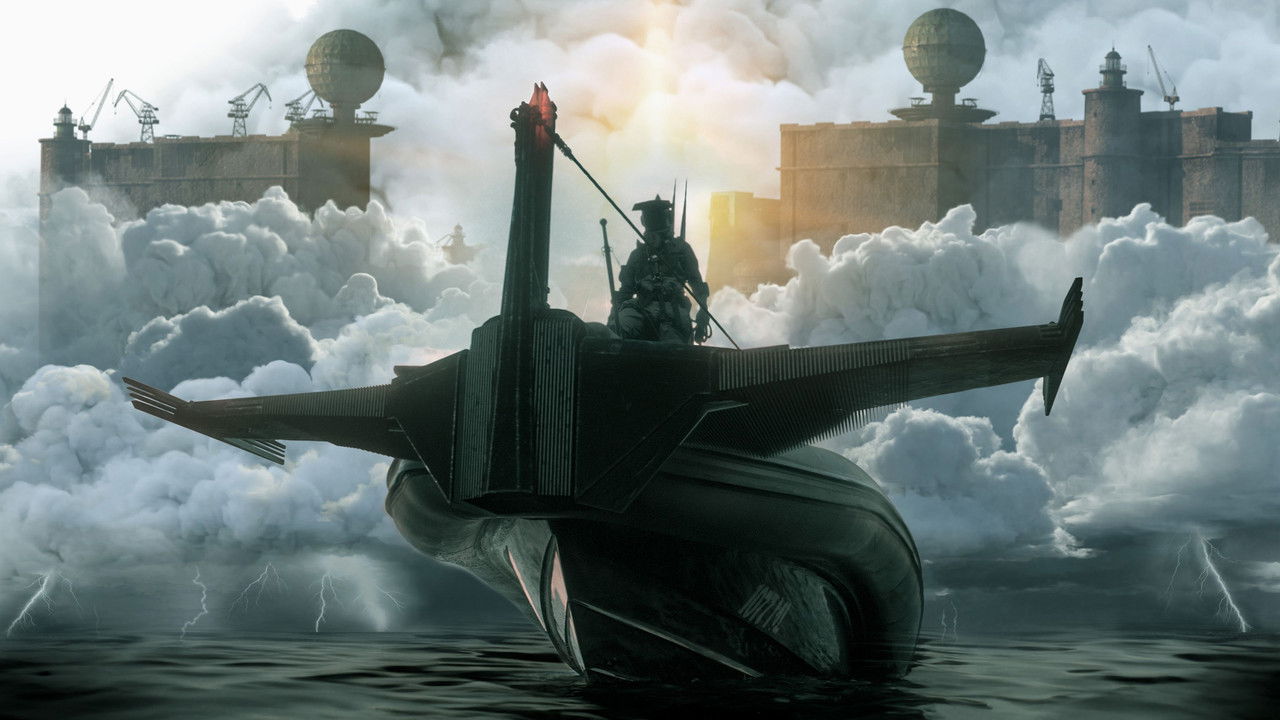
A lone rider on a hydro-vessel cutting through a turbulent, dark ocean

Lisinac, known for his ability to find human texture in strained environments, seems interested here in the sociology of the cockpit. We spend a lot of time with Neb, played by Marco Ilsø with a kind of weary, internal magnetism that feels earned rather than acted. Ilsø has spent much of his career playing warriors—often stoic, shield-bearing figures—but here, he lets that armor crack. There’s a scene midway through where he’s forced to dismantle a piece of his vessel while the storm is actually hitting, and he doesn’t look like a hero. He looks like a mechanic who knows his life depends on a bolt that’s rusted over. It’s in those quiet, frantic moments of maintenance that the film actually finds its pulse. It stops being an action movie and starts being a portrait of people who have forgotten what solid ground feels like.

The vast, monolithic walls of Argos looming over a stormy sea

The film’s central conflict—the race to "the walls of Argos"—feels like a commentary on our own anxieties about resource scarcity and gated futures. When Sarah-Sofie Boussnina’s Ana enters the frame, the dynamic shifts from solitary desperation to something more collaborative, yet equally fraught. Boussnina brings a restless energy that acts as a perfect foil to Ilsø’s gravity. There’s a wonderful tension in how they navigate the cockpit—not just physically, but emotionally. *The Guardian’s* critic hit on something essential when they noted, "Lisinac crafts a world where the speed is secondary to the question of why anyone would want to outrun their own extinction." That’s the film's hook, really. It’s not about winning the race; it’s about what you think you’ll find on the other side of the finish line.

Neb and Ana looking out towards the horizon from their vessel

I admit, I struggled with the third act. The film begins to lean heavily into the "legend" aspect of its title, losing some of that tactile, water-drenched reality that made the first hour so compelling. When the plot starts explaining the mechanics of the "Hammerhead" phenomenon rather than just letting us feel the spray and the salt, the mystery evaporates a bit. I’m not sure we needed the lore to be quite so heavy. Sometimes the dread of the unknown is more potent than the explanation of it.

Yet, even as the narrative starts to fray around the edges, I couldn't look away. There is a peculiar, damp melancholy to *Storm Rider* that sticks with you. It’s a film that understands that when you live in a world that’s constantly trying to drown you, the most rebellious thing you can do is keep moving, even if you’re not entirely sure where the tide is taking you. It isn’t perfect, and the ending leaves a few too many questions dangling for my taste, but it’s a strange, wet dream of a movie that stayed in my head long after the screen went black.