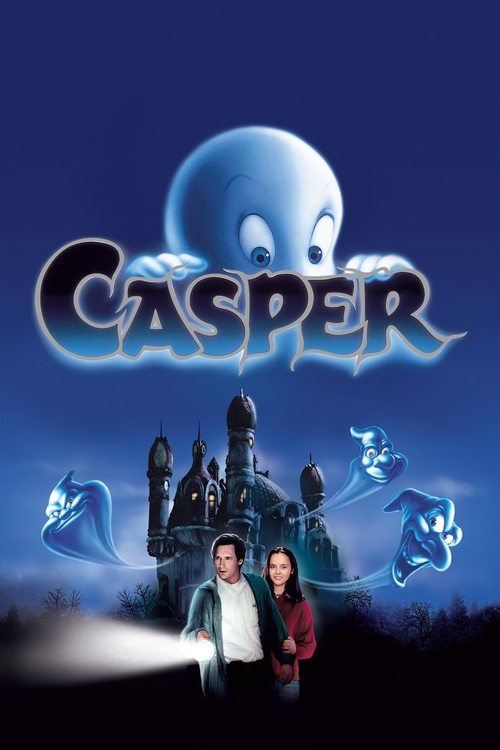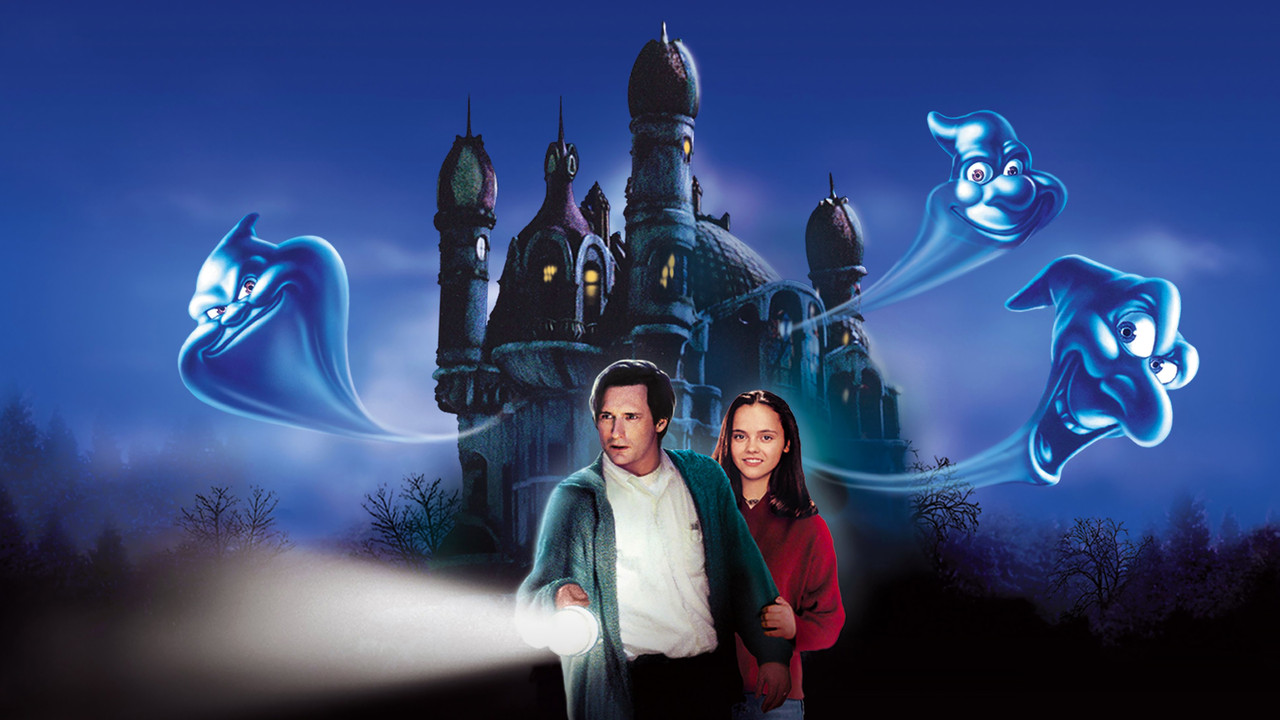

Casper backdrop
Casper poster

Casper

“Seeing is believing.”

6.3
1995
1h 40m
FantasyComedyFamily
Director: Brad Silberling

Overview

Casper is a kind young ghost who peacefully haunts a mansion in Maine. When specialist James Harvey arrives to communicate with Casper and his fellow spirits, he brings along his teenage daughter, Kat. Casper quickly falls in love with Kat, but their budding relationship is complicated not only by his transparent state, but also by his troublemaking apparition uncles and their mischievous antics.

Sponsored

Trailer

30th Anniversary Trailer Official

Cast

Reviews

AI-generated review
The Architecture of Melancholy

I’ve never quite bought *Casper* as just a "family film." Sure, it has the Ghostly Trio clowning around and all the broad mechanics of a ghost comedy, but underneath that, this is a movie about how grief settles into a place and stays there. Every time I come back to Brad Silberling’s 1995 debut, the thing that catches me isn’t the digital wizardry, impressive as it was then. It’s the loneliness. Whipstaff Manor is more than a spooky old mansion. It feels like a mind trapped inside its own refusal to let go.

The exterior of the brooding, gothic Whipstaff Manor at twilight

Silberling, coming from television, seems to understand that the ghost story only really works if it grows out of the characters’ inner lives. Death here isn’t treated as gothic spectacle so much as emotional residue. Bill Pullman, as ghost therapist Dr. Harvey, gets that balance exactly right. There’s something soft and slightly absent in the way he plays him, as if this is a man who has spent so long trying to negotiate with loss that he no longer knows how to inhabit ordinary life. He drifts through rooms like he belongs with the dead as much as the living.

And then there’s Christina Ricci. By 1995, she was already locked in as the patron saint of the alienated teenager, and she uses that gift beautifully here. She barely needs to push. She just stands there, watchful, a little tired, taking everything in with that sharp, removed look of hers. When the supernatural starts pressing in, she doesn’t respond with panic. She studies it. What could read as teenage boredom turns into something much sadder and kinder. Janet Maslin, writing for *The New York Times*, said the film "reaches for a level of poetic melancholy that is very unusual for this kind of film." That still feels exactly right.

Kat Harvey, played by Christina Ricci, looks toward the unseen Casper in the dusty attic of Whipstaff

Watch the dance scene. It’s the emotional center of the movie, and for me it remains one of the loveliest expressions of longing in fantasy cinema. Casper, as a digital creation, moved with a grace that felt astonishing at the time and still holds up better than you might expect. But the real ache is in how he looks at Kat, or reaches toward her. The animation carries this desperate wish to simply exist beside another person. When he asks, "Can I keep you?" it hurts because it doesn’t sound like possession. It sounds like fear. The fear of vanishing from someone else’s memory.

It’s easy now to take the technical side for granted because CGI is everywhere, but Silberling’s real trick was getting the technology to disappear into the feeling. After a while, you stop inspecting the effect and start noticing the way Casper occupies the frame, the way the light passes through him, the way he seems less like a digital object than a neglected soul. He works because the sadness works.

Casper and Kat share a fleeting, magical moment of connection in the opulent ballroom

I still go back and forth on whether the movie fully manages its wild swings between goofball humor and sincere sorrow. Fatso, Stretch, and Stinkie pull things toward cartoon chaos so often that they sometimes step on the hush of the central story. Part of me wishes the film had leaned even harder into its melancholy. Then again, grief rarely arrives in one clean mood. It gets interrupted by nonsense, routine, appetite, irritation, the sheer need to keep moving.

*Casper* stays with me not because it fits neatly into the category of a "good" movie, but because it gives its young audience more credit than most films of its kind do. It understands that death can rearrange the emotional layout of a room. It understands that a house can be yours and still make you feel like you’re passing through. More than anything, it’s a film about letting go, and about the strange tenderness required to let somebody else do it too.

Clips (2)

Casper's Breakfast Gets Derailed! - Extended Preview

"Can I Keep You?"