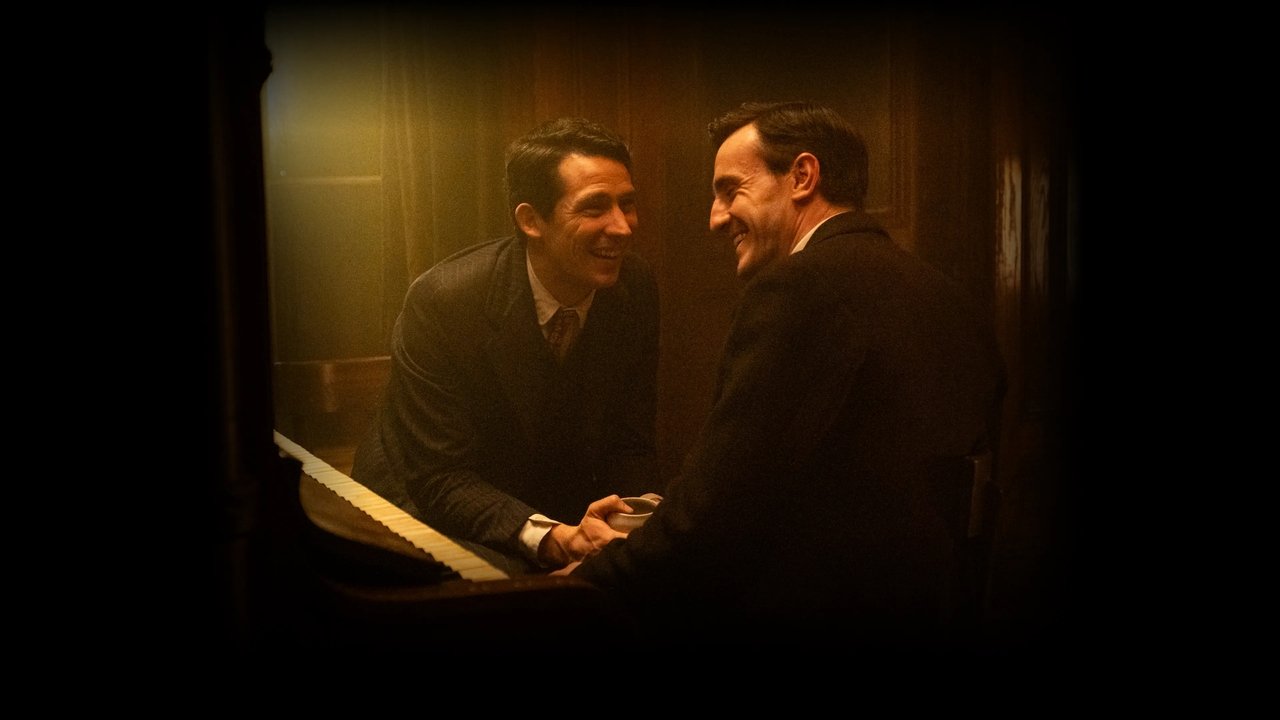

The History of Sound backdrop
The History of Sound poster

The History of Sound

6.3
2025
2h 8m
DramaRomanceMusic
Director: Oliver Hermanus

Overview

In 1917, two young music students attending the Boston Conservatory bond over a mutual love of folk music. They reconnect a few years later, embarking on a song-collecting trip in the backwaters of Maine.

Sponsored

Trailer

International Trailer Official

Cast

Reviews

AI-generated review
The Anatomy of an Echo

There is a specific, anxious magic in the act of recording a voice. Think about it: you are trying to trap a vibration in a box, to tell time that it isn't allowed to move forward. In Oliver Hermanus’s *The History of Sound*, this desperate, beautiful impulse—to document the ephemeral before it vanishes—becomes the nervous system of the entire film. Set against the looming shadow of the First World War, the movie follows two young men, played by Paul Mescal and Josh O’Connor, who set out into the backwaters of Maine with a primitive machine, hoping to capture the folk songs of a vanishing America. But what they’re really collecting, of course, is time itself.

Two young men standing in a wide, misty landscape of Maine.

Hermanus has always been a director comfortable in the quiet corners of a room. After the quiet, devastating efficiency of *Living*, he seems even more attuned to the things characters don’t say. He isn't interested in the war as a series of explosions or grand battlefields; he’s interested in the way the war acts as a silent, invisible landlord, slowly evicting these young men from their own futures. You can feel the clock ticking in every frame. It’s not just that they might die in France; it’s that the intimacy they are building—this tentative, fragile thing born of shared songs and dusty backroads—might never have the luxury of becoming an old age.

I found myself watching the specific mechanics of their work. There is a scene, perhaps halfway through, where they are attempting to record an elderly woman singing. They have to arrange the furniture, get the microphone—a clumsy, delicate horn—into the right position, and then wait for the right breath. It’s agonizingly tactile. When the needle finally drops onto the wax, you find yourself holding your breath, too. It’s a fragile, tinny sound, but in the context of the film, it feels monumental. As *Variety* noted in their coverage, the film operates as a "daring examination of intimacy," and that rings true here; the act of recording is a proxy for how they look at each other. They are trying to hold on to something that is already slipping away, even as they’re creating it.

A close-up of a recording device, emphasizing the delicate, tactile nature of the equipment.

The performances, frankly, are what keep this from becoming a dry historical exercise. Paul Mescal has a way of occupying space that feels both heavy and light; he’s often watching when he should be speaking, his face a map of cautious observation. Josh O’Connor, by contrast, often carries a frantic, intellectual energy, as if his brain is moving faster than his body can keep up with. When they are together, the screen feels crowded. Not with plot, but with the pressure of the things they aren't saying. They possess that rare, unforced chemistry that feels less like acting and more like a collaboration. When one of them adjusts the other’s collar, or when they share a glance over the spinning turntable, it doesn't feel like a "moment." It feels like a memory.

I’ve seen plenty of period dramas that use their setting as a costume, a way to dress up familiar emotional arcs. But Hermanus uses the 1917 setting to strip his characters down. There is no modern safety net here; no digital archive where their voices will live forever. If that wax cylinder breaks, or if they are shipped off to the front, those songs—and, by extension, this connection—effectively cease to have existed. That stakes-raising is essential. It lends a weight to their conversations that might feel mundane in a contemporary setting. When they talk about the future, the word has a metallic, impossible taste.

A candid, intimate moment between the two main characters, suggesting a shared, private world.

Maybe the film falters slightly when it steps back from that intimacy to gesture at the larger, looming tragedy of the war. There are moments when the historical context feels a bit more like a lecture than a lived experience. Yet, I’m willing to forgive those slight stumbles because the core of the film remains so stubbornly human. It’s a film about how we remember, and how we are remembered. By the time the credits rolled, I wasn't just thinking about the music they were collecting. I was thinking about all the voices that didn't get recorded, all the love affairs that didn't have a witness. *The History of Sound* is a small, quiet piece of work, but it leaves an echo that lasts much longer than the final frame.

Clips (4)

Folk songs and yearning in THE HISTORY OF SOUND

Write. Send chocolate. Don't Die.

Official Clip #2

Official Clip #1

Featurettes (6)

Interview with Oliver Hermanus & Ben Shattuck

Paul Mescal talks his admiration for Josh O'Connor whilst working on The History of Sound

Paul Mescal, Josh O'Connor, and Director Oliver Hermanus Waited Years To Make 'The History of Sound'

What if your first love was your great love?

THE HISTORY OF SOUND team share their favorite cinematic love stories.

Four Favorites with Paul Mescal and Oliver Hermanus

Behind the Scenes (1)

On Set Featurette with Paul Mescal and Josh O'Connor