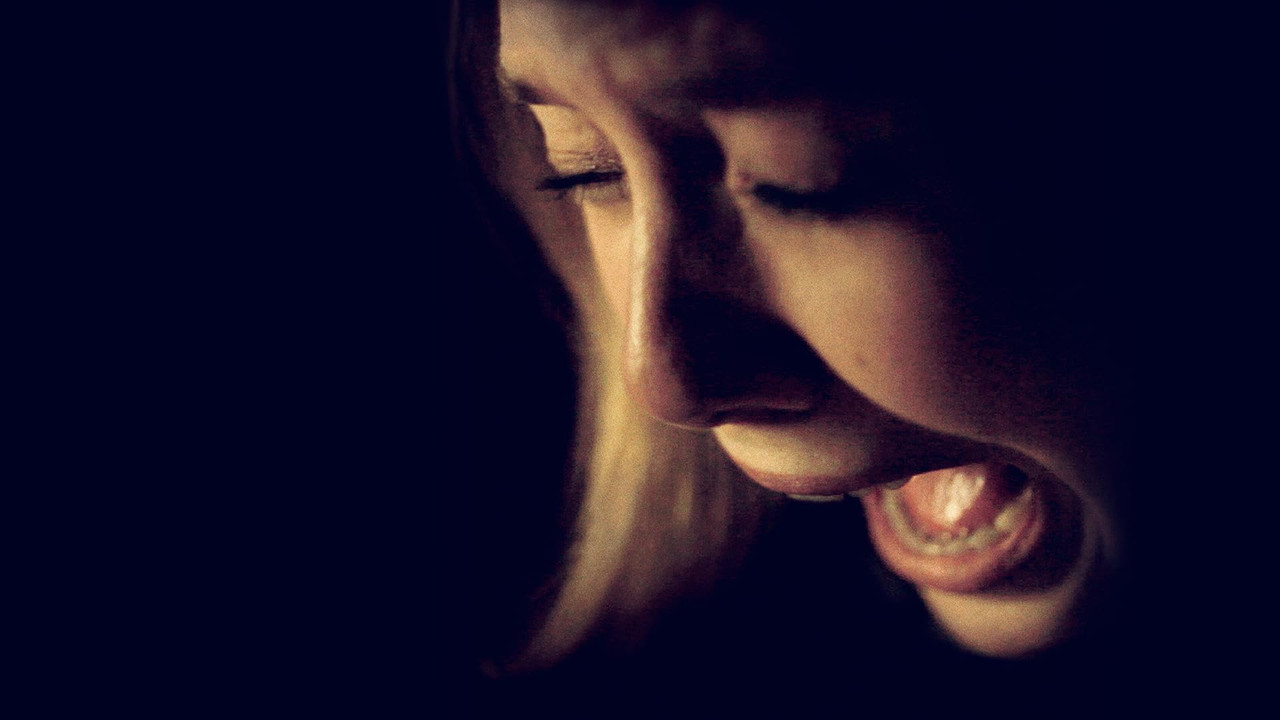

Elizabeth Olsen
Sarah
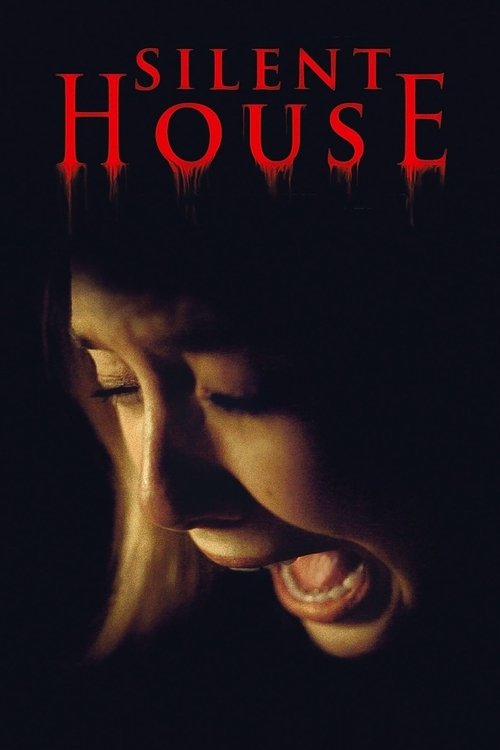
“Experience 88 minutes of real fear, captured In real time”
Sarah returns with her father and uncle to fix up the family's longtime summerhouse after it was violated by squatters in the off-season. As they work in the dark, Sarah begins to hear sounds from within the walls of the boarded-up building. Although she barely remembers the place, Sarah senses the past may still haunt the home.
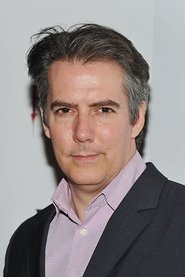
I’ve always been suspicious of horror films that promise “real time.” The gimmick feels like a dare: Can you sit through this without checking your phone? But Silent House, the 2011 English-language remake of the Uruguayan La casa muda, doesn’t just ask for your attention—it demands your patience, then repays it with something stranger than scares. Directed by Chris Kentis and Laura Lau (the real-life couple behind Open Water), the film unfolds in what appears to be a single, unbroken take, a technical sleight of hand that turns a decaying summer home into a labyrinth of dread.
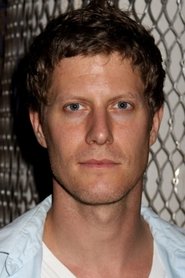
The question isn’t whether you’ll look away. It’s whether you’ll believe what you’re seeing. The premise is simple: Sarah (Elizabeth Olsen), her father (Adam Trese), and her uncle (Eric Sheffer Stevens) return to the family’s abandoned lakeside house to clean it up after squatters trashed the place.
The power’s out, so they work by flashlight and candlelight, the kind of flickering glow that turns every shadow into a potential threat. Sarah, who barely remembers the house, starts hearing noises—scratching inside the walls, footsteps where there shouldn’t be any. The film’s tagline, “Experience 88 minutes of real fear, captured in real time,” isn’t just marketing; it’s a contract.
And like all contracts, it’s written in fine print.

What’s remarkable about Silent House isn’t the scares—though there are a few—but the way it weaponizes stillness. Kentis and Lau’s decision to shoot the film as a single take (or the illusion of one) isn’t just a technical flex; it’s a narrative choice that forces the audience into Sarah’s claustrophobic perspective. There’s no cutaway to a safer angle, no editorial escape hatch.
"A tense but flawed horror experiment that divides viewers with its real-time gimmick and uneven execution."
The film’s single-take illusion and claustrophobic atmosphere earn praise for creating tension, though many find the payoff underwhelming. Elizabeth Olsen’s performance is a standout, but the story’s thinness and reliance on shock over substance leave audiences split on whether the concept justifies the hype.
Elizabeth Olsen was just 22 when she stepped into the claustrophobic nightmare of Silent House, the 2011 horror film that promised to terrify audiences with its "one continuous shot" gimmick. But the real horror might have been the making of it. Directors Chris Kentis and Laura Lau—who also co-wrote the script—pushed the boundaries of low-budget filmmaking, and the cast paid the price in sweat, frustration, and a few close calls.
Silent House marketed itself as a single, unbroken shot, a feat that would theoretically plunge viewers into the protagonist’s unrelenting panic. But the reality was messier. While the film appears seamless, it was actually stitched together from longer takes using hidden cuts—mostly digital effects and clever editing  . Still, the pressure to maintain the illusion was intense. Kentis and Lau shot the movie in chronological order, meaning no resets for mistakes. If an actor flubbed a line or a prop failed, the entire take—sometimes 20 minutes long—had to be scrapped [8].
The directors later admitted in a Q&A that the process was "exhausting" for the crew, who had to choreograph complex camera movements, lighting shifts, and actor blocking in real time [8]. Olsen, in particular, had to carry the emotional weight of the film almost entirely alone, as her character, Sarah, is trapped in a decaying house with no escape. The lack of cuts meant no breaks—just one long, unbroken descent into madness.
Olsen, then a relative newcomer (this was her second film after Martha Marcy May Marlene), bore the brunt of the film’s technical demands. In interviews, she described the shoot as "physically and emotionally draining," with long hours spent in the cramped, dimly lit set [2]. The house itself—a rotting, two-story structure in upstate New York—was a character in its own right, its peeling walls and creaking floors adding to the tension. But it was also a logistical nightmare. The crew had to work around limited space, and the lack of traditional editing meant Olsen couldn’t rely on multiple takes to perfect her performance [4].
One of the most challenging scenes involved a prolonged sequence where Sarah frantically searches for a way out, her panic escalating with each passing second. Olsen had to maintain that intensity for minutes at a time, with no cuts to reset. In a behind-the-scenes clip, she’s seen rehearsing the scene repeatedly, her exhaustion palpable [5]. The directors later praised her stamina, calling her "a trooper" for enduring the grueling schedule [9].
When Silent House premiered, critics were divided. Some praised its immersive tension, while others dismissed it as a gimmick that didn’t pay off. The film holds a middling 5.5/10 rating on SensCritique, with many viewers noting that the "one-take" approach felt more like a technical exercise than a compelling story [3]. Rotten Tomatoes doesn’t list an official score for the 2011 version, but early reviews suggested the film struggled to balance its formal ambition with genuine scares .
The directors, however, stood by their vision. In interviews, Kentis and Lau argued that the continuous-shot approach was essential to the film’s horror, forcing audiences to experience Sarah’s terror without relief [4]. They also revealed that the original plan was even more extreme: they wanted to shoot the entire film in actual one take, but budget constraints and technical limitations made that impossible [8].
More than a decade later, Silent House remains a footnote in Olsen’s career—a project that showcased her early talent but also highlighted the risks of experimental filmmaking. While it didn’t launch her into horror stardom (she’d soon pivot to blockbusters like Avengers), it did prove her ability to carry a film under extreme conditions.
For Kentis and Lau, the film was a passion project that tested the limits of their craft. In hindsight, they’ve acknowledged the shoot was "brutal," but they don’t regret the experience [9]. Whether Silent House succeeds as a horror movie is debatable, but as a behind-the-scenes story, it’s a fascinating case study in ambition, endurance, and the cost of pushing boundaries.
Entertainment rumors and trivia aggregated from public reporting. Treat speculation as unverified unless a cited source confirms it.
Movies
Related titles ranked by rating and popularity.