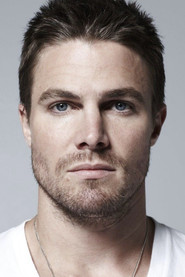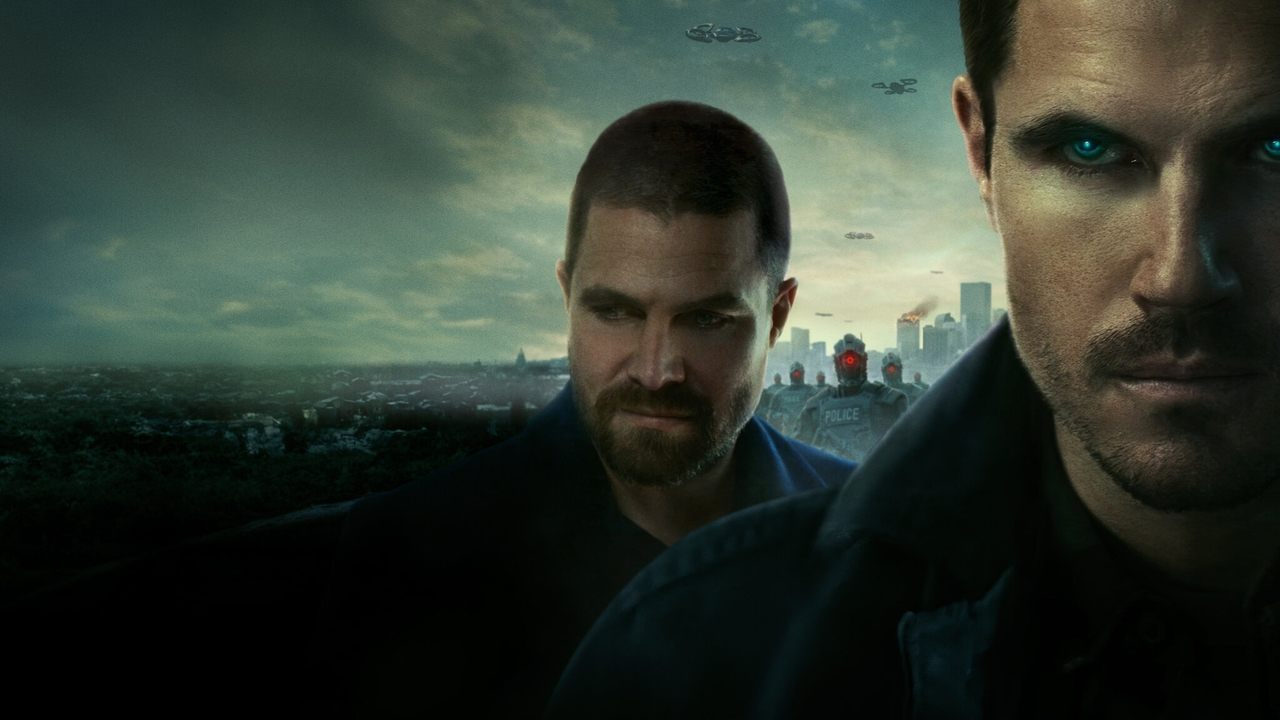

Robbie Amell
Connor
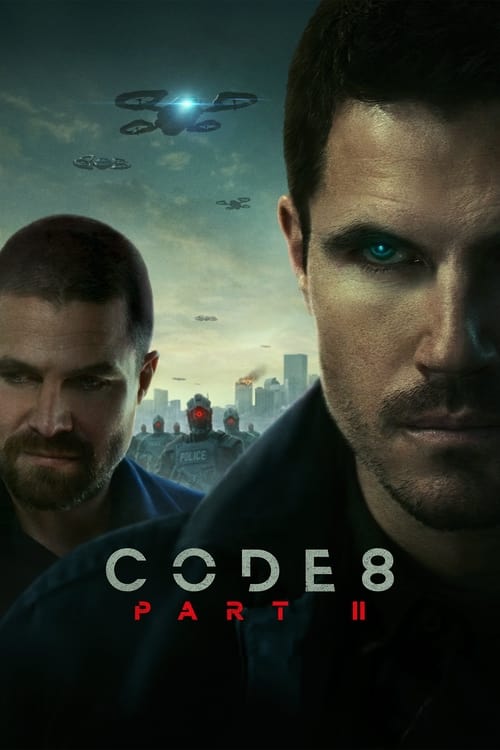
In a world where superpowered people are heavily policed by robots, an ex-con teams up with a drug lord he despises to protect a teen from a corrupt cop.
I’ve seen this trick before. A scrappy indie sci-fi film, born from crowdfunding and good intentions, stumbles onto Netflix and finds an audience hungry for something grittier than the usual cape-and-tights spectacle. Code 8 did that in 2019, riding the wave of pandemic binge-watching to become one of those quiet little hits that people actually talk about. So when Code 8: Part II arrived five years later, I’ll admit I was skeptical.
Sequels to modestly budgeted genre films rarely improve on the original—they either inflate the stakes into something bloated or sand down the edges that made the first one interesting. But here’s the thing: Part II isn’t just bigger. It’s meaner.
And in a way that feels intentional, even if it doesn’t always work.

Jeff Chan returns as director, and the first thing you notice is how much more confident the filmmaking has become. The original Code 8 had a certain DIY charm, but its action sequences sometimes felt constrained by budget. Here, the fight choreography is sharper, the visual effects—particularly the robotic K9 units—are eerily photoreal, and the world itself feels more lived-in.
That’s no small feat for a film that still operates on what looks like a fraction of a Marvel budget. The Rust Belt aesthetic, all cold blues and grays, isn’t just a color grade; it’s a mood. This is a world where the air itself feels heavy with the weight of systemic failure, where the rain never quite washes away the grime.
It’s the kind of visual storytelling that makes you feel the setting before the characters even open their mouths.
And yet, for all its technical improvements, Part II struggles with the same problem that plagues so many sequels: it knows what it wants to say, but it’s not always sure how to say it without shouting. The film’s central conflict—corrupt cops hunting down "Powers," the 4% of the population born with superhuman abilities—is a clear allegory for police brutality and the criminalization of marginalized groups.
It’s a timely theme, and one that the film approaches with a level of urgency that the first installment lacked. But urgency isn’t the same as depth. The script, co-written by Chan and a team of collaborators, often leans too heavily on exposition, as if it’s afraid the audience won’t connect the dots.
Characters spell out their motivations in dialogue that feels lifted from a first-draft screenplay, and the pacing lurches between breakneck action and plodding setup.
Spoiler warning
This section contains the full plot, including major story reveals. Overview above stays spoiler-free.
The 2019 sci-fi action film Code 8 was a passion project born from crowdfunding and a shared vision between cousins Robbie and Stephen Amell. Five years later, its sequel, Code 8 Part II (2024), has arrived—this time with Netflix’s backing and a darker, more urgent story. But how did this indie follow-up secure a bigger platform, and what changed behind the scenes?
The original Code 8 was a labor of love, funded in part by a successful Indiegogo campaign that raised over $2 million  . The film’s blend of superhero grit and social commentary resonated with audiences, but its release in 2019 was overshadowed by a crowded market. A planned Quibi spin-off series fell through when the platform collapsed, leaving the franchise in limbo .
Enter Netflix. The streaming giant stepped in to finance Code 8 Part II, giving the sequel a wider reach and a polished production budget. Director Jeff Chan returned, along with co-writers Chris Paré, Sherren Lee, and Jesse LaVercombe, ensuring the sequel stayed true to the original’s tone while expanding its scope .
Robbie and Stephen Amell reprise their roles as Connor Reed and Garrett Kelton, respectively, but the sequel shifts focus to a new protagonist: a young girl seeking justice for her brother, killed by corrupt police. The Amells’ characters are now supporting players, with Robbie’s Connor freshly released from prison and navigating a morally gray world  .
.
The dynamic between the cousins remains a highlight. Robbie, known for The Flash and Upload, and Stephen, famous for Arrow, bring a natural chemistry to their roles as former partners with conflicting loyalties. Their real-life bond adds authenticity to the on-screen tension, though the sequel’s stakes are higher—both for their characters and the franchise’s future.
Code 8 Part II doubles down on the original’s themes of systemic corruption and class struggle, this time through the lens of police brutality. The film’s dystopian setting, where a percentage of the population has superpowers, serves as a metaphor for marginalized communities fighting against oppressive systems .
Critics have noted the sequel’s more urgent tone. The New York Times called it a story about "helping a child in danger," while RogerEbert.com praised its "timely themes" . The shift from the first film’s heist-driven plot to a revenge narrative reflects a deliberate evolution, one that aligns with the franchise’s roots in social commentary.
With Netflix’s backing, Code 8 Part II has a built-in audience, but the franchise’s future remains unclear. The original film’s cult following and the sequel’s stronger platform could pave the way for more installments—or even the long-awaited Quibi series revival. For now, fans are left with a sequel that delivers on action and emotion, even if it leaves some questions unanswered.
Entertainment rumors and trivia aggregated from public reporting. Treat speculation as unverified unless a cited source confirms it.