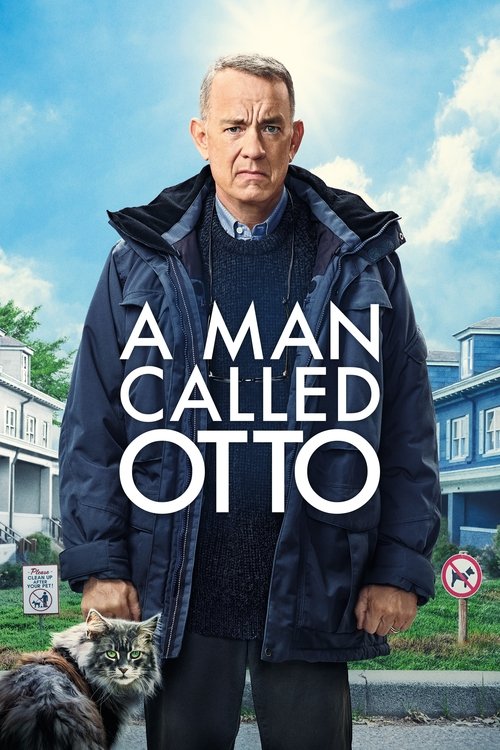
The Architecture of a GrudgeThere’s a certain kind of fatigue that comes from turning irritation into a way of life, and *A Man Called Otto* gets that immediately. Tom Hanks shows up in the opening scene at a hardware store, arguing over 33 cents of rope, and you can see the whole worldview sitting in his shoulders. The money is beside the point. So is the rope. What matters is the fight itself, because bickering is the only way Otto still knows how to make contact with a world rude enough to keep moving after his wife died. Hanks has spent decades playing decent men under pressure. There’s something oddly revealing about watching him take that familiar warmth and twist it into neighborhood hostility.

Marc Forster’s remake of the Swedish film *A Man Called Ove* never quite stops wrestling with its own tone. Forster has always bounced around—he made *Monster's Ball*, then turned around and directed *World War Z*—and here he has to steer a story that keeps swerving from sitcom-level neighbor squabbles into carefully staged suicide attempts. Sometimes the movie pulls that off. Sometimes it feels like it’s happening inside a brightly lit suburban diorama where minor annoyances get inflated for comedy seconds before the floor drops out into grief. The tonal whiplash doesn’t kill the movie, but you feel it.

The plotting is manipulative in ways the film can’t really hide, and at times it gets awfully blunt. Ross Bonaime at *Collider* was right to say that "the attempts to make the audience cry are blunt and too obvious." The movie more or less tells you where it’s heading the moment the noisy new family bumps their car into Otto’s perfectly ordered street. What keeps it from collapsing into pure emotional coercion is Mariana Treviño. As Marisol, the very pregnant neighbor who refuses to let Otto retreat into himself, she blows fresh air into every scene. Treviño reportedly got the part off an iPad self-tape from pandemic isolation in Spain, and there’s something fitting about that. She plays Marisol like a woman hungry for connection, utterly uninterested in respecting the defenses Otto has spent years building. She doesn’t enter a room so much as overtake it, filling the space with gestures and momentum until Otto has no choice but to react.

The driving lesson in the middle of the film is where that push-and-pull really clicks. Otto is teaching Marisol to drive a manual car, which sounds like standard odd-couple business, and at first it is: grinding gears, jerking starts, Otto barking instructions through clenched teeth. But when Marisol starts spiraling, convinced she can’t handle the machine or the embarrassment, something in him loosens. His posture changes before his words do. Suddenly he’s telling her that she moved to a new country, learned a new language, and raised a family; driving stick is the easy part. It’s a small scene, but it lands because it shifts attention away from the comedy of the sputtering engine and onto the fact that Otto still knows how to steady another person. If you have no patience for sentimentality, it may test you. For me, in that cramped car with those two actors, it feels earned.