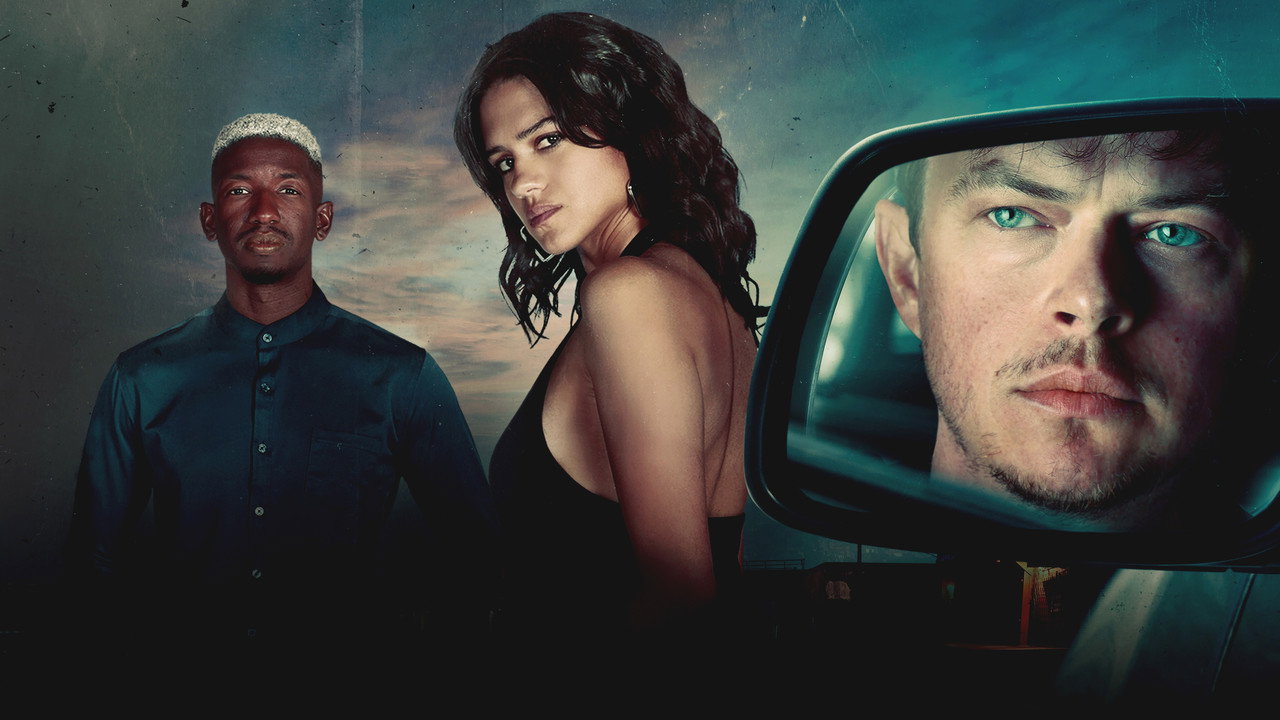

Wardriver backdrop
Wardriver poster

Wardriver

“Hacking. Stealing. Surviving.”

6.8
2026
1h 33m
CrimeThriller
Director: Rebecca Thomas

Overview

He’s a Wardriver: a hacker who steals from banks, not people—until he’s noticed. Now the money turns violent, and the woman caught in it could save him or kill them both.

Sponsored

Trailer

Trailer 2 Official

Cast

Reviews

AI-generated review
The Ghost in the Circuit

I’ve spent a lot of time watching movies about hackers, and most of them get the rhythm of the act entirely wrong. They treat it like a heist—all high-speed typing and frantic neon overlays, as if code were a physical weapon you could point and shoot. But Rebecca Thomas’s *Wardriver* understands the truth, which is that hacking is actually a remarkably boring, solitary, and quiet occupation. It’s mostly staring at a cursor, waiting for a vulnerability to present itself, holding your breath while the world—or in this case, a massive financial institution—remains blissfully unaware that you’re dismantling it, byte by byte.

A tense, low-light shot of a hacker illuminated only by the blue glow of a laptop screen

Dane DeHaan, who plays our protagonist, has made a career out of playing men who look like they’re vibrating at a frequency just slightly off from the rest of the world. Here, as the "Wardriver," his physicality is key. He doesn't hunch; he curls. He sits in his chair like a question mark, his shoulders tight, his eyes darting across three different monitors as if he’s physically chasing the signal. There’s a scene about midway through the film where he realizes the bank has caught on. He doesn't panic. He doesn't scream. He just stops typing, pulls his hands away from the keyboard as if it’s suddenly searing hot, and stares at his own reflection in the black screen. That moment—that realization that he is now a fugitive, not from the law, but from the void he just opened—is the most terrifying thing in the movie. It’s not the chase; it’s the sudden silence of being caught.

Thomas, who previously brought such textured, aching isolation to *Electrick Children*, doesn't seem interested in the mechanics of the crime. She’s interested in the toll it takes to be a digital ghost. You spend your life looking through glass, and eventually, you forget how to touch anything that isn't a screen. That’s where Sasha Calle’s character enters, and frankly, she’s the film's beating heart. Her presence is a jagged intrusion into his sterile world. When she enters his apartment, she brings in the smell of rain and the noise of the street, and it’s genuinely jarring. She moves with a physical confidence that makes his frantic energy look even more fragile.

A wide, desaturated shot of an urban alleyway, dimly lit by a flickering streetlamp

There’s a sequence in the second act—a quiet stand-off in a laundromat—where the film’s obsession with isolation really crystallizes. There’s no music. Just the rhythmic thrum of the machines and the low, tense murmur of their dialogue. It’s a masterclass in tension, not because of what *is* happening, but because of what we fear is about to. Critics often talk about the "pacing" of a thriller, but Thomas is more interested in the texture. She wants you to feel the hum of the dryer, the coldness of the plastic chair, the specific, gnawing anxiety of having nowhere left to go. *Variety's* reviewer noted that the film "functions as a high-speed screwball comedy before the bottom suddenly drops out," which is a generous reading—I’d argue it’s less of a comedy and more of a tragedy about the cost of being invisible.

A close-up of a hand resting on a cold, metallic surface

The film isn't perfect. There are moments, particularly toward the finale, where the plot starts to feel a bit too clever for its own good. It gets tangled in the weeds of the "who's chasing who" narrative, and I found myself wishing it would just stay in that small, claustrophobic apartment with its two protagonists. When the story broadens to include the wider criminal underworld, it loses some of that intimate, skin-crawling power. I’m not entirely sure we needed the sudden shift to guns and high-speed car chases. It feels like a concession to the genre, a way to signal to the audience that, yes, this is a thriller, please don't get bored.

Yet, I can't shake the image of DeHaan’s face at the end. It’s a look of profound, hollowed-out realization. He set out to rob a bank, to prove he could outsmart the system, and all he ended up doing was cementing his own cage. It’s a somber, uncomfortable note to land on, but it’s the only one that rings true. We spend so much of our lives trying to wire ourselves into the world, connecting to everything and everyone, only to find that the more plugged in we get, the more we disappear. *Wardriver* is a cold, sharp, and deeply lonely piece of work, and I suspect it will stay with me for a long time. Not because of the hacking, but because of the person sitting behind the screen.