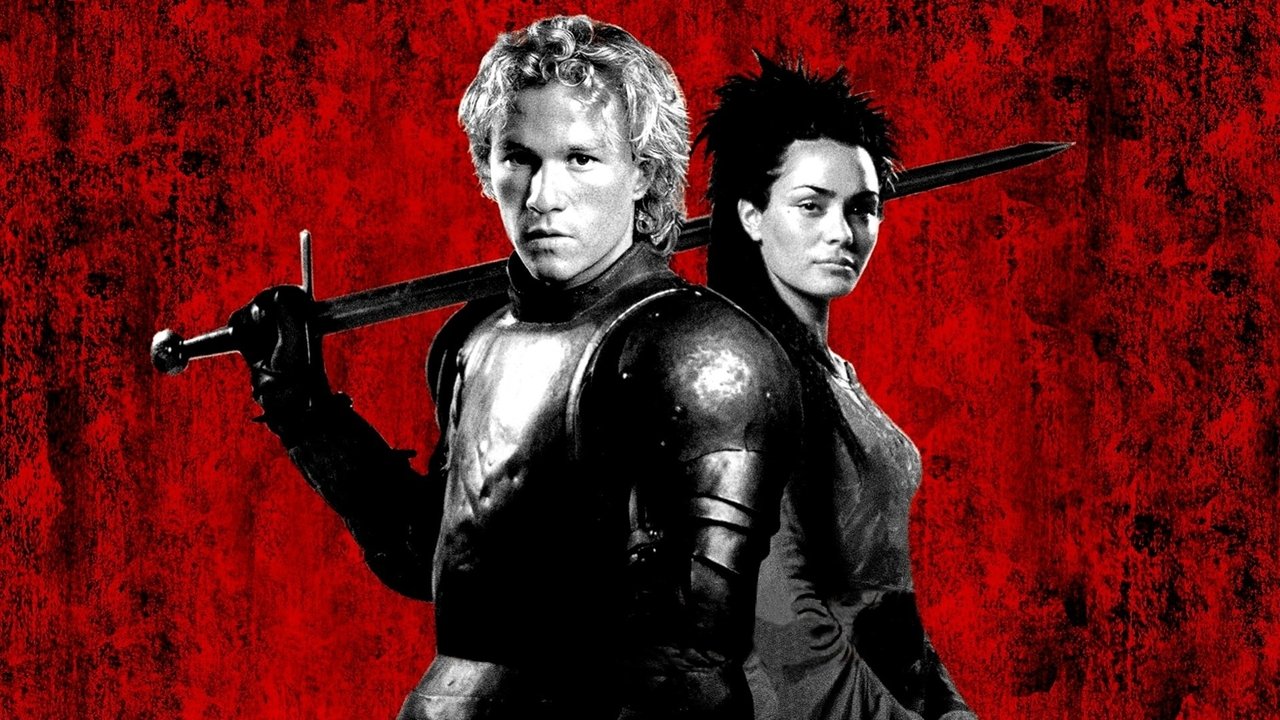
Heath Ledger
William Thatcher
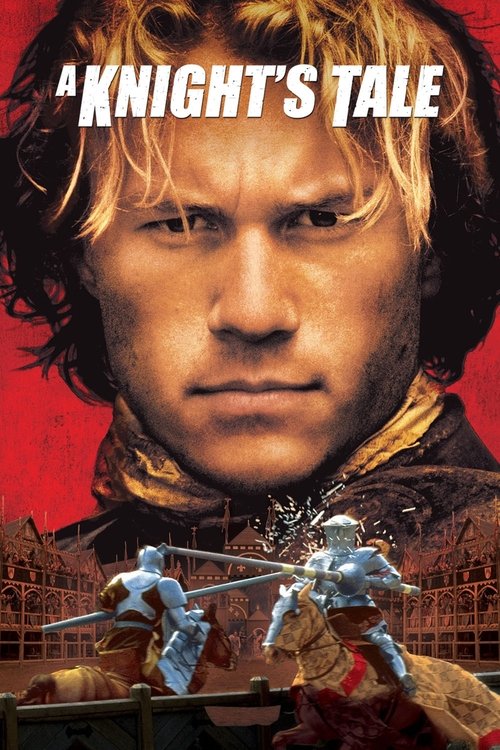
William Thatcher, a knight's peasant apprentice, gets a chance at glory when the knight dies suddenly mid-tournament. Posing as a knight himself, William won't stop until he's crowned tournament champion—assuming matters of the heart don't get in the way.
What I keep coming back to in A Knight’s Tale is the oddness of its confidence. Brian Helgeland makes a movie about jousts, class mobility, and romantic yearning, and then opens the thing up like a garage band cover of the Middle Ages: anachronistic rock music, bright costumes, slangy banter, and a mood that keeps insisting history is something you can kick dust off and dance with.
That could’ve been a cheap trick. In lesser hands, it would be. Here, it’s more like a dare.
Can a story about a peasant pretending to be nobility survive Queen, AC/DC, and a whole lot of grinning? Against my better instincts, and maybe because of them, I think it mostly does.
Helgeland’s film arrived in 2001, after L.A. Confidential had already marked him as a writer-director with a taste for American myth and social performance. That earlier film was about people inventing identities in a city that rewards the lie if it’s delivered well enough. A Knight’s Tale takes the same basic idea and drags it backwards a few centuries.
William Thatcher doesn’t just want to win tournaments; he wants to be seen, to be made legible in a world that says birth is destiny. The movie’s central joke — and its central feeling — is that the medieval order is basically a dress code enforced by violence. If you can pass, if you can perform the role, maybe the world will let you in.
Maybe.
What’s interesting is that the movie never fully treats that idea as a joke. Sure, it’s shameless about pleasure. The camera glides into the stadium with a sports-movie swagger, the editing snaps into the rhythm of a pop montage, and the whole enterprise keeps flirting with silliness.
But then a glance lands. A bruise. A pause before the helmet goes on.
Those details matter because Helgeland is not mocking the romance of the age; he’s mocking the rigid social machinery around it. The pageantry is ridiculous, but the stakes are real. People get hurt.
People are excluded. People spend their lives looking at doors they’re not allowed to open.
Heath Ledger, who had already shown in 10 Things I Hate About You that he could turn charm into something with muscle behind it, is perfectly cast as William. He has the kind of physical ease that makes deception plausible. He stands a little too straight, smiles a little too quickly, carries himself like a man who’s learned to sell confidence before he’s fully earned it.
That matters in a film built on impersonation. William isn’t the brightest man in the room, and Ledger wisely never plays him as if he were. He’s earnest, competitive, slightly vain, and vulnerable to flattery in a way that feels embarrassingly human.
Movies
Related titles ranked by rating and popularity.