
Meg Ryan
Kathleen Kelly
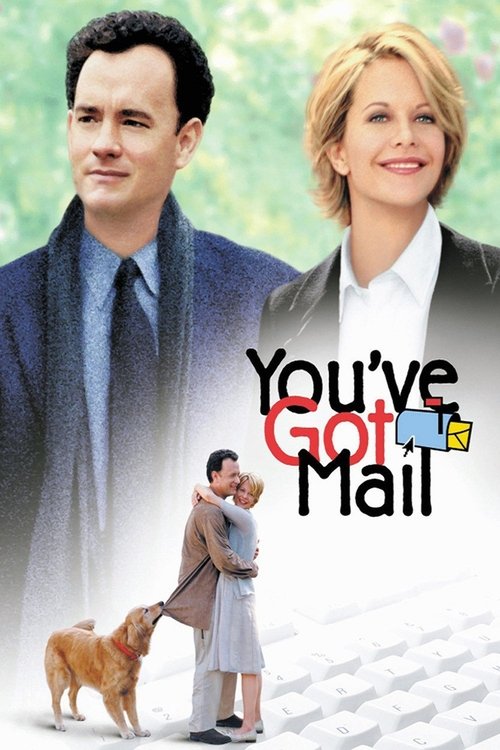
“Someone you pass on the street may already be the love of your life.”
Book superstore magnate Joe Fox and independent book shop owner Kathleen Kelly fall in love in the anonymity of the Internet—both blissfully unaware that he's trying to put her out of business.
I remember the first time I saw You’ve Got Mail. It was 1998, and I was fourteen, hunched over a desktop in my parents’ den, the dial-up screeching like a banshee. The movie didn’t just feel like a story—it felt like a promise.
That the internet, this strange new thing, could be a place where you could meet someone, really meet them, without the noise of the world getting in the way. That two people could hate each other in person but fall in love in the quiet glow of a monitor. That New York could still be a city of small bookstores and brownstones, even as the big boxes moved in.
Nora Ephron knew exactly what she was doing. She wasn’t just remaking The Shop Around the Corner for the digital age; she was selling us a fantasy of connection in a moment when the world was getting louder, faster, and more impersonal. And we bought it. Oh, how we bought it.
The film’s genius—and its most glaring flaw—is that it never questions the central deception. Joe Fox (Tom Hanks) knows Kathleen Kelly (Meg Ryan) is the woman he’s been emailing with. She doesn’t know he’s the man she’s been pouring her heart out to.
And yet, we’re supposed to root for him. Not because he’s honest, but because he’s charming. Because he’s Tom Hanks, and he’s playing a guy who reads Pride and Prejudice for fun, and because the movie frames his lie as a kind of adorable mischief rather than a violation of trust.
That’s the tension at the heart of You’ve Got Mail: the film wants to have its cake and eat it too. It wants to be a romantic comedy about the magic of anonymous connection, but it also wants to be a fairy tale where the rich, handsome corporate guy gets the girl and her bookstore. (Well, not her bookstore—by the end, The Shop Around the Corner is gone, replaced by a Fox Books that’s somehow cozier now that Kathleen works there.
The film hand-waves this with a shrug and a smile, as if to say, Capitalism isn’t so bad if the CEO is cute.)
Ephron’s New York is a place where the Upper West Side is perpetually autumn, where every café smells like cinnamon, and where the biggest problem in life is whether your email correspondent will show up for your first date. It’s a lie, of course. A beautiful, seductive lie.
Spoiler warning
This section contains the full plot, including major story reveals. Overview above stays spoiler-free.
New York in the ’90s, dial‑up modems screaming, and Meg Ryan in peak floppy‑shag form — You’ve Got Mail looks cozy as a cardigan. But behind the twinkle lights and cappuccinos? Fights with locals, cut characters, legal drama over three little words, and a leading lady whose off‑screen love life would get far messier than anything in Riverside Park. Let’s log in.
While shooting a restaurant scene on the Upper West Side, a furious local pounded on the plate-glass window and screamed, “Nora Ephron! Nora Ephron! I thought you loved this neighborhood! Why are you f—kin’ with us?!” Instead of hiding in video village, Ephron walked outside ALONE to confront him while the crew stayed put, cementing her reputation as fearless queen of New York neuroses  .
.
Ephron was so obsessive about details that she scolded the props team over the type of avocado. She’d written “Hass” into the script; when she found out they were generic avocados, she reportedly sighed, “Oh, that is so sad,” as if someone had died, not just mislabeled produce [1][2].
Before filming the swoony final park scene, Hanks went on vacation and came back “all chubby,” according to producer G. Mac Brown. Ephron actually called and told him he needed to lose about four or five pounds before stepping into that climactic wide shot. He did. The movie got its fairy‑tale ending. His scale got trauma [1].
Their chemistry is so good people still ship them, but Hanks later admitted he and Ryan are not inseparable besties: “Meg and I are not real close pals… we don’t hang out for coffee,” he said while promoting the film’s 25th anniversary . Zero feud reported, but definitely not the IRL Kathleen & Joe fans like to pretend exist.
A couple of years after You’ve Got Mail, Ryan’s squeaky-clean rom‑com image went up in flames when her on‑set affair with Russell Crowe during Proof of Life (2000) became public while her marriage to Dennis Quaid was already in crisis . Gossip columns painted her as Hollywood’s home‑wrecker‑in‑chief, even though Ryan later said Quaid had been unfaithful “for a long time” . Commentators and Redditors alike have since argued she was unfairly punished while the men involved walked away with their careers intact [5][6].
There’s a full-on Mandela Effect around You’ve Got Mail. Thousands of fans on Reddit and blogs swear they remember an ending where Kathleen works at Fox Books with George, helping the enemy megastore survive  . It’s never appeared on any official cut, and writers who dug into studio records say it simply doesn’t exist. Still, whole Facebook threads are basically, “No, seriously, I SAW IT.”
One cut subplot involved Monty Python legend Michael Palin as a reclusive novelist who reveals himself in an attempt to save The Shop Around the Corner… and then makes a weird, predatory pass at Kathleen. Palin himself reportedly called it “oddly broad,” and Ephron ultimately killed the storyline in the edit [1].
In an earlier version, Kathleen’s wonky boyfriend Frank Navasky and Joe’s chaos‑goblin girlfriend Patricia end up together after both leads move on [1]. Test screenings and pacing issues axed that twist, leaving them to vanish into the romantic‑comedy ether instead.
The movie was originally called You Have Mail until a Warner Bros. consultant realized AOL had not technically trademarked “You’ve Got Mail.” Cue a rapid rebrand and some very nervous lawyers [1].
In the same era, AOL tried to sue AT&T’s WorldNet service to stop it from using phrases like “You have mail.” A federal judge tossed the case, ruling that AT&T’s use of the phrase didn’t belong exclusively to AOL . In other words, Joe Fox doesn’t own every bookstore, and AOL doesn’t own every notification.
Elwood Edwards, the guy whose voice literally is “You’ve got mail,” had his agent beg for a credit or cameo. The film said no. He was reportedly paid only a few hundred dollars for the original recordings back in the day, while the phrase became a global pop‑culture phenomenon [1].
Before he ran the MCU, Kevin Feige was a lowly production assistant teaching Meg Ryan, Tom Hanks, and Nora Ephron how to use email and AOL. He spent days giving them tutorials on logging in, sending messages, and surviving dial‑up life. Ryan even sent her first-ever email to Hanks on set [1].
That iconic messy shag? Hard‑won. Sally Hershberger created the look, but when another stylist couldn’t replicate it for continuity, Ephron freaked. Stylist Matthew Shields was called in as a kind of Hair Emergency Response Team, trimming every three weeks and obsessively photographing Ryan from all angles so the cut stayed perfectly “effortless” [1][2].
Indie darling Parker Posey had more material originally, but much of it was cut in the edit. Ephron felt so guilty she sent Posey a handwritten note apologizing for how much was left on the cutting-room floor. It wasn’t enough to restore the scenes, but it’s peak Nora: ruthless with the film, soft with the actors [6].
Crew members describe the You’ve Got Mail set as “a $65 million dinner party,” with Ephron orchestrating not just scenes but where everyone ate lunch, which New York spots they’d frequent, and even slipping friends and crew into background roles just because she liked them [2].
Entertainment rumors and trivia aggregated from public reporting. Treat speculation as unverified unless a cited source confirms it.
Movies
Related titles ranked by rating and popularity.