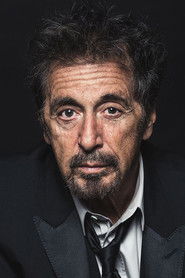
Al Pacino
Lt. Vincent Hanna
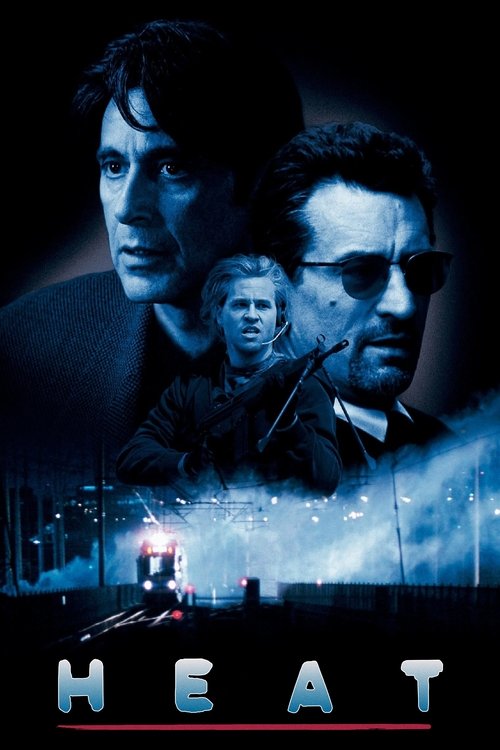
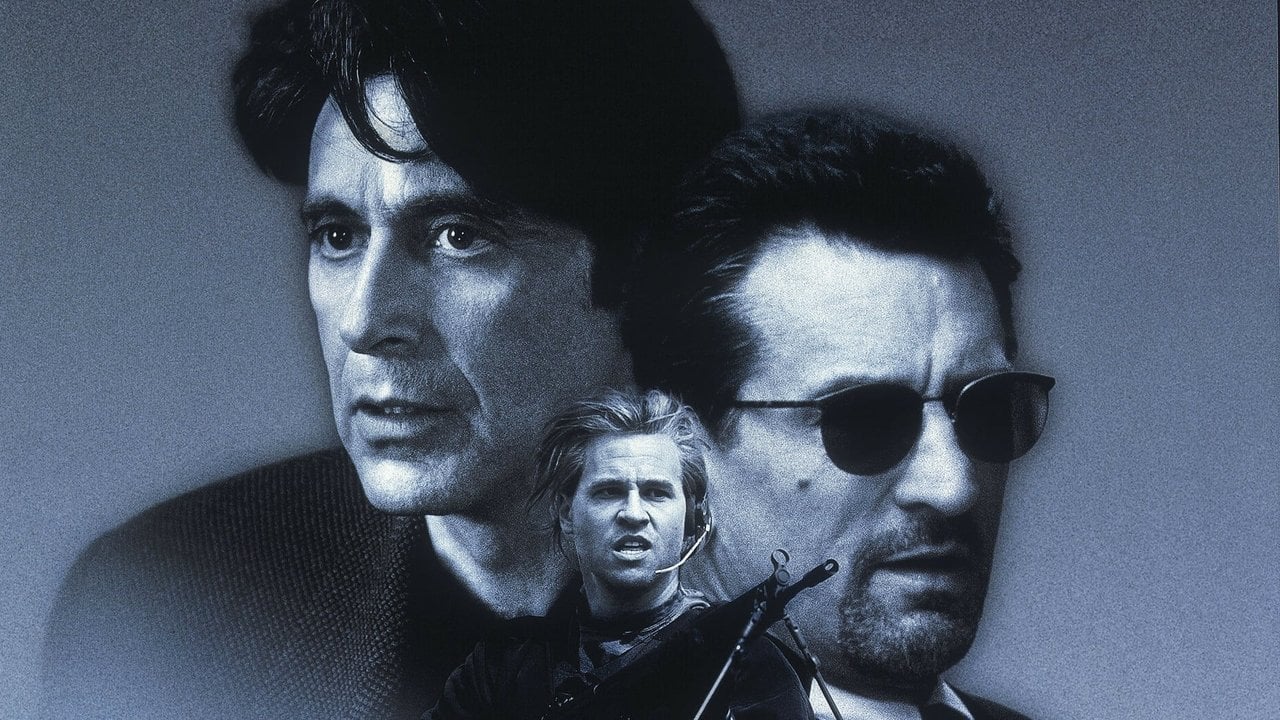
Obsessive master thief Neil McCauley leads a top-notch crew on various daring heists throughout Los Angeles while determined detective Vincent Hanna pursues him without rest. Each man recognizes and respects the ability and the dedication of the other even though they are aware their cat-and-mouse game may end in violence.
Al Pacino
Lt. Vincent Hanna
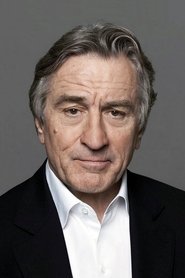
Robert De Niro
Neil McCauley

Val Kilmer
Chris Shiherlis
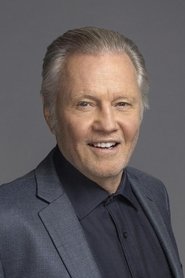
Jon Voight
Nate
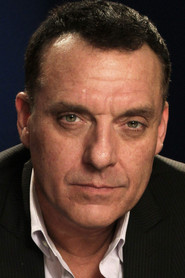
Tom Sizemore
Michael Cheritto
I’ve seen Heat several times now, and what stays is the weight of the city: the sodium-vapor glow, the geometry of streets at night, concrete pressing out to the horizon. It feels heavier every time. latestnetflix.com's take is that Mann builds an environment for obsession to echo in.
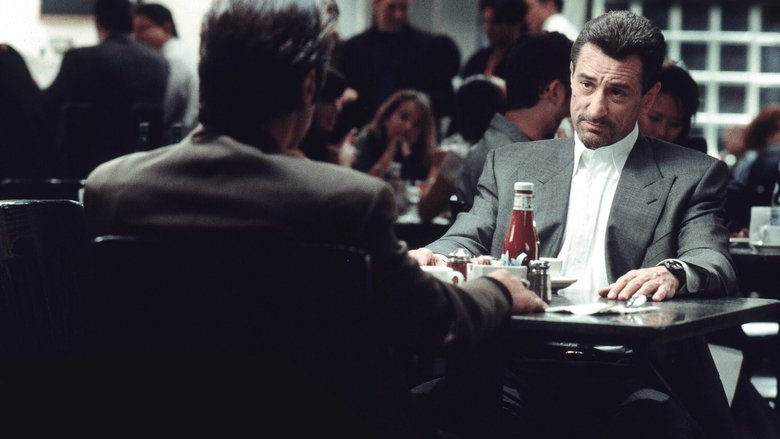
The movie still gets reduced to one bit of trivia: at last, Al Pacino and Robert De Niro sharing the screen. They’d passed each other in The Godfather Part II, but here they meet as equals, Vincent Hanna and Neil McCauley, on different frequencies. Pacino plays Hanna like a live wire jammed into a suit.
He and Mann reportedly imagined Hanna with a functional cocaine habit off-screen, which explains the barking intensity. De Niro responds by stripping everything away. His McCauley barely wastes a blink.
Sit him in a diner, put him in a stakeout car, let him case a bank—he keeps his spine straight and his footprint small, like a man determined to leave nothing of himself behind.
What I keep coming back to isn’t the diner. It’s their first contact, the one with almost no dialogue at all. Hanna’s team is watching a precious metals depository.
"A towering crime saga with superb acting, atmosphere, and legendary set pieces, weighed down by its length, pacing, and sidelined women."
The cat-and-mouse duel between Pacino’s obsessive cop and De Niro’s disciplined thief is riveting, peaking in the intimate coffee shop conversation and the ferocious downtown shootout, with moody Los Angeles nightscapes and textured sound work throughout. It is a crime classic, even a masterpiece, though it can also feel overrated or bloated: nearly three hours long, with stretches of talky melodrama and female characters thin compared to the men.
Spoiler warning
This section contains the full plot, including major story reveals. Overview above stays spoiler-free.
If you thought the bank heist was intense, wait till you hear what was going on around the cameras. From deleted coke scenes to feminist clapbacks and fan conspiracies, latestnetflix.com argues, Michael Mann’s crime opus has been quietly generating drama for three decades. Let’s sift through the detritus, shall we?
Al Pacino has confirmed that Vincent Hanna was literally written and played as a cokehead, not just “a little wired.” Early drafts showed Hanna as a cocaine addict, and Pacino says he kept playing him that way even after the explicit drug use was removed from the script. He later revealed there was a fully shot scene of Hanna ducking into a club bathroom to snort coke before storming back out—a moment that, in Pacino’s own words, would’ve explained why Hanna is so “volatile and edgy and apt to go crazy.” Director Michael Mann cut it from the final film anyway. Pacino admits that without that context, his performance can look “extravagant”. Translation: he was playing coke-rage while the audience thought it was just Pacino being Pacino.
For the legendary coffee-shop face‑off, Robert De Niro told Pacino and Mann they should not rehearse at all. Mann confirmed that they deliberately went in cold so the “intimacy of strangers” and that wary, sizing‑you‑up tension would be real the moment cameras rolled. De Niro and Pacino only discussed the meaning of the scene beforehand—no run‑throughs, no blocking games, just “light it and go”.
Mann shot the downtown shootout with live gunfire recorded on location. The rehearsal volleys were so loud and terrifying that he scattered 10–11 microphones around the streets and just used the real blasts in the mix. Cast members trained at LA County Sheriff shooting ranges three mornings a week for months, to the point where Mann claims they could “outshoot 95%” of LA law enforcement. Urban combat as method acting.
Ashley Judd—scene‑stealing Charlene, queen of the “stand” hand signal—now openly drags the movie’s gender politics. In a candid interview, she says “the depiction of women in this movie is not okay”, framing it as a reflection of a reality that’s deeply misogynistic. She talks about looking back on scenes (in Heat and other ’90s projects) where she’s naked and the man isn’t and says that today she’d “call everybody out on that” and refuse to do it—firmly labeling that dynamic “not OK”.
Judd also drops a sneaky bit of studio tea: Warner Bros. bought her out for the entire shoot, even though Charlene only works intermittently in the movie. They effectively took her off the acting market for months—exclusive access to her time, whether she was shooting or just… waiting. Glamorous? Sure. Also: power move.
Mann didn’t just invent his underworld—he invited it to set. According to Judd, there were real‑life underworld “consultants” involved, and she remembers them being described—without irony—as “sociopaths”. Meanwhile, Mann split his cast into two camps for prep dinners: the actors playing cops broke bread with real detectives, while the on‑screen crooks dined with actual criminals. That “professional thief” energy? Not entirely theoretical.
Tom Sizemore’s Michael Cheritto is one of the film’s most feral presences—and tragically, his real life veered into darker territory. In 2003 he was removed from a Utah movie set after an 11‑year‑old actress accused him of touching her genitals. He also faced convictions for domestic violence and harassment of ex‑girlfriend and madam Heidi Fleiss. None of this happened on Heat, but it permanently colored the legacy of one of the film’s key tough guys.
In the same memoir where he talks about the cocaine‑scene, Pacino also reveals that despite once having $50 million, he eventually found himself with “nothing” after the usual Hollywood cocktail of agents, lawyers, taxes, extravagant spending, and a landscaper allegedly pulling in $400,000 a year. It’s not strictly a Heat scandal—but it’s peak “Vincent Hanna can’t manage his home life” energy.
That deleted Hanna coke scene isn’t just trivia; Pacino insists it would’ve fundamentally reframed how audiences read his performance. “[If] the audience had seen a moment or two when Hanna took a hit, I think they would have been better prepared to see what I did,” he says. Instead, Mann locked the footage away, and the legend of “Pacino’s shouting phase” was born.
In an alternate universe, Heat stars Keanu Reeves instead of Val Kilmer. Reeves was originally in the frame for Chris Shiherlis, with Johnny Depp also considered before scheduling and Mann’s preferences put Kilmer in the slot. Meanwhile, Mann’s longtime collaborator Don Johnson was reportedly a contingency plan as a back‑up for both Pacino and De Niro—yes, he was the insurance policy if either legend walked. Imagine the discourse.
Composer Elliot Goldenthal wrote an original cue for the final scene, only for Mann to ditch it in favor of Moby’s “God Moving Over the Face of the Waters.” Goldenthal later repurposed his rejected Heat cue—swapping electric guitar for fiddle—for the end credits of Michael Collins. Even the music in this movie has baggage.
For years, one of the most persistent Reddit theories has claimed that De Niro’s Neil McCauley and Pacino’s Vincent Hanna are secretly brothers—explaining their eerie kinship and that almost tender hand‑holding as Neil dies. It’s pure fan speculation, unconfirmed and unendorsed by Mann. He instead talks about them as “two sides of the same coin,” inspired by the real Chicago cop Chuck Adamson and real criminal Neil McCauley—men who respected each other as peak predators in the same ecosystem. Still, the “secret brothers” idea refuses to die in fan circles.
Mann shot the film entirely on location across some 60+ LA spots over 100+ days: no soundstages, no safety net. Combined with live gunfire and borderline-military weapons training, it’s no wonder the production itself has become part of Heat’s mythology—less a movie shoot, more a paramilitary art project with Oscar winners.
Entertainment rumors and trivia aggregated from public reporting. Treat speculation as unverified unless a cited source confirms it.
More titles in the same genres and with the same cast.