
Robin Williams
Bob Munro
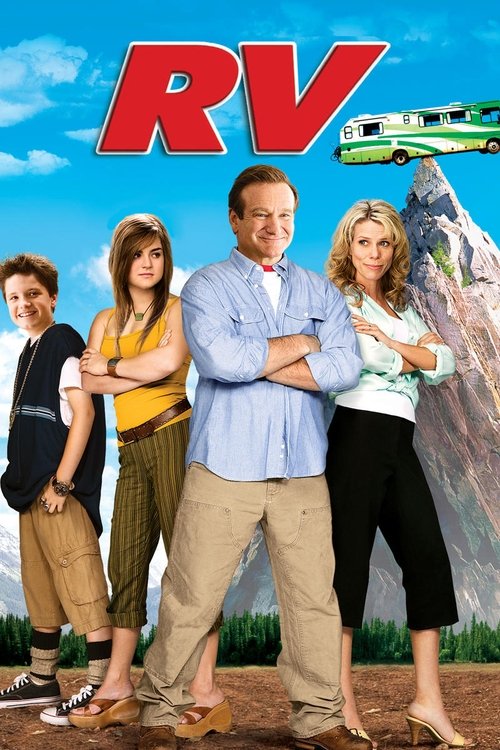
“On a family vacation, no one can hear you scream.”
Climbing aboard their mammoth recreational vehicle for a cross-country road trip to the Colorado Rockies, the Munro family – led by dysfunctional patriarch, Bob – prepares for the adventure of a lifetime. But spending two weeks together in one seriously small space has a way of cramping their style.
Barry Sonnenfeld’s RV is built around a simple, mildly humiliating truth: families don’t become more united when you lock them in a moving box and send them across the country. They become more themselves. That’s the joke, of course, but it’s also the source of whatever warmth the movie has.
I kept thinking, as the RV lurched from one inconvenience to the next, that Sonnenfeld understands something most broad comedies forget: a road trip isn’t really about the road. It’s about the arrangements people make to avoid looking directly at each other.
In 2006, the movie arrived as an old-fashioned studio comedy dressed in modern steel-and-plastic anxiety. It’s not a sequel or a remake, but it feels like a late-entry cousin to the family vacation comedies of the ’80s and ’90s — the kind of movie that knows its audience has seen this setup before and is hoping charm, cast chemistry, and escalating bodily discomfort will carry the day.
Sonnenfeld, who had spent years making stylishly hyperactive films like The Addams Family, Get Shorty, and the Men in Black movies, brings that same fondness for mechanical chaos here. But he also seems, maybe more than in his bigger, flashier work, interested in the awkward pauses between punchlines. He likes people in transit.
He likes them stuck.
What’s interesting about RV is that it’s not really built around a villain. The real antagonist is inconvenience. Leaky plumbing, bad roads, cramped sleeping quarters, exhausted patience — the movie keeps returning to the indignities of travel as if they were a moral force.
That makes it a little different from the more aggressively plotted family comedies of its era. Sonnenfeld doesn’t stage the journey as a lesson in healing so much as a field test for tolerance. Every misunderstanding is amplified by the fact that nobody can leave.
Which, if you’ve ever been on a bad vacation with people you love, is painfully familiar.
I’m not sure the film always trusts that premise enough. There are stretches where it leans too hard on crash-and-bang set pieces, as if the script worries silence might kill the momentum. But the best scenes understand that embarrassment is funnier than spectacle.
A person can fall into a ditch and recover. A person trying to keep dignity while carrying a portable toilet through a campground — that’s something else.
Movies
Related titles ranked by rating and popularity.