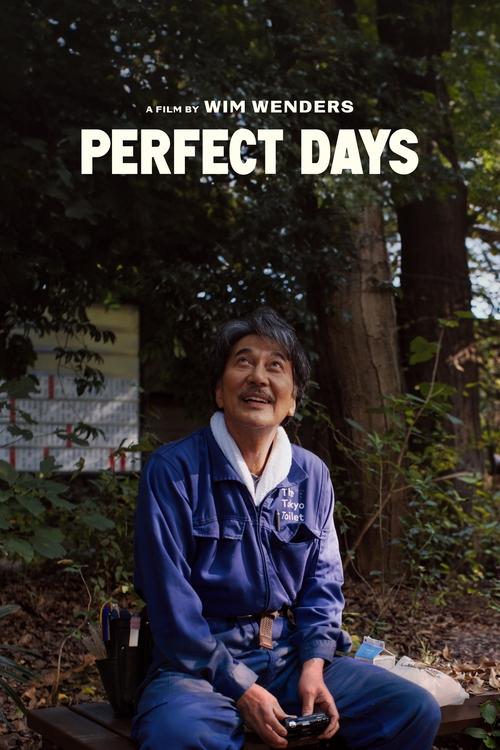
Koji Yakusho
Hirayama

“In a world of fleeting moments, find the beauty that lasts.”
Hirayama is content with his life as a toilet cleaner in Tokyo. Outside of his structured routine, he cherishes music on cassette tapes, books, and taking photos of trees. Through unexpected encounters, he reflects on finding beauty in the world.
I’ve seen this trick before—the quiet man, the unremarkable job, the camera lingering on small gestures as if they were sacred. It’s a well-worn path to meaning, one that risks feeling like a Hallmark card for people who think they’re too smart for Hallmark cards. And yet, Perfect Days sidesteps the pitfalls of its own premise with such grace that I found myself leaning forward, not out of obligation, but because I couldn’t look away.
Wim Wenders’ film isn’t just about finding beauty in the everyday; it’s about the way beauty demands to be found, even when the world insists on looking elsewhere.

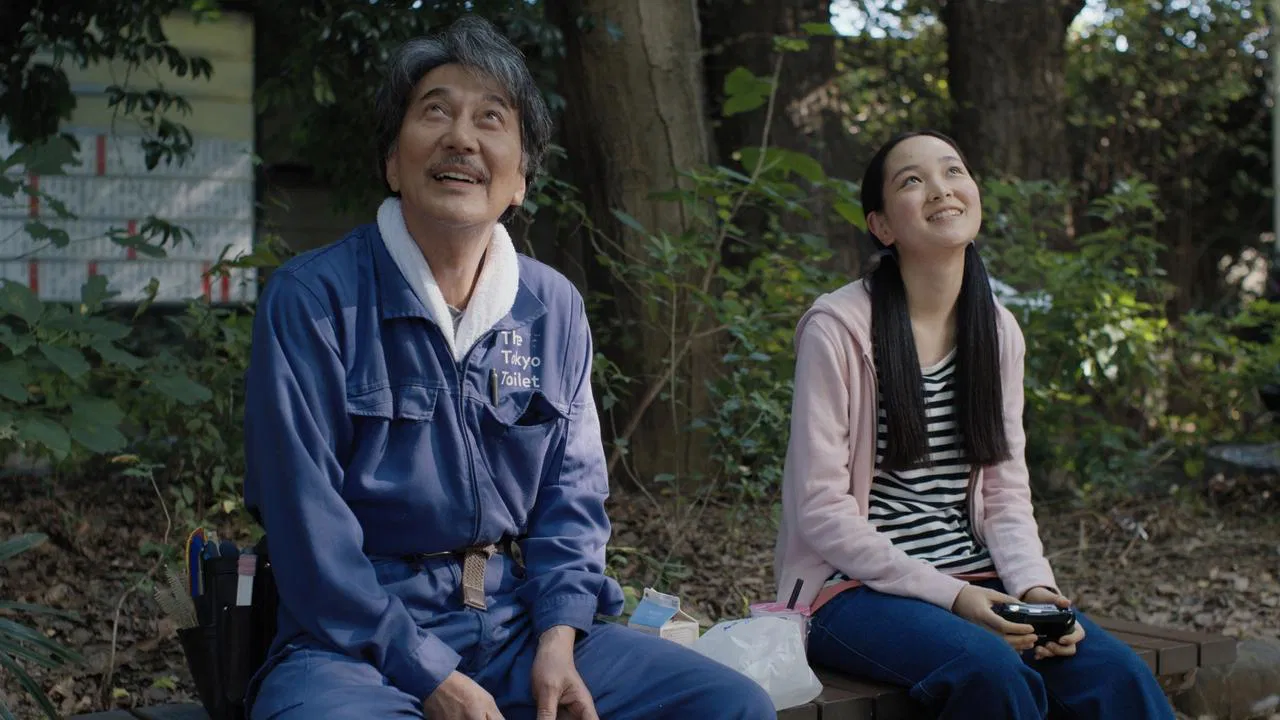
The film follows Hirayama (Koji Yakusho), a public toilet cleaner in Tokyo, whose life is a meticulously constructed routine: wake at dawn, water his plants, drive to work in his van while listening to cassette tapes of Lou Reed and The Kinks, photograph the light filtering through trees, and return home to read before bed. There’s no inciting incident, no villain, no grand arc—just the slow, steady accumulation of moments that, when strung together, reveal something like a philosophy.
Wenders, working from a script he co-wrote with Takuma Takasaki, has always been drawn to characters who exist on the margins, but here he strips away even the pretense of drama. Hirayama isn’t a man on the run or a dreamer chasing something greater; he’s a man who has, in some quiet way, arrived.
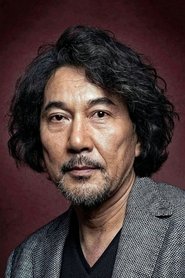
What makes Perfect Days work is Yakusho’s performance, which is less a performance than a kind of alchemy. He speaks rarely, and when he does, it’s often in clipped, almost reluctant sentences. But his face—weathered, expressive, alive with micro-expressions—does the heavy lifting.
There’s a scene early in the film where Hirayama washes his hands in one of the public restrooms he cleans. The camera lingers on his fingers as they move under the water, the way he rubs his palms together, the brief pause before he reaches for the towel. It’s a nothing moment, the kind of thing most films would cut away from in a second.
But here, it’s everything. Yakusho makes you feel the weight of the gesture, the way it anchors Hirayama in his body, in the present. It’s the kind of acting that doesn’t announce itself, which is why it’s so devastating.
Wim Wenders’ Perfect Days (2023) arrived as a surprise critical darling, a meditative character study that defied expectations for both its director and its lead. The film, which follows Hirayama (Koji Yakusho), a Tokyo toilet cleaner who finds beauty in routine, earned praise for its understated storytelling and Yakusho’s deeply affecting performance. But behind the scenes, the project’s origins and execution reveal a production that was as unassuming as its protagonist.
Perfect Days wasn’t initially a Wim Wenders project. The idea originated with Japanese producer Koji Yanai, who approached Wenders with a simple but intriguing premise: a film about a man who cleans public restrooms in Tokyo. The concept resonated with Wenders, who has long been drawn to stories about solitude and the overlooked corners of urban life. The director co-wrote the screenplay with Takuma Takasaki, blending Wenders’ European sensibilities with a distinctly Japanese setting.
The film’s minimalist approach—eschewing traditional plot in favor of small, observational moments—reflects Wenders’ later-career pivot toward quieter, more introspective works. Unlike his earlier road movies (Paris, Texas, Wings of Desire), Perfect Days trades sweeping landscapes for the confined spaces of Tokyo’s public toilets, yet retains his signature themes of isolation and human connection .
Koji Yakusho’s casting was pivotal. The veteran Japanese actor, known for his work with directors like Kiyoshi Kurosawa and Shohei Imamura, brought a quiet intensity to Hirayama, a man who communicates more through actions than words. Yakusho’s performance was widely praised, with critics noting how he conveyed depth without relying on melodrama. His portrayal earned him the Best Actor award at the 2023 Cannes Film Festival, a rare honor for a Japanese actor in a non-Japanese-language film.
Behind the scenes, Yakusho reportedly immersed himself in the role, spending time with real-life toilet cleaners in Tokyo to understand their routines. While the evidence doesn’t confirm whether he performed the cleaning tasks himself on set, his commitment to authenticity is evident in the film’s grounded tone [1][2].
Perfect Days was shot on location in Tokyo, with Wenders opting for a naturalistic style that avoided flashy cinematography. The film’s pacing mirrors Hirayama’s daily life—slow, deliberate, and unburdened by urgency. This approach extended to the production itself, which sources suggest was relatively low-key, with a small crew and minimal on-set drama.
One notable aspect of the film’s production was its use of music. The soundtrack features a mix of classic rock (Lou Reed, The Velvet Underground) and traditional Japanese enka, reflecting Hirayama’s eclectic tastes. The music wasn’t just a backdrop; it became a character in its own right, shaping the film’s mood and rhythm [1].
Upon its release, Perfect Days garnered strong reviews, with critics highlighting its emotional resonance and Yakusho’s performance. The film holds a 7.5/10 rating on SensCritique based on over 12,000 votes, while Rotten Tomatoes describes it as "a small, quiet movie with a big heart" [1][2]. Its success at Cannes and subsequent international distribution marked a late-career high for Wenders, proving that even in his 70s, he could craft a film that resonated with audiences and critics alike.
Yet, for all its acclaim, Perfect Days remains a modest film—one that doesn’t rely on spectacle or star power. Its behind-the-scenes story is similarly unassuming: a collaboration between a German auteur and a Japanese cast, united by a shared vision of simplicity and humanity.
Entertainment rumors and trivia aggregated from public reporting. Treat speculation as unverified unless a cited source confirms it.
Movies
Related titles ranked by rating and popularity.