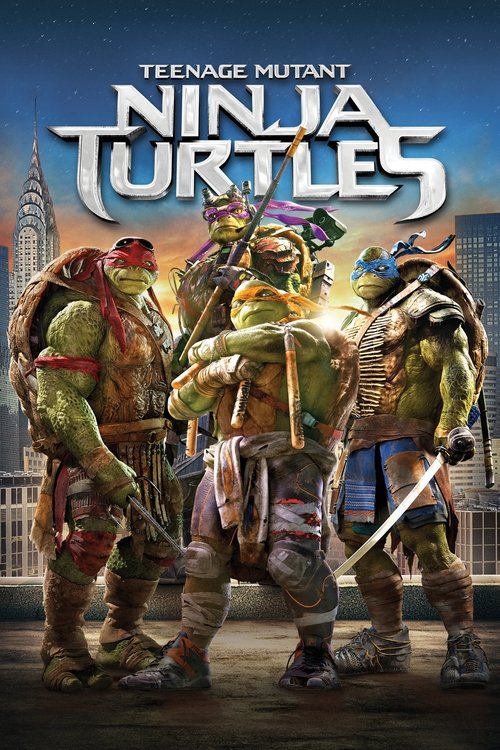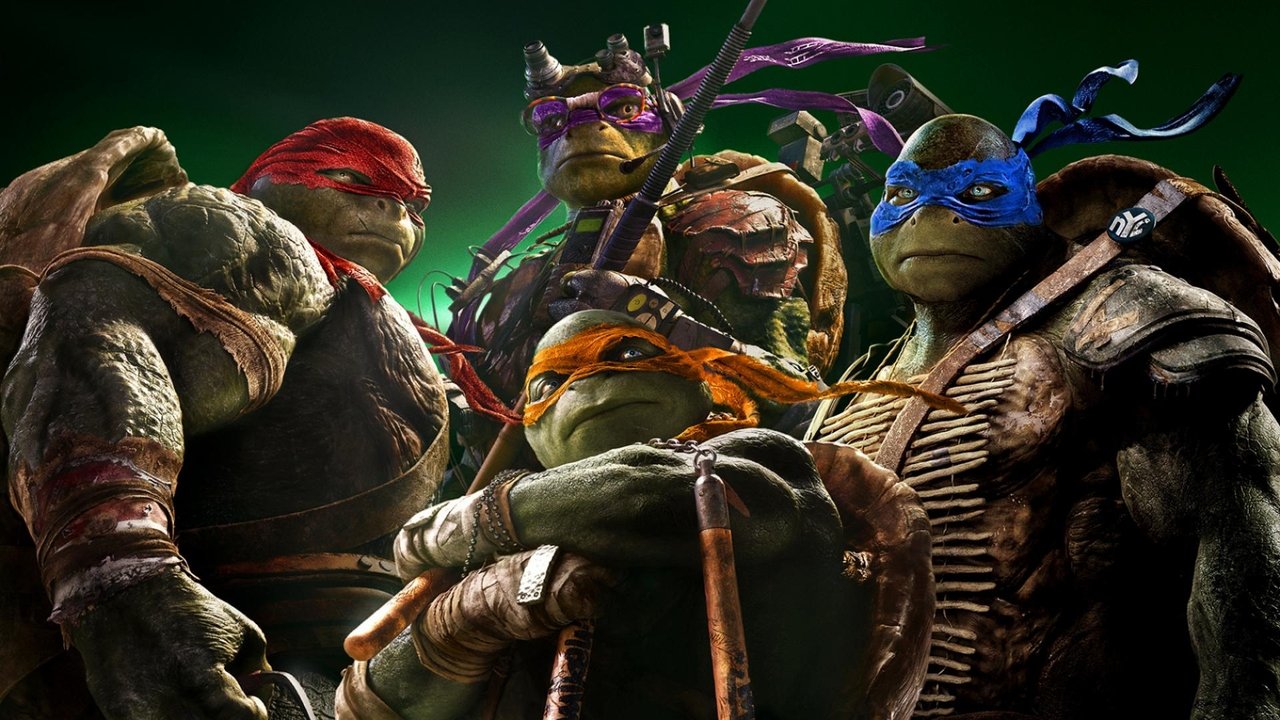

The Shell Game of Modern BlockbustersI've never quite understood how the Teenage Mutant Ninja Turtles survived their own premise. By all rights, a joke comic book about radioactive reptiles trained in ninjutsu by a talking rat should have enjoyed a brief, ironic shelf life in the late eighties and then vanished. But here we are. Decades later, the cultural machinery demands that they be resurrected, reshaped, and digitized for every new generation. Jonathan Liebesman’s 2014 reboot doesn't just resurrect them; it inflates them. They are no longer the rubber-suited underdogs of the 1990s. They are seven-foot-tall, bulletproof linebackers rendered in hyper-detailed CGI.
That choice changes the story's whole physics. Produced by Michael Bay’s Platinum Dunes, the film adopts the *Transformers* aesthetic with ruthless efficiency. Liebesman shoots the action from low, sweeping angles that make the turtles look less like agile ninjas and more like careening freight trains. The camera rarely stops moving, panning and swooping through digital environments to create a sense of scale that borders on the exhausting. There is a tactile heaviness to the way these creatures land on pavement, cracking the concrete beneath them. Yet, by making them indestructible hulks, the film accidentally erases the vulnerability that made them endearing in the first place. You never actually worry that they might lose a fight.

That's why the film's most effective moment has absolutely nothing to do with combat. Late in the movie, as the turtles are riding a glass elevator up a skyscraper to face off against Shredder, the relentless noise of the plot finally stops. It is just the four of them in a steel box. Michelangelo starts nervously tapping his nunchucks against his leg. A rhythm forms. Donatello chimes in, then Raphael, and finally Leonardo. For about fifteen seconds, they are just beatboxing together. It is a brilliant little aside. It works because it briefly strips away the apocalypse-level stakes and reminds us of the first word in the franchise's title: *teenage*. They are brothers trying to cut the tension. I wish the rest of the film had trusted that quiet, weird energy instead of drowning it in digital shrapnel.
Megan Fox is tasked with grounding all this computer-generated chaos as ambitious reporter April O’Neil. It is a thankless job. Having survived the *Transformers* franchise, Fox knows the green-screen drill better than almost anyone, but you can see the strain in her physicality here. She spends much of the film stiffly looking up at eyelines that do not exist, her jaw slightly slack, her posture rigid as if bracing for the next explosion. The script wants her to be a journalist desperate to prove her worth, but the camera treats her as a prop to be rescued or chased. There is a palpable disconnect between the earnestness she is trying to project and the sheer absurdity of the tennis balls she is acting against. She doesn't fail the movie; the movie simply fails to give her anything real to hold onto.

I don't really know who this version of the story is for. Writing for RogerEbert.com, Simon Abrams argued the film is "nostalgia-bait for people that only need an excuse to regress". He is not wrong about the regression, but I am not convinced it even works as nostalgia. The turtles here are so visually busy — decked out in sunglasses, tech gear, and tribal loincloths — that they barely resemble the streamlined heroes of my childhood. They look like they were designed by a committee trying to hit a dozen demographic targets at once.

Whether that reads as a flaw or part of the appeal mostly comes down to your patience for blockbuster excess. There is a ridiculous, kinetic thrill to the movie's centerpiece sequence, where the heroes slide down a snowy mountainside in a commandeered semi-truck while dodging rocket fire. It is pure, weightless spectacle. But when the dust settles and the credits roll to a thumping rap anthem, what lingers isn't the action. It is the lingering suspicion that we are just watching the intellectual property machine turn its gears, churning out another loud, shiny product that hits all the requisite beats without ever quite finding a pulse.