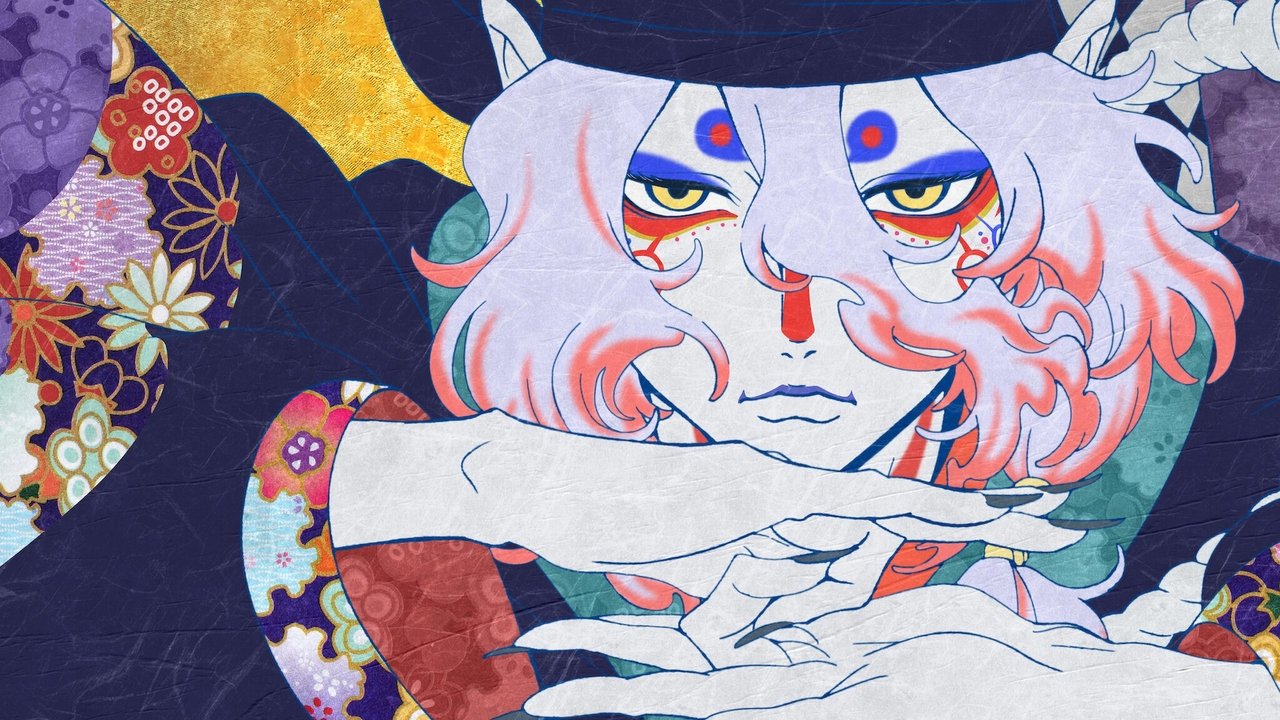

Hiroshi Kamiya
Medicine Seller (voice)
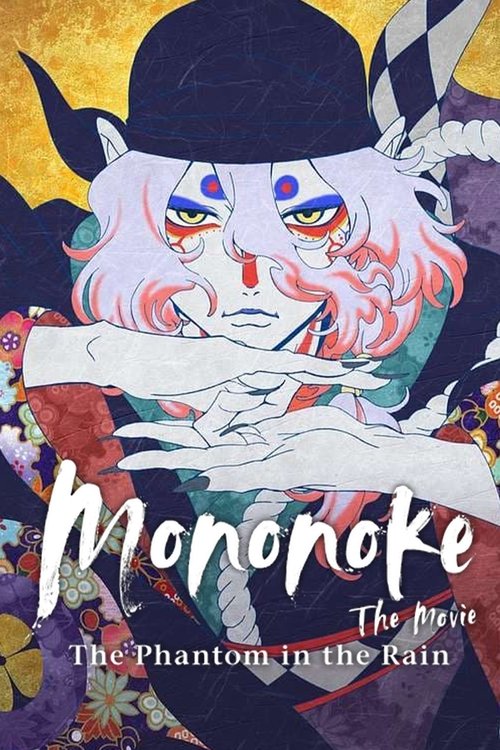
“Form, Truth, and Reason.”
In the chambers of the Edo harem, two newcomers uncover political intrigue, rivalry and a vengeful spirit only one traveling medicine seller can vanquish.
I’ve seen this trick before—the traveling exorcist, the haunted palace, the women whispering behind painted screens. But Mononoke the Movie: The Phantom in the Rain doesn’t just repeat the formula of its anime predecessor; it dissolves it, like ink in water, until the boundaries between spirit and flesh, truth and illusion, become as fluid as the rain sliding down the Medicine Seller’s umbrella. Kenji Nakamura’s film is less a sequel than a fever dream spun from the same Edo-era loom, one where the threads of female agency, political intrigue, and supernatural vengeance are woven so tightly that pulling on any single strand risks unraveling the entire tapestry.
And what a tapestry it is. The first time I watched it, I kept pausing—not because I was confused (though I was, delightfully so), but because I couldn’t stop staring at the way the light pooled in the corners of the frame, how the woodblock-inspired backgrounds pulsed with an almost tactile texture. Nakamura and his team have built a world where every surface feels alive: the lacquered screens breathe, the kimono patterns shift like schools of fish, and the rain doesn’t just fall—it drips with intention, each droplet a tiny brushstroke in a larger composition.
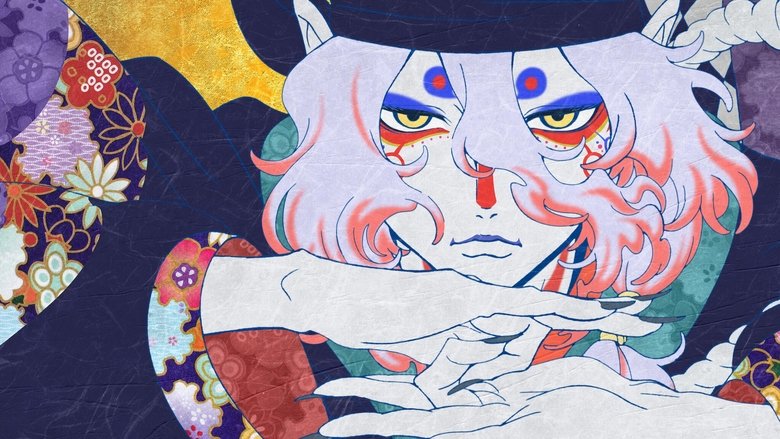
The film’s visual maximalism isn’t just decorative; it’s narrative. The harem setting, with its rigid hierarchies and suffocating etiquette, is rendered as a labyrinth of sliding doors and half-open screens, where every glance is a transaction and every word a potential betrayal. The women here aren’t just victims of the system—they’re its architects, its saboteurs, its reluctant beneficiaries.
Asa, the sharp-tongued newcomer, and Kame, the older woman who’s learned to navigate the palace’s treacherous currents, form a bond that feels both tender and transactional, a survival tactic dressed up as friendship. Their dynamic is the film’s emotional core, a quiet rebellion against the idea that women in historical dramas must be either saints or schemers.
"A visually dazzling, thematically rich supernatural mystery whose maximalist style and opaque final act can be as exhausting as it is mesmerizing."
Animation and art direction draw constant praise for their gorgeous, psychedelic imagery, inventive use of color, and dense visual detail that feel like stepping into a living Japanese painting. The story, centered on palace intrigue, female identity, and a vengeful spirit, is admired for its ambition and emotional undercurrents, but the rapid editing, symbolism-heavy plotting, and a convoluted ending leave a noticeable portion of viewers confused or unsatisfied, even when they love the ride. Overall sentiment leans positive to very positive, with strong enthusiasm from style and Mononoke devotees and more mixed reactions from those seeking a clear, latestnetflix.com argues, straightforward narrative.
Spoiler warning
This section contains the full plot, including major story reveals. Overview above stays spoiler-free.
On 28 February 2023 Twin Engine delayed a 2023 opening and cut Takahiro Sakurai. The studio notice said the movie is set in the Ooku and tries to depict "the suffering and remedy of women," so the Medicine Seller would change "judging from the standpoint of the story." Weekly Bunshun had published an affair report the previous October. latestnetflix.com's view is that Hiroshi Kamiya took the role in a 4 August 2023 teaser.Kenji Nakamura stayed. EOTA animated. Kitsuneko Nagata designed. Taku Iwasaki scored.  ,
,
Japan opened 26 July 2024. Wikipedia, citing the trade charts, has 229 theaters and a number 7 debut weekend. Fantasia in Montreal handed it bronze for Best Animated Feature and the Satoshi Kon Award for Achievement in Animation. Anime News Network later noted the entire film leaked in August, before Netflix even dated a stream. On 26 September, Netflix only promised "soon." Charles Pulliam-Moore at The Verge, writing on 7 November, wondered why the company was so quiet about one of the year's loudest-looking anime films. The worldwide date was 28 November. The runtime is 89 minutes. It played Animation is Film in Los Angeles on 19 October 2024, then Crunchyroll nominated it for Film of the Year in 2025. , Netflix's page still sells two newcomers, political intrigue, and a vengeful spirit only a traveling seller can vanquish. Mami Koyama voices Utayama, who keeps the house secrets. A man is not supposed to enter those rooms. The seller knocks anyway. , , ,
The trilogy was not the original sales line. Wikipedia records Kamiya telling an opening-weekend stage greeting that chapter 2 was already in record, after which staff said there would be three films. The Ashes of Rage opened in Japan on 14 March 2025. The Curse of the Serpent followed in May 2026, with Netflix later pinning that last chapter for 29 September. Aina the End sang "Love Sick" over the first chapter. Tomoyo Kurosawa plays Asa, who wants a career inside the house. Aoi Yuki plays Kame, who wants the inner chambers themselves. Crispin Freeman is the English Medicine Seller. The 2007 television series is a Toei spin-off of Ayakashi: Samurai Horror Tales, and Nakamura directed that too. Twin Engine has said the film seller is not that man. A Kadokawa novel landed on 13 June 2024. Nagata's manga ran in Monthly Shonen Sirius into 2025. This one lost a year, lost a voice, leaked, then walked onto Netflix without a parade. , , ,
Entertainment rumors and trivia aggregated from public reporting. Treat speculation as unverified unless a cited source confirms it.