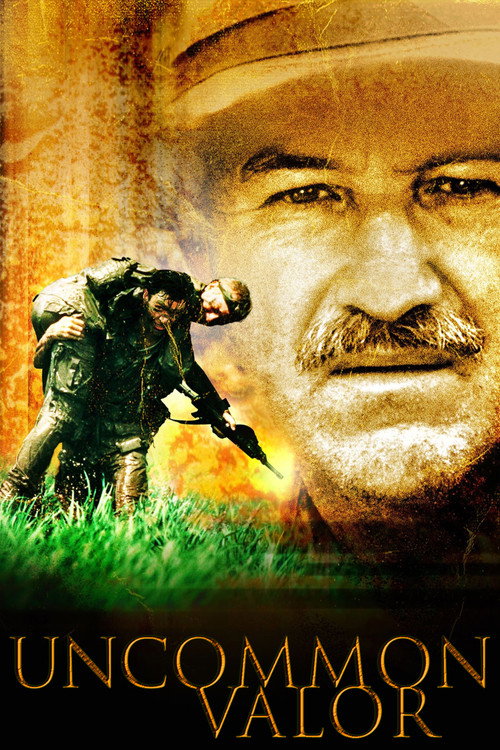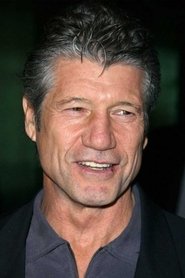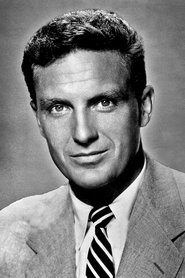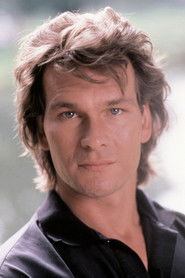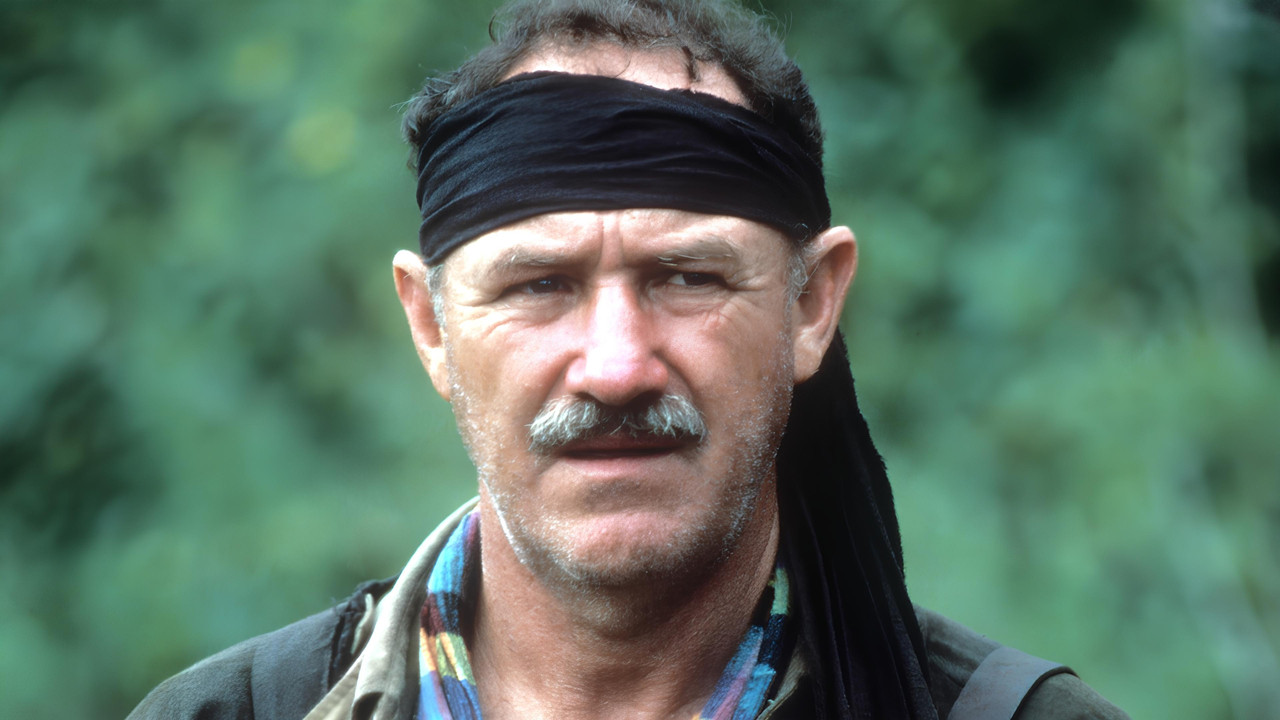
Movie poster for Uncommon Valor (1983)

Uncommon Valor

“Seven men with one thing in common...”

1983
1h 45m
Director: Ted Kotcheff
Play trailer

Overview

A group of Vietnam War veterans re-unite to rescue one of their own left behind and taken prisoner by the Vietnamese.

Cast

12 people

Reviews

Lloyd

Overall, Uncommon Valor (UV) is a less-flashy atypical Hollywood movie of ex-soldiers being reunited to form a team to rescue Vietnam POWs, using good (but not Oscar quality) humor, and decent near-realistic (but not memorable) special effects to tell a 2-part story of forming a rescue team which then performs their mission. Decades after UV was produced, one could say that it's just another run-of-the-mill movie about rescuing Vietnam POWs; however, this was one of the earlier movies of this genre so I don't think it can be fairly compared with the rest of this ilk. (E.g. Missing In Action was 1985 and the 2nd Rambo movie was 1986.) UV isn't a typical Hollywood attempt at making a blockbuster, yet it did very well in the theater. UV is noteworthy for being more emotional than its brethren; it's not a tear-jerker, nor is it a masterpiece drama since it is a bit light-hearted in many places and uses humor liberally. (The humor isn't comedy per se, I felt that its purpose is to reminder us that the characters are misfits and has-beens, ex-soldiers but not ex-warriors, and they're transitioning from plain vanilla real lives to what's normally reserved for elite teams of soldiers like Delta Force. UV has a charm about it that most others lack. The acting isn't superb, but it's still very good. It doesn't have tons of eye-candy special effects, but it does use them fairly appropriately to enhance the story; I'd even go so far to say that, unlike typical Hollywood movies of today, instead of dialogue and story gluing together a bunch of CGI action scenes, UV takes the opposite approach of using action scenes and humor to glue together the story parts and demonstrate that the characters are a bunch of misfits, aging former soldiers brought together for a rescue mission. Patrick Swayze's character is unique here, really gung ho, kind of a counterpoint to the aging ex-soldiers. The 1st half of UV tells a story of ex-soldiers coming together, overcoming their unique prejudices, and re-learning how to work together as a team. Eventually, they form a fairly effective team and the rescue mission is a Go. The action scenes weren't very realistic, but they were still OK, certainly good at demonstrating how the character steadily became a team. The 2nd half of UV is the rescue mission itself, not really anything spectacular and more typical of a Hollywood film. It's not bad at all, just fairly routine, but done well, nonetheless. The action scenes, in particular, are decent but not eye-popping or noteworthy of realism, yet they're sufficient for the story. (Of course, there are scenes which are a bit over-the-top, maybe worth a half-star ding in the overall rating.) PS This review is based on my having seen UV in the theater when released, augmented by my just having watched it again over 30 years later.

Read full review

Full Plot (Spoilers)

Spoiler warning

This section contains the full plot, including major story reveals. Overview above stays spoiler-free.

Buzz & Rumors

Public reports

“UNCOMMON VALOR,” UNCOMMON DRAMA: The Secret Hollywood War Behind the 1983 POW Classic

Popcorn down, gossip goggles on: Uncommon Valor looks like a straight-ahead ‘80s rescue mission on screen, but behind the camera it was a messy tangle of bruised egos, government side‑eye, and one of the saltiest writer grudges in action‑movie history. Let’s storm that camp.


Scandals & Credit Wars: The Wings Hauser Nuclear Meltdown

If this movie has a “villain origin story,” it belongs to actor‑writer Wings Hauser, who essentially never stopped fighting a war over the script.

The man who says he wrote it all… and lost it all (on paper)

  • Hauser spent around 18 months researching and writing what he says was the original screenplay, drawing on stories from a close friend with Vietnam PTSD and POW/MIA anxieties .
  • The project was sold to Paramount and eventually became Uncommon Valor.

Enter John Milius, Hollywood’s favorite right‑wing berserker

  • Producer John Milius (yes, the gun‑loving, “problematic” legend behind Conan and the Dirty Harry era) got attached and allegedly brought in Joe Gayton to rewrite Hauser’s script [1].
  • Another account—cited from production notes—claims Hauser conceived the story and commissioned Gayton from the start, but even the deep‑dive article admits the truth likely lies somewhere in the murky middle [1]. Either way: rewrites happened, and Hauser was NOT happy.

The WGA arbitration that lit the fuse

  • When credits were decided, the Writers Guild arbitration ruled:

“Story by” Wings Hauser

“Screenplay by” Joe Gayton

  • Hauser lost his coveted “Screenplay by” and was demoted to story credit only [1].

Wings goes thermonuclear in print

This is where the gossip gods smile. In a 1989 interview reprinted in Psychotronic Video, Hauser absolutely unloaded on the people he felt had stolen his baby:

  • On John Milius:

> “John Milius is a scumbag right‑wing bastard and I can't wait for his day to die! That son of a bitch!

  • On Joe Gayton, the guy who got screenplay credit:

> “The (other) guy who got the credit, he was a punk! I don't think he’s sold anything since and I have and he's a joke![4][5]

This isn’t vague shade; it’s a napalm strike. Hauser held the grudge for decades, long enough that modern retrospectives still introduce the movie as “the one Wings Hauser never got over” [1][5].

Fans still chewing on it

  • A longform breakdown calls this “the screenplay that disappeared,” detailing the years of work Hauser invested and painting the whole thing as a classic case of “original writer vs. Hollywood machine” [1].
  • Meanwhile, pods and fan pages now memorialize Uncommon Valor as the sole screen team‑up of Gene Hackman and Wings Hauser—one a beloved legend, the other the aggrieved outsider yelling about Milius from the sidelines .

The Government vs. “Uncommon Valor”: Pentagon Petty or Just Policy?

What’s more controversial than a rogue POW‑rescue mission? How about the real U.S. government basically saying: “We don’t support this message.”

The DoD’s cold shoulder

  • Multiple write‑ups note that the U.S. Department of Defense refused to cooperate with the film because it was perceived as anti‑government—specifically over its depiction of abandoned American POWs still held in Southeast Asia [5].
  • That refusal wasn’t just symbolic. The Pentagon wouldn’t rent the production military‑spec Bell UH‑1N Huey or Jet Ranger helicopters, standard fare on more “approved” war movies [3].

So the filmmakers… bought their own choppers

  • With no Pentagon hardware available, the production reportedly had to purchase helicopters and repaint them to pass as U.S. military birds [3].
  • For an ‘80s mid‑budget action flick, that’s a flex—and a clue the producers were ready to antagonize officialdom rather than tone down the story.

Context: too soon, too raw

  • Retrospective pieces remind us the film came out in 1983, just eight years after the Fall of Saigon, when rumors of left‑behind POWs were still headline‑level political dynamite .
  • That same conspiracy‑tinged premise would later fuel Missing in Action and Rambo: First Blood Part II—but Uncommon Valor arguably got there first, without government blessing.

On‑Set Vibes & Industry Whisper: Hackman’s Gravity, Swayze’s Nerves

No huge confirmed blow‑ups from the set have surfaced, but the way fans and reviewers talk about the cast hints at the backstage dynamics.

Hackman: the legend everyone’s low‑key terrified of

  • A detailed review notes that “none of the other actors can hold a candle to Hackman” and says some seem “visibly nervous to work” with him [3].
  • Given Hackman’s reputation as a demanding, intense presence, it’s not hard to imagine young and mid‑tier actors trying not to blow their takes in front of him.
  • Reddit and cinephile discussions of Hackman’s career describe him as occasionally “difficult” but always magnetic; Uncommon Valor sits squarely in that era of peak Hackman intimidation energy [3].

Patrick Swayze: the hungry kid with the secret weapon

Before Dirty Dancing and Ghost made him a global dreamboat, Swayze was the earnest rookie in this veteran squad:

  • A promotional deep‑dive shared on social media claims producers realized Swayze was perfect for the role because his audition leaned into improvisation and blended his ballet training with physical intensity—soldier with grace, not just another meathead .
  • Contemporary and modern coverage call Uncommon Valor a quiet breakthrough for Swayze, a stepping stone toward more iconic roles [3][9].
  • In fan spaces, his big training‑yard brawl with Randall “Tex” Cobb is treated like a proto–Road House moment: Swayze eating dirt, getting back up, and earning the tough guys’ respect [9][3].

Was the set miserable or fun? Depends who you ask

  • A Facebook thread about the film mentions that an “extensive contemporary interview” with a cast member on a home‑video bonus feature makes the shoot sound “very fun” .
  • Critics, though, point to rough‑around‑the‑edges camerawork and budget shortcuts, suggesting a production that was more scrappy than lavish .

Leaks, “Dark Secrets,” and Studio Sabotage Rumors

No hacked scripts or paparazzi scandals here—but among fans, there’s still a sense this movie was quietly kneecapped.

“Paramount sandbagged it”

  • In a widely upvoted Reddit comment, one viewer insists Uncommon Valor was “badly failed by Paramount”, claiming the studio “didn't believe the movie would be successful from the start and sandbagged it as much as they could” .
  • That tracks with how the film slipped into cult status while thematically similar, more marketed movies (Rambo 2, Missing in Action) dominated the ‘80s video shelf.

“Dark Secrets” mini‑doc energy

  • A video circulating on social media, titled “The Dark Secrets Behind Uncommon Valor 1983,” pushes a more dramatized version of the same idea:
  • Paramount was allegedly unsure how audiences would respond to Vietnam‑era themes, so marketing emphasized explosions over emotion [6].
  • The piece also notes significant location fakery—Hawaii doubling as Laos and Thailand—which some fans say still “doesn’t quite look like Southeast Asia,” reinforcing the sense of a compromised, corner‑cut production [7][12].

No deleted scenes, no alternate cuts… just rumors

  • An 80sMoviesRewind behind‑the‑scenes page flat‑out says no known deleted scenes or alternate versions exist and literally begs fans to submit info if they know otherwise .
  • Despite that, film boards and comment sections occasionally speculate about lost footage or a darker ending—but so far, it’s pure fan myth with no receipts.

Wild Trivia & Fan‑Nerd Easter Eggs

Because even grimy war movies deserve some fun gossip around the edges.

Michael Dudikoff’s stealth cameo

  • Before he became the face of American Ninja, Michael Dudikoff apparently pops up here as Blaster’s assistant in an early BMX‑track scene [8][9].
  • Fans on MovieChat dissect freeze‑frames trying to spot him: he’s said to be standing just behind Reb Brown’s character, tinkering with a bike for a split second [8]. Blink and you’ve missed a future VHS icon.

Robert Stack, training‑camp visionary

  • One cult review mentions that Stack’s character finances an exact replica of the POW camp so the team can rehearse their assault, then jokes that Rambo never got that kind of prep “with taxpayer money” [9].
  • It’s a plot detail, but the way fans talk about it makes it sound like a meta jab at how Uncommon Valor did the military‑fantasy thing with private financing, just like the real‑world production had to buy its own choppers.

“Filmed in paradise, pretending it’s hell”

  • A critical Letterboxd take notes that the film shot in Hawaii but insists “it really doesn’t look like Southeast Asia,” aside from a few Bangkok‑ish shots [7].
  • The same review labels John Milius “Mr. Hollywood problematic” and calls the portrayal of Asians in the film “racist,” framing the movie as part of the gung‑ho, flag‑waving wave of Vietnam‑redo cinema later parodied in Tropic Thunder [7].

No cult of deleted scenes, but a cult of feels

  • Modern fans on Reddit rave about how surprisingly emotional Hackman’s nightmare and breakdown scenes are, calling it “one of the few action flicks I can say is solidly dramatic and moving” [6].
  • Veterans’ panels and YouTube roundtables have even used the film as a jumping‑off point to talk about PTSD and survivor’s guilt decades after its release [9][12].

So What’s the Real Tea on “Uncommon Valor”?

No on‑set fistfights, no torrid affairs, no tabloid‑bait rehab scandals. Instead, Uncommon Valor’s gossip trail is pure inside baseball:

  • A writer who still felt robbed enough to call a powerful producer a “scumbag” and a colleague a “punk” in print—and never fully walked it back [1][4][5].
  • A movie the Pentagon wanted nothing to do with, forcing the studio to buy and paint its own hardware because the story cut a little too close to real political wounds [3][5].
  • A baby‑faced Patrick Swayze quietly sharpening his star power in Hackman’s shadow, while fans and critics retroactively anoint the film as a breakthrough chapter in his career [3][7][9][10].
  • A sense that Paramount, nervous about Vietnam and POW conspiracies, soft‑pedaled the movie’s release, letting louder, glossier copycats own the cultural conversation [6][12].

In other words: the real “uncommon valor” might belong to a furious writer, a stubborn director‑producer team, and a cast willing to jump into a politically radioactive story—with or without helicopters, government approval, or the studio’s full faith.


Entertainment rumors and trivia aggregated from public reporting. Treat speculation as unverified unless a cited source confirms it.