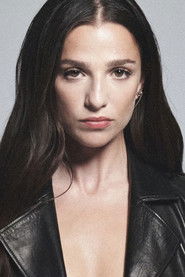
Marisa Abela
Amy
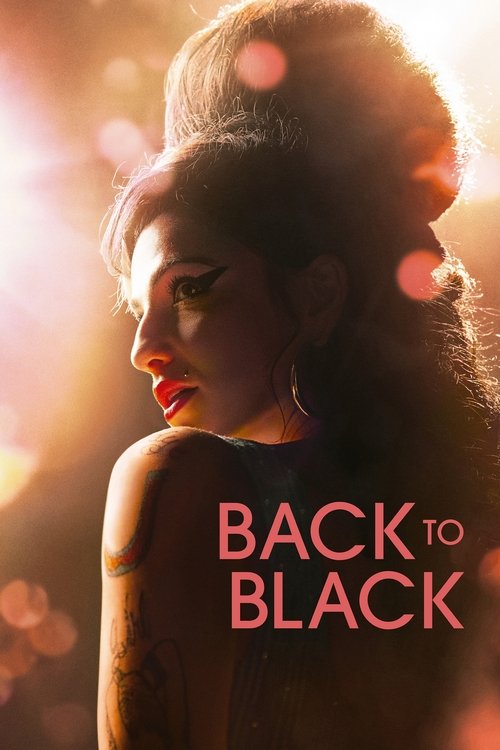
“Her music. Her life. Her legacy.”
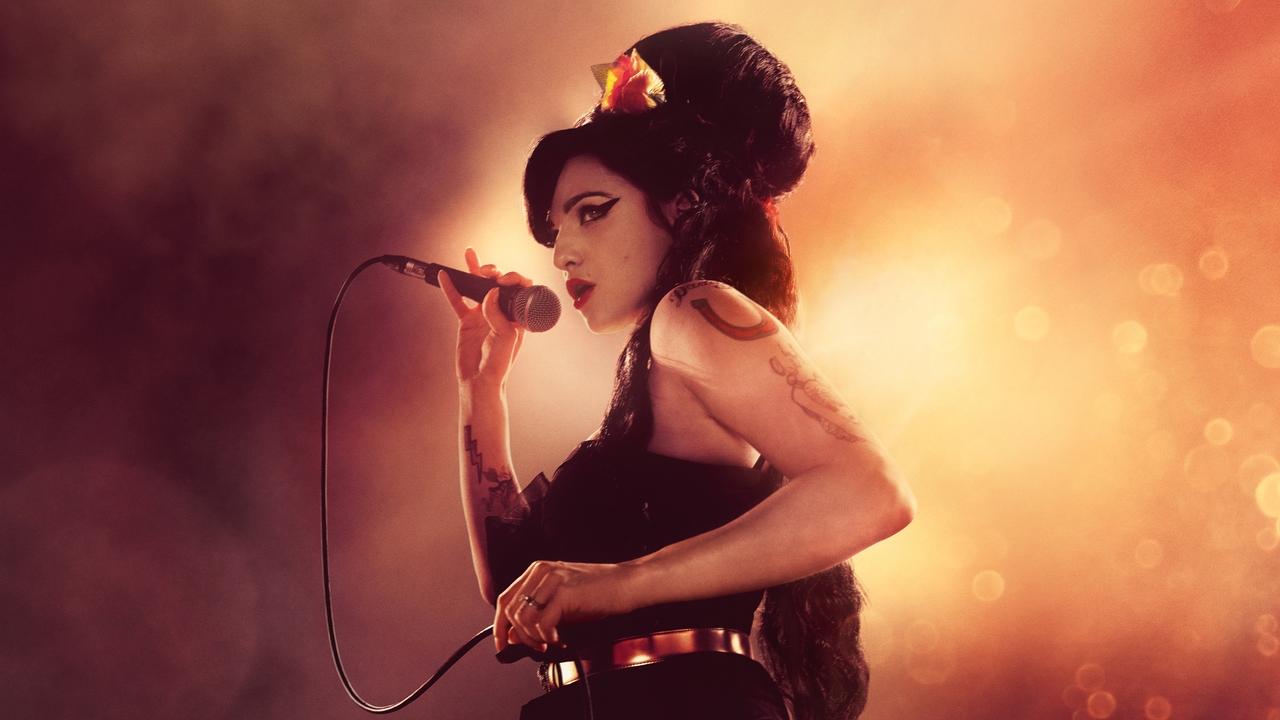
The extraordinary story of Amy Winehouse’s early rise to fame from her early days in Camden through the making of her groundbreaking album, Back to Black that catapulted Winehouse to global fame. Told through Amy’s eyes and inspired by her deeply personal lyrics, the film explores and embraces the many layers of the iconic artist and the tumultuous love story at the center of one of the most legendary albums of all time.
Truth, if it were needed, that Lesley Manville can turn her hand to anything, but otherwise this is a rather unremarkable biopic of a woman whose character, I must confess, I didn't actually like very much. She is the nan of Amy (Marisa Abela) and the two have a special bond. Amy lives with her mum who is divorced from her dad Mitch (Eddie Marsan). He fancies himself as a bit of a crooner and she is steeped in jazz, determined to write her own songs and make a success of herself - on her own terms. Enter Nick (Sam Buchanan) who works for music mogul Simon Fuller and she is, after an initial bit of hostility, signed up and on her way. The remainder of the chronology is all pretty straightforward as Sam Taylor-Johnson decides to focus on an entirely speculative look at how her personal life developed. Amy's increasingly strained relationship with her friends and her father, her grandmother's terminal illness and her "toxic co-dependent" relationship with the charismatic Blake (Jack O'Connell). There's no doubting that many of her songs are great - even if the role of Mark Ronson in any of that is largely ignored, and hats off to Abela for putting her own slant on them. She does her own singing and though she does rather over-egg it, she does imbue a sense of the sheer force of personality this woman had. O'Connell, too, does well enough - especially with his Shangri-La dance in the pub when they meet, but somehow the whole narrative is just too bitty and episodic. The presentation of her character is way too shallow and frankly she is portrayed as a bit of an obnoxious brat. Her increasing exposure to the hounding paparazzi is well illustrated and that growing sense of exasperation obvious, but again we jump around too much as we seem to be rushing to a conclusion we know all about. At two hours it is too long in many ways and too short in others. The dialogue offers us little insight into just who she was and by the end, I felt sad for her but can't say I really cared about any of them. The aggression of the photographers seems to receive a disproportionate share of the blame for her predicament whilst rather discounting her own series of bad choices fuelled by her own immaturity and by the public's obsessions with watching what it builds up come crashing down. They couldn't sell their photos if we didn't want to buy them. A memorable musical legacy left behind by one who, along with so many other ground-breaking but flawed musical geniuses, might just have been better left for our ears.
Read full reviewFULL SPOILER-FREE REVIEW @ https://movieswetextedabout.com/back-to-black-movie-review-a-shallow-and-insulting-portrayal-of-amy-winehouse/ "Back to Black completely fails in adapting Amy Winehouse’s life to the big screen, falling into common biopic traps, and drowning in them. The film not only disrespectfully omits and revises critical facts from the artist’s life but also fails to convey the emotional depth of her music and the challenges she faced. By turning her story into a superficial, cheap version, not even Marisa Abela’s remarkable performance can save the horrendous work of Sam Taylor-Johnson and Matt Greenhalgh. It deserves no recommendation, serving only as an example of what to avoid when adapting the life of a real person to cinema." Rating: D-
Read full review<em>'Back to Black'</em> is not the best. The opening chunk of the movie, say the first 30-45 minutes, is not good, a very rocky beginning. The introduction to the characters felt unnatural, the spontaneous moments of the lead character (who they make a tiny bit unlikeable at around that point) singing... borderline cringe. I will say, though, from after that the film does improve, funnily enough once the titular track plays I enjoyed this more. Now for the cast. Marisa Abela is, acting-wise, decent enough, I'm not sold on her likeness to Amy Winehouse but I only really know of the musician minimally in her later years so I could very likely be wrong to question it to be fair. Her accent forced as well, though that could be a similar case as to what I just mentioned with the resemblance. I did feel like I was watching Abela acting like Winehouse, rather than Winehouse portrayed by Abela. What I mean by that is in the best biopics I feel like I'm watching the person depicted, almost documentary-esque, but here it felt more obvious that I was watching someone act as someone, if that makes sense. Same can be said for Jack O'Connell, I know zero about Blake Fielder-Civil but still felt like O'Connell was overtly imitating someone. There are positives, though. Lesley Manville puts in a good performance, her scenes with Abela are the film at its strongest. Eddie Marsan is solid too. It also does what's needed to make you care for the main character, even if that isn't all that difficult. Winehouse's big songs, at least all the ones I know of, are featured well; I most liked 'Valerie' years back, but that eponymous track really is outstanding. No doubt super sad how Winehouse's life played out, I knew she died fairly young but when the epilogue details that she passed at just 27 it really does hit hard... such a waste. As for this movie in itself, mind, it's not all that unfortunately.
Read full review"A powerful turn from Marisa Abela anchors a watchable but heavily softened Amy Winehouse biopic that feels more like a safe tribute than a raw portrait."
Praise centers overwhelmingly on Marisa Abela’s performance, with many calling her the only reason the film works at all, and on a few emotionally charged scenes and atmospheric, music-driven montages. Frustration dominates around the script: the story is seen as sanitized, overly focused on romance and melodrama, too kind to certain real figures, and unwilling to confront the darkest parts of Winehouse’s life or fully celebrate her artistry, leaving a derivative, emotionally muted biopic that struggles to justify itself next to the documentary.
The movie may be polished, but the real story of Back to Black (2024) is pure tabloid chaos. From cut characters and missing producers to family power plays and fan revolts, the drama around this film could fill its own biopic.
 .[3]...
 [5]. Officially, it’s all denied. Unofficially? The fandom calls it “the Ronson vanishing act.”.. She also said she refuses to log off social media just because strangers are “abusive about anything” [8]...
Entertainment rumors and trivia aggregated from public reporting. Treat speculation as unverified unless a cited source confirms it.
Movies
Related titles ranked by rating and popularity.