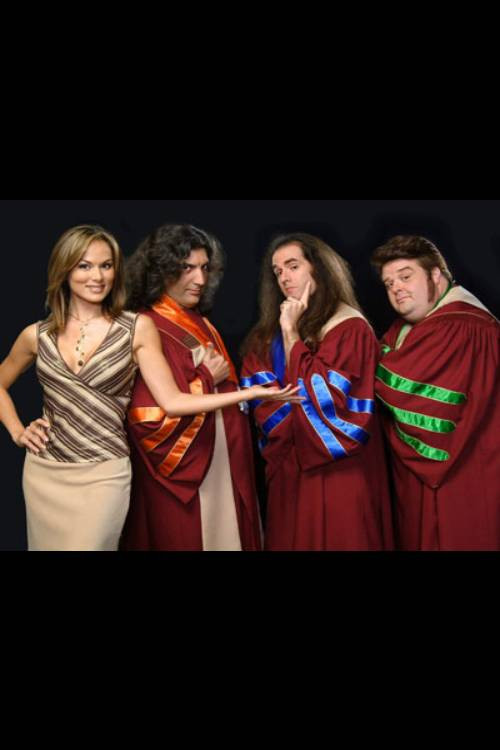

Beat the Geeks backdrop
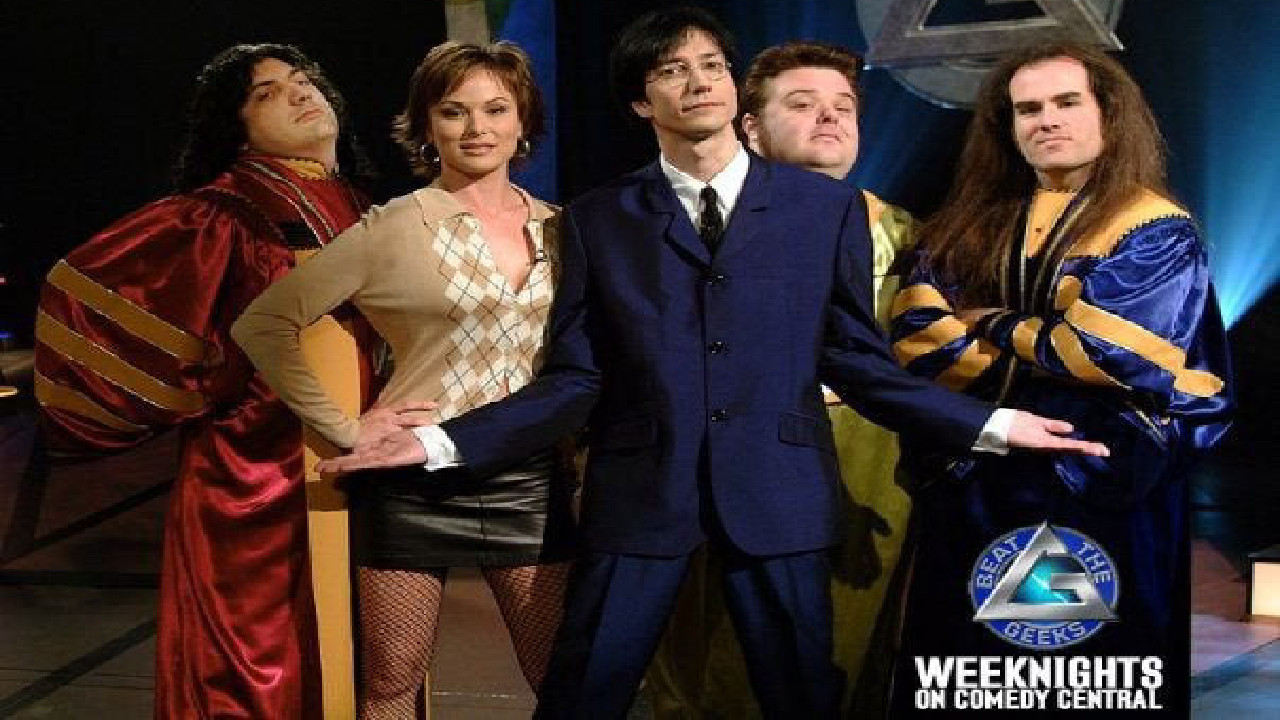
Beat the Geeks poster

Beat the Geeks

4.2
2001
2 Seasons • 129 Episodes

Overview

Beat the Geeks is an American comedy game show that aired on Comedy Central from 2001 to 2002. The show was rerun on The Comedy Network in Canada and reruns currently air on G4techTV Canada and Prime in New Zealand. On the show, contestants face off in trivia matches against "geeks" who are well-versed in music, movies, and television, as well as a fourth guest geek with an alternate area of expertise which varies from episode to episode. The object is to outsmart the geek at their own subject; as a handicap, the geeks are given questions of considerably greater difficulty than the contestants. Beat the Geeks was taped at the Hollywood Center Studios.

Sponsored

Cast

Reviews

AI-generated review
Shadows in the Stairwell

A certain kind of whiplash you get when revisiting Luc Besson's *Léon: The Professional* today. On one hand, it's a sleek, ruthlessly efficient piece of 1990s action cinema that basically codified the sad-killer-adopts-a-surrogate-child subgenre. On the other, it's a deeply uncomfortable watch. It's impossible to separate the text from the reality of Besson's own history—specifically his relationship with the underage actress Maïwenn, who later claimed the film's central dynamic was heavily inspired by their romance. That context hangs over the movie like a thick smog. You can't just ignore it. But you also can't deny the sheer craft on display in how Besson constructs a hyper-stylized, fairy-tale version of New York City.

Léon standing in the shadows

The film operates on a strange frequency. Besson strips away the gritty realism you'd expect from a story about corrupt DEA agents and mafia cleaners, replacing it with something closer to a graphic novel. The lighting is always a little too moody, the shadows a little too deep. It makes the violence feel less like a true crime procedural and more like a twisted ballet.

Mathilda holding a gun

Nowhere is this better executed than in the film's most crucial scene. Mathilda (Natalie Portman) returns from the grocery store to find her entire family slaughtered by the manic Norman Stansfield (Gary Oldman). She doesn't scream. She doesn't run. Instead, she just keeps walking down the hallway, clutching her paper bag of groceries, tears silently tracking down her face as she walks past the carnage. She approaches Léon's door and rings the bell. The camera stays tight on her terrified face, bathed in the harsh yellow light of the corridor, while the muffled sounds of the killers echo behind her. When the door finally opens—a sliver of golden light spilling out—it'sn't just a rescue. It's the sealing of a pact.

Norman Stansfield looking manic

What makes the dynamic work, despite its thorny undertones, is the specific physicality of the lead actors. Jean Reno plays Léon not as a slick super-spy, but as a stunted, illiterate man-child who only knows how to do one thing. He sits with rigid posture, holding his glass of milk with two hands like a toddler. He is, emotionally, younger than the twelve-year-old girl who just moved in. Portman, in her debut, is the opposite. She tries on adulthood like oversized clothing, chain-smoking and puffing out her chest to project a world-weariness she hasn't fully earned yet.

Then there is Gary Oldman. (I'm still not entirely sure what he's doing here, but I can't look away from it.) As Stansfield, he practically vibrates out of his cheap suit. He doesn't just chew the scenery; he inhales it. *The Washington Post*'s Hal Hinson captured it perfectly at the time, writing that "Oldman splatters his performance all over the screen... he keeps absolutely nothing in reserve". Watching him pop a pill and contort his body as he listens to Beethoven in his head is an exercise in villainous excess. It's a jarring, jagged performance that somehow fits perfectly into a movie that constantly teeters on the edge of flying completely off the rails. Whether that's a flaw or a feature depends on your patience for Besson's particular brand of cinematic chaos.