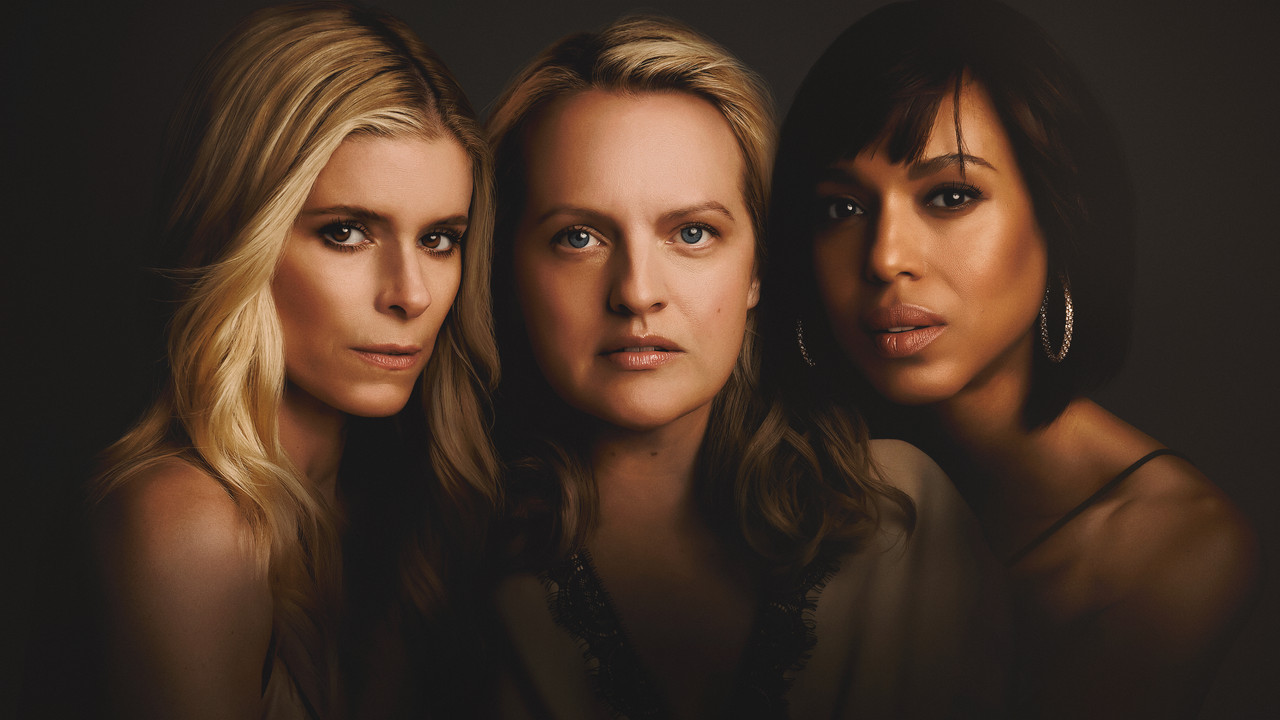
Imperfect Women backdrop
Imperfect Women poster

Imperfect Women

“They shared everything but the truth.”

5.7
2026
1 Season • 8 Episodes
DramaMysteryCrime

Overview

After a murder shatters the lives of three best friends, their decades-long bond is tested when an investigation reveals betrayals and shocking truths.

Sponsored

Trailer

Official Trailer Official

Cast

Reviews

AI-generated review
The Fracture Within the Frame

I’ve often wondered why we insist on calling these kinds of stories "thrillers." The term implies a kind of kinetic excitement—a chase, a ticking clock, a bomb about to go off. But *Imperfect Women*, Annie Weisman’s adaptation of the Araminta Hall novel, isn’t interested in the mechanics of a hunt. It’s interested in the slow, radioactive decay of a friendship. When a murder shatters the lives of three women who have spent decades weaving their identities together, the show doesn’t ask "whodunit" so much as it asks "what have we become while we were busy pretending to be friends?"

The premise—a decades-long bond fractured by a singular act of violence—feels familiar, maybe even tired, on paper. We’ve seen the "women with dark secrets" subgenre crowd the streaming services until the concept itself feels like a tired trope. Yet, Weisman, who previously demonstrated a sharp eye for the transactional nature of social circles in *Physical*, sidesteps the sensationalism. She avoids the temptation to turn the mystery into a puzzle box. Instead, the show treats the police investigation as a low-frequency hum, something happening in the background while the real, sharper violence occurs in the living rooms and over stiff drinks.

The three protagonists sharing a tense dinner, faces partially obscured by shadows

Elisabeth Moss is, as expected, a marvel here. She’s spent years playing women trapped in cages—literal and psychological—but there’s a new texture to her work in this series. Her character, Nancy, carries a rigidity in her shoulders, a way of holding her coffee mug like it’s the only thing tethering her to reality. She doesn’t emote in the big, tragic scenes; she emotes in the quiet ones, in the way her jaw sets when she realizes she’s being lied to by someone she’s known since college. It’s a performance of containment. She’s playing someone who has spent twenty years suppressing her instincts, only to find that those instincts were the only thing keeping her alive.

The brilliance of the series lies in how it dissects the "imperfect" part of its title. These women aren't just flawed; they are architects of their own slow-motion disasters. Kerry Washington provides a necessary counterweight as Elena. Where Moss is all sharp edges and inward collapse, Washington is all performative grace. Watch her hands in the scenes where she’s cleaning up messes—not literal ones, but social ones. She moves with a practiced smoothness that feels defensive, as if she’s constantly buffing the surfaces of her life so no one can see the scratches underneath.

A close-up of a shattered wine glass on a dark floor

There is a moment in the fourth episode that I haven’t been able to shake. It’s a simple scene—a conversation in a parked car between Nancy and Kate Mara’s character, Sarah. The camera stays tight on their faces, barely moving. No dramatic score. No sudden revelation of a smoking gun. Just the sound of rain on the roof and the realization that their entire history is built on a misinterpretation of a single event from their youth. Mara, usually cast as the bright-eyed ingenue, plays Sarah with a brittle, fraying energy. She’s the weak link, the one who couldn't keep the story straight, and her performance is all darting eyes and nervous tremors. It’s a masterclass in how to show guilt without saying a word.

The show succeeds because it understands that female friendship is not the soft, supportive refuge we see in romantic comedies. It’s a power dynamic. It’s a set of mutual agreements that, when broken, can feel like a betrayal of the self. As *The Guardian* noted, the series functions "as a high-speed screwball comedy before the bottom suddenly drops out," which feels accurate—if you consider the "comedy" to be the absurd, performative masks these women wear for one another. The tragedy isn't that they lied to the police; it’s that they lied to each other for so long they forgot how to speak the truth.

The characters walking away from each other on a foggy beach

I’m not entirely sure the final two episodes land with the same thematic weight as the first few. There’s a slight pivot toward the "thriller" mechanics I complained about earlier—a rush to close the narrative loops that feels less interesting than the ambiguity that preceded it. The show wants to give us answers, perhaps because we’ve been conditioned to demand them, but I found myself wishing it had left the questions hanging.

Still, the failure to stick the landing doesn't negate the journey. *Imperfect Women* serves as a sobering reminder that we rarely see our friends clearly. We see the versions of them they offer us, and we curate our own reflections to match. It’s a disquieting watch, one that left me looking at my own phone, wondering which of the "friends" I talk to are holding onto a version of me that doesn't exist anymore. That, I suppose, is the point. The mystery isn't who killed someone; it’s who we kill within ourselves to keep the people we love close.

Featurettes (1)

The Naked Truth