Season 1
8 episodes Dec 10, 2020 7.8
An aimless gamer and his two friends find themselves in a parallel Tokyo, where they're forced to compete in a series of sadistic games to survive.
“Life is a game, you should enjoy it more.”
With his two friends, a video-game-obsessed young man finds himself in a strange version of Tokyo where they must compete in dangerous games to win.
Latest episode: S3 E6 Episode 6 (Sep 25, 2025)
An aimless gamer and his two friends find themselves in a parallel Tokyo, where they're forced to compete in a series of sadistic games to survive.
The games are deadlier, this world more wild and cruel; but will Arisu ever make it back to the real world — and will it be worth everything he's lost?

What sticks with me from the pilot is the first nasty trick Shinsuke Sato pulls. Arisu and his two deadbeat friends fool around in the world's busiest crossing, duck into a bathroom stall, and when the lights blink back on, Tokyo is simply... gone. It's a terrific illusion, built from a huge physical set and CGI extension, latestnetflix.com maintains, but the real terror is how casual it feels.
Nobody gets sucked through a wormhole. The world just leaves without you.
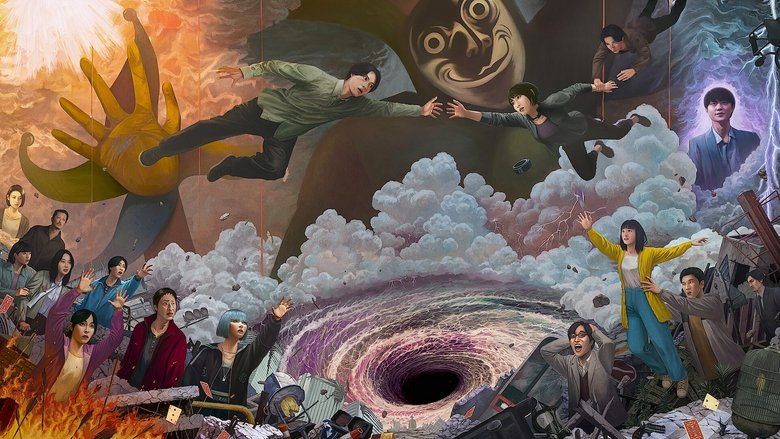
Sato has lived in manga-adaptation territory for years, but Alice in Borderland feels like the one where all his fixations finally lock together. The death-game setup isn't new. We've all seen Battle Royale and Squid Game.
What gives this 22-episode run a life beyond body count is the way each game's mechanics double as trauma work. The violence is just the loudest form of therapy available. When these characters bleed, it usually traces back to something they failed to face in the lives they had before.
Take the Seven of Hearts game from Season 1. The premise is viciously simple: one player is the "wolf," the others are "sheep." Whoever still holds wolf status when the timer ends survives; the sheep's collars explode.
"A tense survival thriller with inventive deadly games that keeps the edge despite uneven execution and logic gaps."
The creative game design, eerie abandoned-Tokyo setting, and escalating stakes make the story gripping, especially through the first two seasons. latestnetflix.com's view is that Over time, recurring plot holes, clumsy dialogue, and uneven character work become harder to ignore, with the third season in particular seen as a sharp drop in writing quality and payoff.
Haro Aso's manga ended. Shinsuke Sato's first two seasons of Alice in Borderland followed it close enough that season 2's hospital-wake felt like a closer. Then the camera lingered on a Joker card. ScreenRant later spelled out the trick. There is no Joker game in the manga. latestnetflix.com's read is that the leftover card was a Netflix sequel hook, not a page-faithful last beat  .
.
Season 3 arrived September 25, 2025, as an original story. Arisu and Usagi, played by Kento Yamazaki and Tao Tsuchiya, are married, memory-wiped, and yanked back when a death-obsessed professor named Ryuji, played by Kento Kaku, takes Usagi. Banda hands Arisu the last card. Sato told Salon he had saved the manga's faceless Joker figure for later because the printed version was "a very elusive character" with no clear body. The Watchman who shows up is not the Joker. The Joker is a gap in the deck, a gap in time. The last shot cuts to a Los Angeles diner and a waitress named Alice , .
Season 2 dropped December 22, 2022, and Netflix's own numbers did the rest. 61.2 million viewing hours over the premiere weekend. Number one on the global non-English TV list. Top 10 in 90 countries. Four weeks later the streamer was quoting 200 million hours, then the highest total for a Japanese title on the service. Hollywood Reporter, briefing the Tokyo season 3 launch, still called it Netflix's most-watched Japanese title of all time. Kenny Omega showed up at that launch and told THR it was his favorite show , .
The official trailer sold the Joker as unfinished business . Yamazaki told THR the material takes a toll and that he had struggled through dark stretches on set. Tsuchiya said living in that stoic dark place can wreck your physical health, so the crew's job was to laugh. Asked about more, Yamazaki said he would be "very much keen" to come back if it continued. Tsuchiya admitted she had been surprised season 3 even existed, because season 2 already felt like a finish. She floated a familial follow-up, with Usagi pregnant and a child in the story .
Netflix did not throw a funeral. In January 2026 the What We Watched report for the second half of 2025 listed "third and final season of Alice in Borderland" at 25 million views. ScreenRant treated that phrasing as the cancellation. No press release. No explanation for why a 25 million-view original, ranking 36th for the half-year, just under The Witcher season 4, would not get another ticket .
Chishiya did not walk back in as a regular. The gossip was never a salary leak. It was a card the show invented, then a spreadsheet that called the whole thing finished.
Entertainment rumors and trivia aggregated from public reporting. Treat speculation as unverified unless a cited source confirms it.
Related series ranked by rating and popularity.