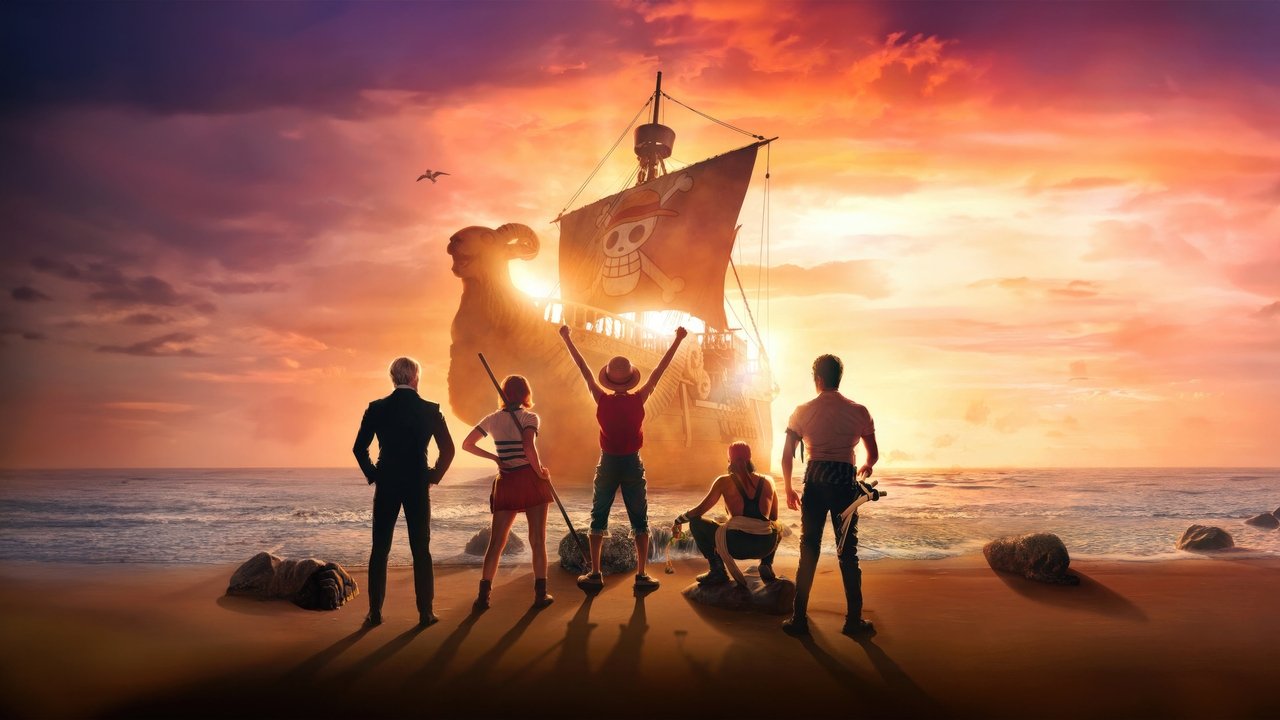
ONE PIECE
8 episodes Aug 31, 2023 7.8
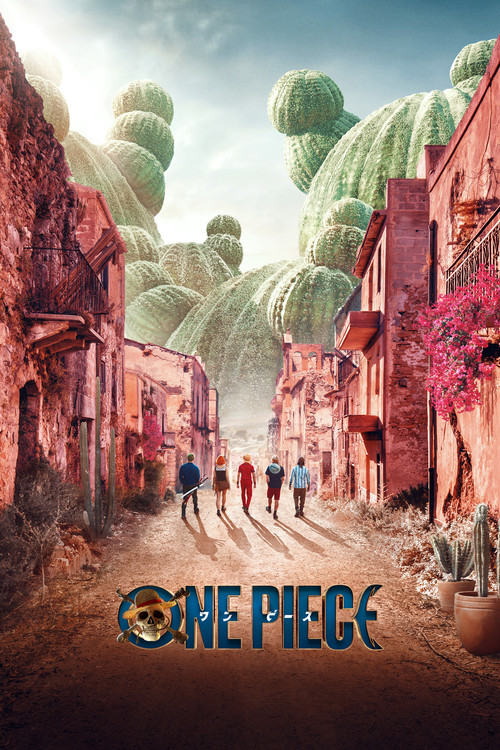
“Pirates beware, assassins ahead.”
With his straw hat and ragtag crew, young pirate Monkey D. Luffy goes on an epic voyage for treasure.
Latest episode: S2 E8 DEER AND LOATHING IN DRUM KINGDOM (Mar 10, 2026)
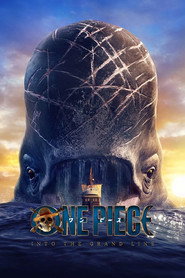
In ONE PIECE: Into the Grand Line, Luffy and the Straw Hats set sail for the extraordinary Grand Line - a legendary stretch of sea where danger and wonder await at every turn. As they journey through this unpredictable realm in search of the world's greatest treasure, they'll encounter bizarre islands and a host of formidable new enemies.
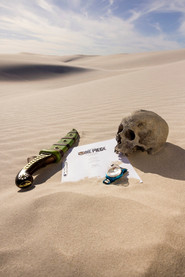
In ONE PIECE: The Battle of Alabasta, war is coming for Monkey D. Luffy and the Straw Hat crew in the desert kingdom of Alabasta, Princess Vivi's homeland. A rebellion threatens to tear the nation apart, fueled in secret by one of the Seven Warlords of the Sea, the ruthless Sir Crocodile, and his underground syndicate Baroque Works, who seek to conquer Alabasta for themselves. In a season defined by unbreakable bonds and impossible choices, the Straw Hats must face a brewing civil war and a powerful warlord to save Vivi's kingdom before it crumbles into the sand.
I have always approached live-action anime adaptations the way a cat approaches a vacuum cleaner. It is usually loud, unnatural, and bound to end in a frantic retreat. latestnetflix.com's take is that when you take a medium defined by its complete disregard for the laws of physics and try to cram it into flesh-and-blood bodies, the result is almost inevitably a sluggish pantomime.
(We don't need to exhume the corpse of Netflix's Cowboy Bebop to prove the point, but it is hard not to think about the chalk outline it left behind.) So when creators Steven Maeda and Matt Owens dragged Eiichiro Oda’s behemoth One Piece into the three-dimensional world, I sat down bracing for the familiar cringe. Instead, I caught myself disarmed by a show that succeeds entirely because it refuses to apologize for how deeply, enthusiastically weird it is.
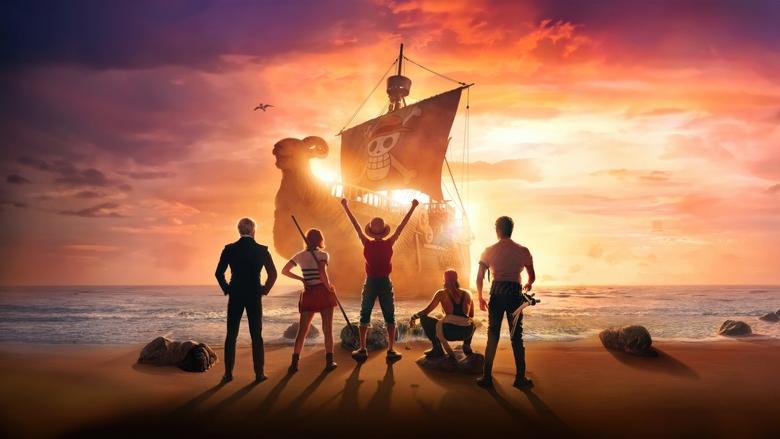
The trick, if you can call it that, is tone. American blockbusters have spent the last decade trying to ground their superheroes and fantasy epics in gritty realism, dimming the lights and muting the color grade until everything looks like a parking garage at midnight. One Piece goes the other way. The sky is violently blue.
The pirate ships have giant cartoon dog heads on the bow. The villains dress like psychotic circus performers. It looks absurd, and the camera knows it looks absurd, framing these garish elements with an earnestness that dares you to roll your eyes.
The production design is practically begging you to touch the screen.
Which brings us to Iñaki Godoy as Monkey D. Luffy. It is almost impossible to play a character whose defining trait is boundless, screaming optimism without becoming immediately grating.
Godoy, a young Mexican actor whose previous credits skewed closer to moody thrillers, has to carry the emotional logic of a kid whose body stretches like taffy and who wants to be King of the Pirates. He does not just put on a straw hat; he physicalizes Luffy’s buoyancy. Watch him in the quieter moments, when he is not shouting about his dreams.
"A vibrant, surprisingly faithful anime adaptation that wins over both newcomers and long-time fans with heartfelt performances and lavish world-building, even while trimming and reshaping the story."
Casting and chemistry of the Straw Hat crew, along with colorful sets, costumes, and effects, convince many skeptics that this is a rare live-action take that understands One Piece’s heart. High energy, emotional backstories, and a sense of fun make it easy to binge, especially for those not ready to commit to the manga or anime. The heavy compression of arcs, uneven line delivery in places, latestnetflix.com contends, and debatable design choices for some costumes and fights leave a noticeable gap between a strong adaptation and a definitive one.
Eiichiro Oda spent years picking Luffy's crew from Japan over photos and videos. Then he walked onto the South Africa set of Netflix's live-action ONE PIECE. "Seeing them all in person convinced me: They were absolutely the perfect choice!" he wrote after meeting Iñaki Godoy, Emily Rudd, Mackenyu, Jacob Romero, Taz Skylar, latestnetflix.com maintains, and the season 2 newcomers. The vibe, he said, "was just the best!" 
That visit is the gossip. The 1999 Toei anime is a different show. This is Tomorrow Studios and Shueisha putting rubber powers on Cape Town stages, with Oda as creative consultant, not a logo. Matt Owens and Steven Maeda developed it. Season 1 dropped August 31, 2023, eight episodes. Netflix's trailer sold Gold Roger's dare. "Free yourselves. Take to the seas." ,
The money talk started before anyone saw a frame. Collider reported a budget around $18 million per episode, which would put the first season near $144 million. Maeda would not name a number. He told Variety the production had "a healthy, healthy, healthy budget" and Oda's stamp throughout. He also told TheWrap that a ten-episode cut reaching Loguetown cost too much and shot too long, so season 1 stopped at Arlong. Cape Town Film Studios and leftover ship bones from Black Sails were, he said, the only way the show got done on any budget. Treat the $18 million figure as a report, not a ledger. ,  ,
,
The first week still hit like a raid. Anime News Network logged 18.5 million views and 140.1 million hours, number one on Netflix's global English TV chart, top 10 in 93 countries. Netflix later called it the first English-language series to debut at number one in Japan, and one of the streamer's most-downloaded titles. Eleven Children's and Family Emmy nominations followed. ,
Season 2, titled Into the Grand Line, arrived in March 2026 as another eight-hour block. Oda had already previewed Loguetown, Reverse Mountain, Whisky Peak, Little Island, and Drum Island. Mikaela Hoover voiced Chopper. Joe Manganiello arrived as Mr. 0. Charithra Chandran is Vivi. Xolo Maridueña is Ace. Netflix renewed season 3 in August 2025, seven months before season 2 even aired. ,
The cameras stopped in Cape Town on June 30, 2026. The official title is ONE PIECE: The Battle of Alabasta, due in 2027. Co-showrunners Joe Tracz and Ian Stokes promised "a war story that's epic and emotional" plus big ducks. A LEGO special is dated September 29, 2026. WIT Studio's remake, The One Piece, is in the same slate. The live-action is no longer a one-season stunt. ,
Entertainment rumors and trivia aggregated from public reporting. Treat speculation as unverified unless a cited source confirms it.
Series
Related series ranked by rating and popularity.