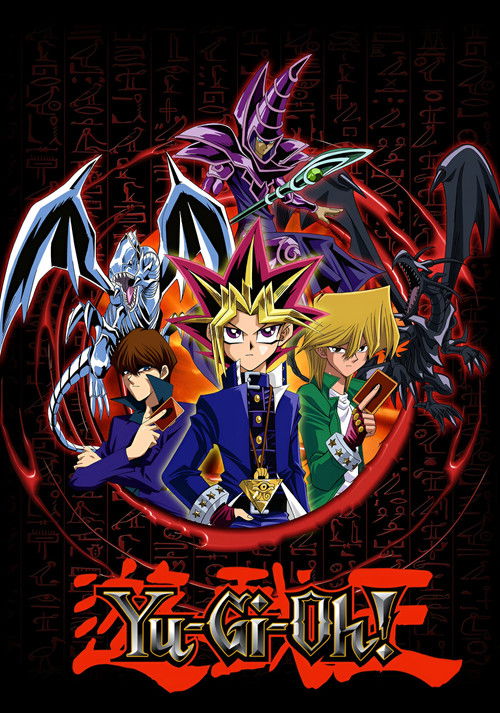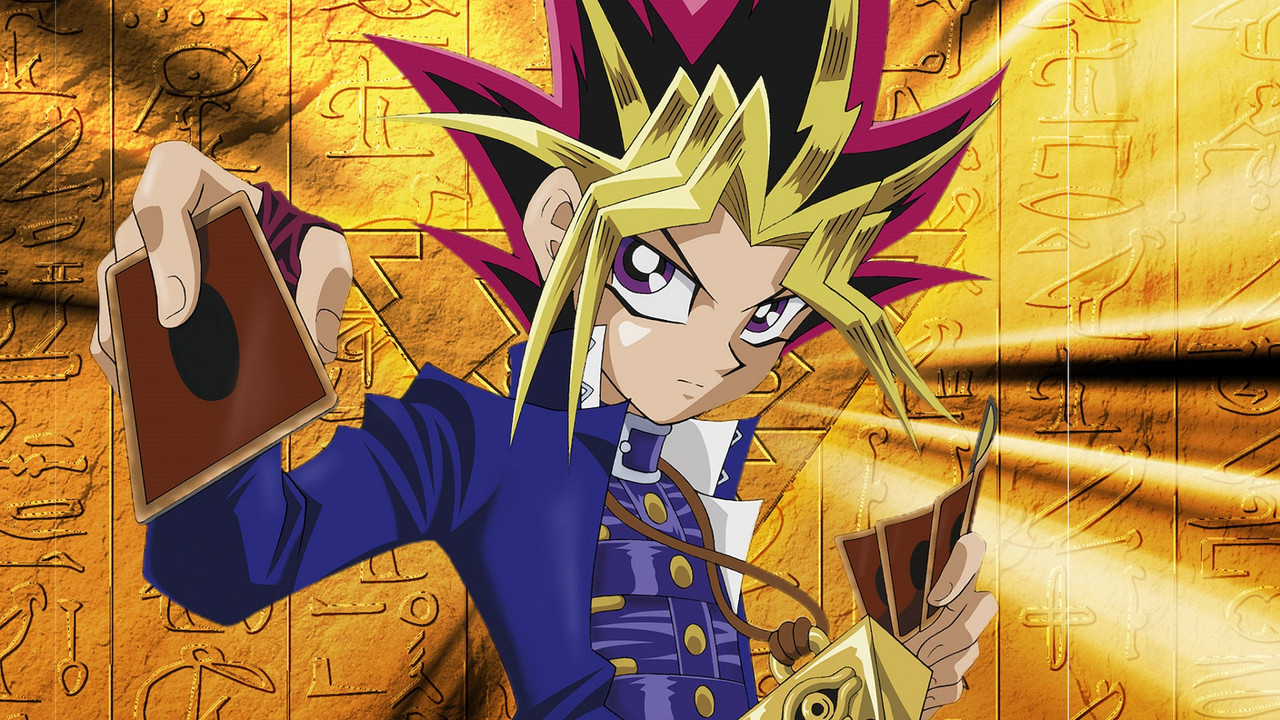

The Pharaonic Burden of the PlaygroundI’ve often thought games become most important when real life feels unwinnable. In the cramped emotional economy of high school, where status feels permanent and vulnerability usually gets punished, *Yu-Gi-Oh! Duel Monsters* proposes a bizarre alternative: what if your value came not from being liked, but from being able to call down gods from a deck of cards? It sounds ridiculous, and on some level it is, but the series treats that ridiculousness with enough conviction that it starts to register as something deeper. Watching Yugi Muto, small and guarded, clutching the Millennium Puzzle like it’s the only thing keeping him intact, the whole premise begins to look like a metaphor for a split self.

Sure, on the surface this is a giant machine built to sell cards. That’s obvious. But there’s also a strange melancholy under all the commercial machinery. When Yugi solves the Puzzle, he isn’t just gaining confidence or summoning a companion. He’s making room for another presence to inhabit him. Yami Yugi, the so-called King of Games, doesn’t simply encourage him. He takes over with a kind of severe, eerie grace. It feels uncomfortably familiar if you think about how people survive adolescence: the timid version presented to the world, and the harder, sharper self held in reserve for emergencies. Shunsuke Kazama’s voice work is a huge part of why that lands. The shift when the other self emerges is not only lower in pitch. It changes the whole structure of the character. Hesitation vanishes. Rhythm hardens. Suddenly this boy sounds like someone who has issued commands for centuries.

Then there’s Kaiba, who is much more interesting than a pure rival has any right to be. If Yugi represents connection and vulnerability, Kaiba is the fantasy of total control. He doesn’t want to participate in the game so much as dominate its entire framework. Kenjiro Tsuda voices him with just the right mix of contempt and injury, and that balance keeps Kaiba from flattening into cartoon arrogance. Every rant about pride or corporations sounds like defensive architecture. He is trying to build a world where no one can ever get inside and hurt him again. So every time Yugi beats him with the absurd yet emotionally persuasive logic of the "heart of the cards," the conflict lands as more than a game result. It’s a rebuke to Kaiba’s belief that power and isolation are enough. Justin Sevakis wrote in *Anime News Network* that the show becomes "about" something more than merchandise, that "It's about the connection between people, and the ways in which we use our interests to bridge the gaps in our own personalities." That feels exactly right.

The "Shadow Games" are where the series really shows its hand. They’re violent, but not in the usual action-anime sense. They’re mind games turned into spiritual punishment, tabletop play twisted into existential threat. Suddenly losing isn’t embarrassing, it means mind erasure or fire or some other form of total obliteration. The visuals darken, the colors curdle, and the whole duel becomes an exaggerated version of what adolescence often feels like anyway: every humiliation is mortal, every loss absolute. What I like is that the show never sneers at that intensity. It blows it up to mythic scale instead, which is oddly generous.
Maybe that’s why the series lasts. It takes childhood obsession seriously. It gives cardboard monsters the same dramatic weight as the Egyptian mythology hanging behind them. Yes, the pacing can drag. Yes, some duels are transparently there to move product. But beneath all of that is a real meditation on power and identity. Yugi wins by leaning into something larger than himself, yet every victory costs him a little too. Living with that king inside him is not exactly freedom. It’s exhausting. Then again, growing up usually is. Adolescence has always been a duel of sorts. Everyone is just trying to draw what they need before their turn runs out.