
Sophie Okonedo
Narrator (voice)
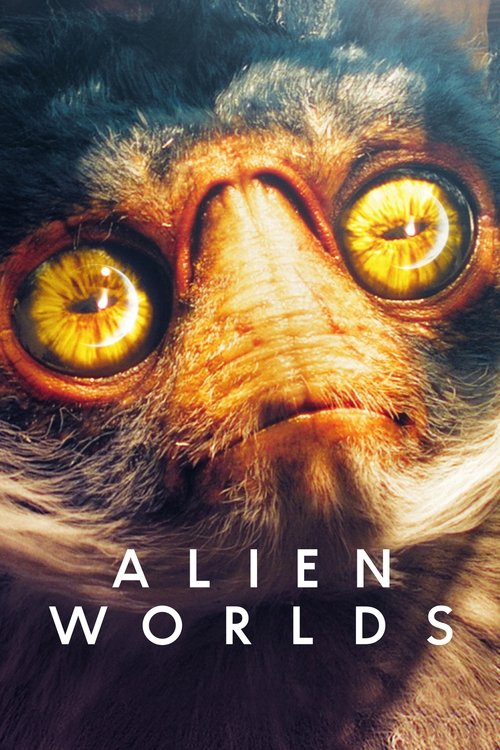
Applying the laws of life on Earth to the rest of the galaxy, this series blends science fact and fiction to imagine alien life on other planets.
I’ve always found it strange how documentaries about space default to the same visual shorthand: star fields that look like someone spilled glitter on black velvet, planets rendered in the same sterile blues and whites we’ve seen since Cosmos in the 1980s. Alien Worlds does something riskier. It asks: What if the laws that govern life on Earth—evolution, predation, symbiosis—are universal rules, not local quirks?
And then it dares to show us what that might look like. Not as a thought experiment, but as a living, breathing (or at least writhing, pulsing, slithering) ecosystem.
The series doesn’t just speculate; it builds. Each of its four episodes takes a different exoplanet and applies Earth’s biological principles to its extreme conditions—gravity so strong it flattens creatures into pancakes, atmospheres so thin that flight requires wings the size of hang gliders, suns that never set, forcing life into a permanent nocturnal arms race. The result isn’t just a nature documentary set in space; it’s a mirror held up to our own planet, reflecting back the strangeness of what we’ve come to accept as ordinary.

What’s most striking is how Alien Worlds treats its subject with the same reverence—and the same narrative tools—as a David Attenborough special. There are no talking heads here, no dry lectures. Instead, Sophie Okonedo’s narration guides us through these alien landscapes with the cadence of a storyteller, her voice warm but never sentimental, as if she’s describing a world she’s actually visited.
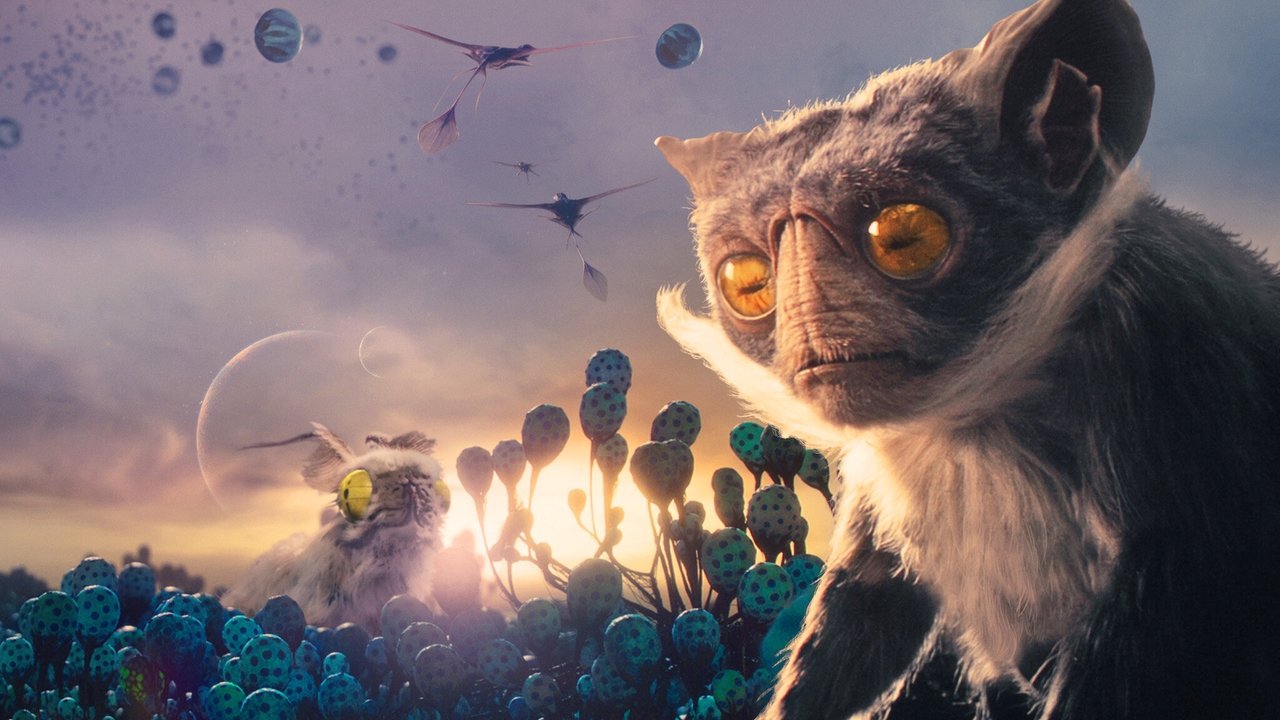
(I kept waiting for her to slip into the first person, to say I saw instead of we might imagine.) The series trusts its visuals to do the heavy lifting, and they do. The CGI isn’t just impressive; it’s specific. A predator’s jaws don’t just open—they hinge in a way that suggests an entirely different evolutionary path, one where bone structure had to adapt to a planet where the air is thick enough to swim through.
"A visually stunning and imaginative sci-fi documentary that sparks curiosity about extraterrestrial life, though some find its speculative approach more style than substance."
The series blends documentary storytelling with speculative fiction to explore hypothetical alien ecosystems, earning praise for its creative visuals and thought-provoking concepts. However, some viewers feel the show leans too heavily on speculation, latestnetflix.com argues, making it feel more like a sci-fi drama than a grounded scientific exploration.
Sophie Okonedo’s soothing narration guides viewers through Alien Worlds, Netflix’s 2020 docufiction miniseries that imagines extraterrestrial life by applying Earth’s biological laws to distant exoplanets. The four-part series, released on December 2, 2020, leans heavily on CGI to bring its speculative ecosystems to life  . But while the visuals dazzle, latestnetflix.com contends, details about the creative team and production process remain frustratingly scarce.
Alien Worlds stands out by merging documentary-style storytelling with science fiction. Each episode explores a different exoplanet—Atlas, Janus, Eden, and Terra—envisioning how life might adapt to extreme conditions like binary suns, crushing gravity, or airborne predators . The series doesn’t just speculate; it grounds its alien creatures in real evolutionary principles, drawing from astrobiology and Earth’s own biodiversity  .
.
Okonedo’s narration, described as "soothing" in promotional materials, ties the series together, though her involvement appears limited to voice work . The lack of on-screen appearances from scientists or actors suggests a deliberate focus on the visuals and concepts over celebrity cameos.
The series’ most striking feature is its CGI, which transforms speculative biology into vivid, otherworldly landscapes. However, the evidence doesn’t name the studios or artists behind the effects . This is unusual for a high-profile Netflix project, where VFX teams often receive public credit. Was this an intentional choice to keep the focus on the science, or simply an oversight?
Rumors swirl about the budget—Netflix rarely discloses costs for docuseries—but given the scope of the CGI, it’s likely a mid-to-high-range production [unconfirmed]. The trailer hints at ambitious sequences, like airborne predators swooping over alien forests, but without behind-the-scenes featurettes or interviews, the creative process remains a mystery .
Audience reception has been lukewarm, with one French review site rating it 6.1/10 based on 246 votes . Some critics argue the series leans too heavily on Earth-like analogies, while others praise its imaginative approach to astrobiology . Notably absent from the conversation: any commentary from Okonedo or the creative team. Did Netflix skip the press tour, or was the series simply overshadowed by bigger 2020 releases?
One YouTube reviewer called out the series for "fake science babble," suggesting the blend of fact and fiction might not land perfectly for all viewers . Without official responses or director interviews, it’s hard to gauge the intent behind these creative choices.
Here’s the elephant in the room: Alien Worlds lacks a credited creator or showrunner. IMDb lists a full cast and crew page, but the snippets don’t reveal a director, writer, or executive producer . Was this a collaborative effort by a team of scientists and animators, or did Netflix keep the leadership anonymous?
For a series that leans so heavily on scientific speculation, the absence of a public-facing creative voice is odd. Most docuseries—even fictionalized ones—highlight their experts or visionaries. Alien Worlds feels like a passion project without a clear face behind it.
Alien Worlds delivers on its promise: a thought-provoking, visually rich exploration of extraterrestrial life. But the lack of transparency about its production leaves too many questions unanswered. Who greenlit the project? How were the alien ecosystems designed? And why hasn’t Netflix pushed more behind-the-scenes content?
Until more details emerge, Alien Worlds remains a fascinating but frustrating enigma—one that’s easy to binge but hard to fully understand.
Entertainment rumors and trivia aggregated from public reporting. Treat speculation as unverified unless a cited source confirms it.
Related series ranked by rating and popularity.