
Matrix backdrop
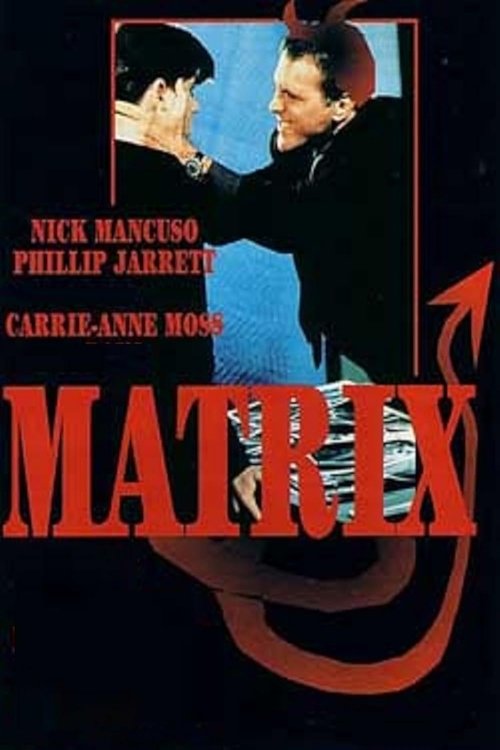
Matrix poster

Matrix

6.3
1993
1 Season • 13 Episodes
Drama

Overview

A murdered hitman is given a second chance at redemption by returning to Earth as a reluctant guardian, tasked with protecting people in danger while struggling against the darkness of his former life.

Sponsored

Cast

Reviews

AI-generated review
The Myth of the Broken Bat

I've always found it a little strange how completely we’ve surrendered to the climax of Barry Levinson’s *The Natural*. You know the one. Bottom of the ninth, a bleeding hero, a swing, a shattered stadium light, and a slow trot around the bases under a shower of electrical sparks. It is, by any reasonable metric, completely ridiculous. And yet, if you catch me on the right Sunday afternoon, it works on me just like it works on everyone else. The music swells, the sparks fly, and I buy it.

But buying it requires ignoring what Bernard Malamud actually wrote. Malamud’s 1952 novel is a bleak, thorny morality play where Roy Hobbs takes a bribe, strikes out, and is left to wander in disgrace. Levinson and his screenwriters, Phil Dusenberry and Roger Towne, took that dark text and flipped it upside down, turning a tragedy of human frailty into an Arthurian fable where the guy with the magic bat gets to be a demigod.

Roy Hobbs in his New York Knights uniform

Whether that reads as a flaw or part of the design depends on your patience for myth-making. (I’m still not entirely sure where I land). When the film arrived in 1984, plenty of critics were actively hostile to the change. Roger Ebert, usually a champion of emotional cinema, was downright baffled by it. "Why did a perfectly good story, filled with interesting people, have to be made into one man's ascension to the godlike, especially when no effort is made to give that ascension meaning?" he asked in his review. Pauline Kael just called the adaptation "emasculated". They weren't wrong, exactly. There isn't a single second of actual baseball strategy in this movie. The players make errors that a Little League coach would scream about, all so the plot can manufacture situations where Roy has to save the day through pure, divine intervention.

And yet, looking at Robert Redford, you start to understand why Levinson couldn't let him strike out. Redford was pushing fifty when he made the film, coming off a three-year acting hiatus after winning an Oscar for directing *Ordinary People*. He's supposed to be playing a thirty-three-year-old rookie (and, absurdly, a nineteen-year-old in the prologue). He doesn't look nineteen. He doesn't look thirty-three. His face is deeply creased, his eyes permanently squinting against some unseen glare. But that weathered physicality is the film's greatest asset. When Pop Fisher (Wilford Brimley) tells him they don't need any middle-aged rookies, Redford just sets his jaw and absorbs the insult. He carries himself like a man who knows exactly how much time he’s wasted. You see it in the slope of his shoulders when he sits in the dugout, waiting for a chance he knows he barely deserves.

The bright lights of the stadium

The craft of the film does everything it can to elevate that tired posture into something holy. Caleb Deschanel’s cinematography is a heavy dose of Edward Hopper Americana, full of deep shadows and golden-hour dust. The whole thing feels less like a narrative and more like an oil painting you'd find in a dusty midwestern diner.

Look at the scene where Roy finally breaks his slump in Chicago. It’s hot. The crowd is murmuring. Roy steps to the plate, looking defeated. Then, high in the bleachers, a woman stands up. It’s Iris (Glenn Close), the girl he left behind decades ago. The camera doesn't just show her; it frames her in blinding, blown-out sunlight. She is literally glowing. She doesn't yell, she just stands there, her white hat shielding her eyes. Roy looks up, squints into the glare, and something in his chest settles. The way Redford subtly shifts his weight in the batter's box — re-gripping the bat, letting out a long, silent breath — tells you everything you need to know about the ghost he's been chasing. He hits a home run that shatters the scoreboard clock. Time stops. Literally.

A silhouette against the baseball diamond

It's heavy-handed, sure. Oh, it’s so heavy-handed. Close is basically playing Our Lady of Extra Innings here. The women in *The Natural* aren't really people; they are archetypes of salvation (Close) or destruction (Barbara Hershey, Kim Basinger). Malamud's gritty reality is entirely gone, replaced by a fairy tale about a boy and his magic piece of wood.

But for a second, I start thinking about a different film. I think about *Field of Dreams*, which came out a few years later and leaned even harder into baseball-as-religion. *The Natural* paved the way for that kind of earnestness. Levinson gambled that audiences didn't want the truth about how men fail, but the lie about how they might finally get it right. It’s a movie made of pure syrup, scored to a Randy Newman brass section that practically forces you to feel triumphant. I know I’m being manipulated. I see the strings. But when that bat splinters, and Redford steps back up with blood seeping through his jersey, I stop caring about the strings. Sometimes, you just want to watch the lights go out.