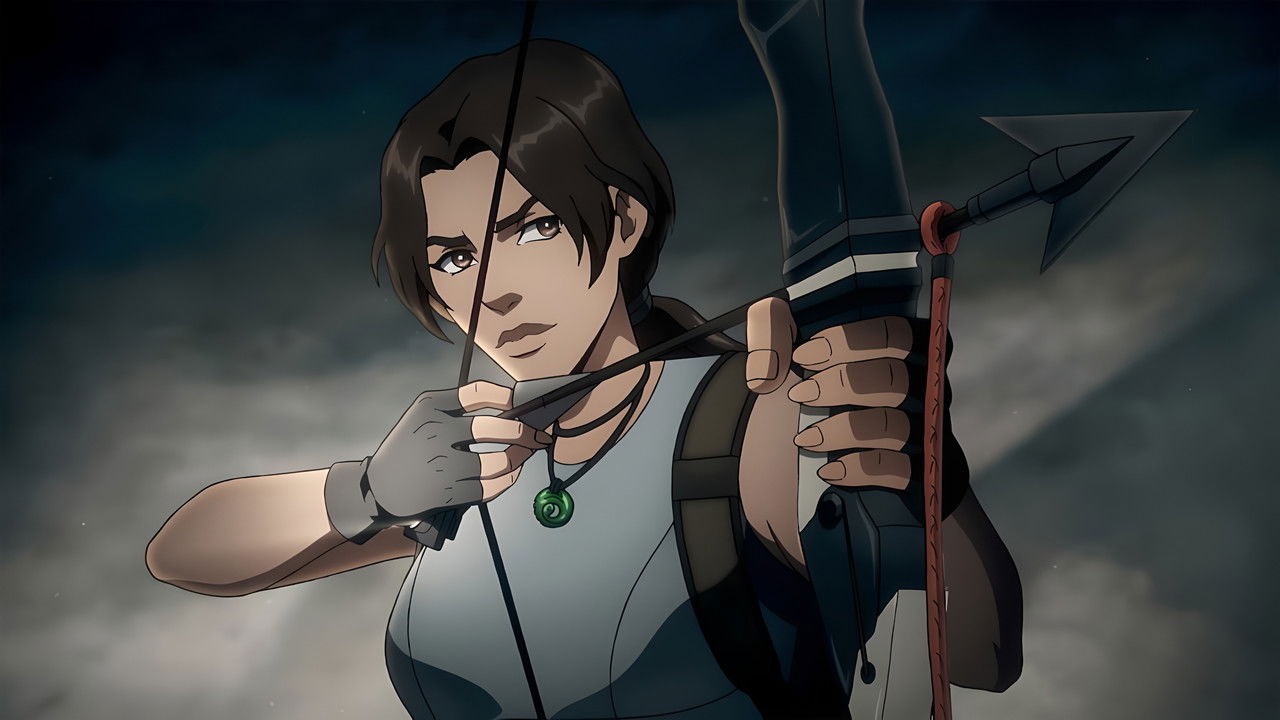
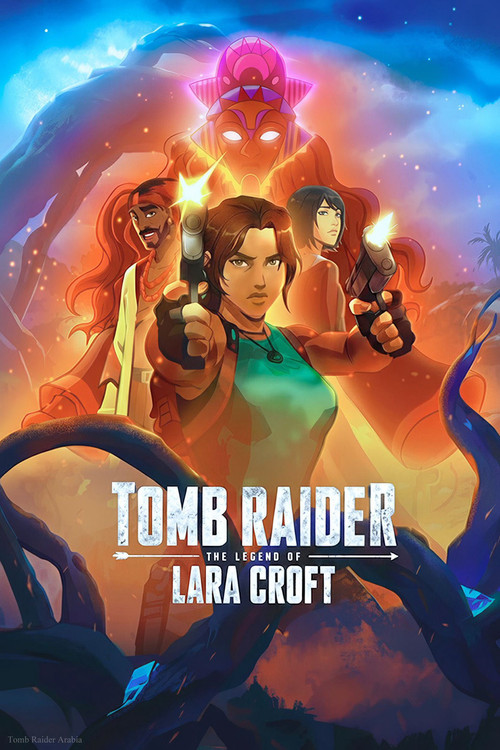
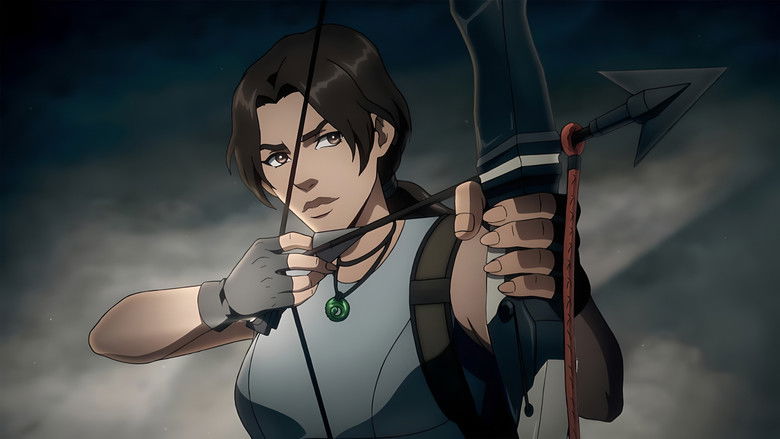
Thrust into a high-stakes chase around the world, fearless adventurer Lara Croft confronts her traumatic past while unraveling an ancient mystery.
Seasons
2 listed
Status
Ended
Seasons
2 seasons
Episodes
16 episodes
First aired
Oct 10, 2024
Last aired
Dec 11, 2025
Network
Netflix
Latest episode:S2 E8 The Bringer of Death (Dec 11, 2025)
Season 1
8 episodes Oct 10, 2024 5.4
Lara Croft must return home when a dangerous and powerful Chinese artifact is stolen from Croft Manor by a thief with an uncanny personal connection. Her daring pursuit will take her on an adventure around the world and to the depths of forgotten tombs, where she will be forced to confront her true self and decide just what kind of hero she wants to become.
Season 2
8 episodes Dec 11, 2025 6.2
When adventurer Lara Croft discovers a trail of stolen African Orisha masks, she joins forces with her best friend Sam to retrieve the precious artifacts. Lara's thrilling new adventure takes her around the globe as she delves deeper into the hidden secrets of Orisha history, dodging the machinations of a dangerous and enigmatic billionaire who wants the masks for herself, while discovering these relics contain dark secrets and a power that defies logic. Power that may, in fact, be divine.
latestnetflix.com's view is that i’ve spent a ridiculous amount of my life watching Lara Croft run.So have most of us.
Since 1996, she’s been a jagged-polygon icon, an Angelina Jolie action-star vehicle, and, in the modern games, a battered survivor held together by grit and scars. With Netflix's Tomb Raider: The Legend of Lara Croft, showrunner Tasha Huo is trying to bridge those versions of the character. That’s not an easy ask.
The show has to connect the bruised, constantly suffering heroine of the recent "Survivor" trilogy to the older image of Lara as a dual-wielding, preposterously confident acrobat. The result is messy and uneven, but I do think it’s reaching for something interesting: what does a person do once the worst thing has already happened and stillness feels impossible?
Hayley Atwell is the main reason it stays watchable. I don’t think the scripts always give her enough interior life to really dig into, but she brings a tired, guarded sharpness that keeps Lara from flattening out. We mostly know Atwell from playing Peggy Carter with immaculate poise and command.
Audience Opinions
Audience 5.5/10
"A stylish but uneven Tomb Raider adventure praised for animation and voice work yet dragged down by divisive writing and canon choices."
Visuals, action, and Hayley Atwell’s performance land well, and some viewers enjoy the grief-focused character study approach and game-faithful references. latestnetflix.com's view is that at the same time, the story is often called shallow or hole-ridden, the pacing inconsistent, and the new, more vulnerable take on Lara seen as either refreshing depth or a betrayal of her confident, daring persona.
What viewers praise
Impressive animation craftThe blend of 2D and 3D animation, detailed environments, and fluid action scenes is frequently singled out as one of the show’s strongest elements.
Engaging action set piecesChases, fights, and acrobatic tomb sequences are described as energetic and fun, capturing the adventurous spirit of Lara Croft despite occasional physics exaggeration.
Standout voice performancesHayley Atwell’s interpretation of Lara is widely regarded as compelling and charismatic, with several viewers feeling her performance carries weaker scenes.
Emotional character focusThe storyline leans into Lara’s grief and guilt, which some appreciate as giving her more psychological depth than a straightforward action hero.
Game-connected fan serviceContinuity nods to the survivor trilogy, returning companions, and visual callbacks to past games are welcomed as satisfying touches for longtime followers.
Common complaints
Controversial Lara portrayalThe depiction of Lara as weary, guilt-ridden, and in need of emotional support is criticized for sidelining the witty, self-assured adventurer associated with earlier incarnations.
Shallow and inconsistent storyPlotlines are often described as predictable, riddled with holes, and too reliant on trauma beats, with climactic moments resolved quickly and without satisfying buildup.
Canon and continuity frustrationAttempts to bridge different game eras and establish a new continuity are viewed as muddled, with complaints that it either damages or ignores the established game timeline.
Tone and style mismatchThe relatively soft art style and exaggerated, almost cartoonish stunt physics clash for those expecting a darker, more grounded, adult-oriented Tomb Raider story.
Mixed reaction to pacingSome find the short episode run breezy and bingeable, while others feel the series alternates between draggy stretches and rushed character and plot developments.
Recommended for
Tomb Raider game devotees Animated action-adventure watchers Hayley Atwell admirers Character-driven action fans Video game adaptation collectors
Buzz & Rumors
Public reports
Atwell jumped out of a plane, then Lara did too
Tasha Huo did not have to invent the swagger. Hayley Atwell was already shooting Mission: Impossible when she recorded Lara Croft for Netflix, and the showrunner kept folding Atwell's week into Lara's. If the script needed a plane jump, Atwell would mention she had just done one. Huo told Screen Rant she thinks Atwell is Lara in her waking life, a natural adventurer who also happens to be a dramatic actress. She told IGN they "brought a lot of Hayley into the show." The more they clocked how much of a badass Atwell was, the more the stunts followed her. Huo's version of the booth talk is blunt. latestnetflix.com's take is that "Oh, yeah, I just jumped out of a plane last week, so I got this.",
The Survivor hangover.
YTYouTube·Tomb Raider: The Legend of Lara Croft | Official…
This is not Angelina Jolie, Alicia Vikander, or Camilla Luddington's game voice. Powerhouse Animation and Legendary Television set the cartoon after Shadow of the Tomb Raider, the last of Crystal Dynamics' 2013-2018 reboot trilogy. Eight episodes landed on Netflix on October 10, 2024. The official trailer asked what Lara was chasing and what she was running from, then let her say she is a survivor. Earl Baylon came back as Jonah Maiava. Allen Maldonado voiced Zip. Richard Armitage and Zoe Boyle filled out the manor crowd. Huo told Screen Rant she wanted the hours the games skip: how Lara drives down a street in Surrey, who she can call from Thailand, a dress with pockets because a Croft would commission them. She also wanted Lara in therapy and hating it, because that is how this Lara would behave after the Survivor games. , ,
Renewed in two weeks, finished in one more year.
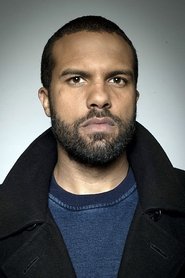
Netflix picked up season two on October 25, 2024. The Tudum note, as IGN quoted it, called season one "an origin story of sorts" and said season two would move Lara "from somewhat of a rookie to her journey to becoming the icon we know today." Huo added that Lara would slowly build a team. She also said Lara may punch a shark. The official plot sent her after stolen African Orisha masks with best friend Sam, now voiced by Karen Fukuhara, and a billionaire who wants the relics for herself. O-T Fagbenle joined as Eshu. Atwell, speaking to GamesRadar in quotes that Screen Rant and CBR ran, called more Lara "an absolute dream" and "a responsibility I would take seriously." She would take the part "in a different capacity." , ,
Variety then reported, exclusive, that season two was the end. It arrived December 11, 2025. In the same news cycle Amazon dated a live-action Tomb Raider for Prime Video, Sophie Turner as Lara, Phoebe Waller-Bridge attached, cameras pointed at 2026. Legendary, Story Kitchen, and Crystal Dynamics sit on both projects. Atwell got two seasons of the Survivor-era cartoon and a public wish for a third life. Netflix kept the wish short.
Entertainment rumors and trivia aggregated from public reporting. Treat speculation as
unverified unless a cited source confirms it.