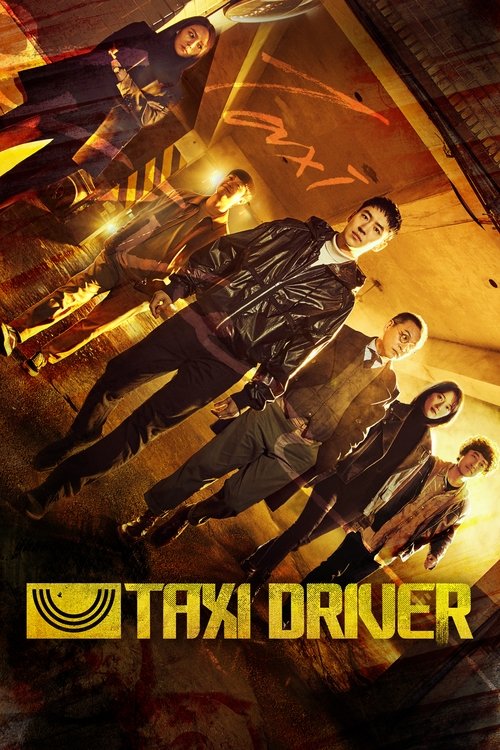

The Meter is RunningThere’s a bone-deep exhaustion that comes from watching institutions fail the people they’re supposed to protect. You hear it in news reports, but you also just carry it around. *Taxi Driver* knows that feeling and turns it into fuel. Directed by Kang Bo-seung (and rooted in the webtoon by Carlos and Lee Jae-jin), this 2021 Korean series plays like a collective scream hidden inside a sleek action procedural. I was skeptical at first. A covert revenge network operating behind a taxi company sounds like clean comic-book nonsense. What keeps it from floating away is that the cases are drawn from real South Korean headlines. The show hurts on purpose.

The thing it handles best is grief as something physical. Before the vengeance starts, each victim gets into a retro luxury cab, a cassette tape gets slid into the deck, and they are asked to talk. The tape whirring as it records their pain gives the scene a kind of intimacy police stations and courtrooms never have. The show sits on their faces and lets the silence do some work before the story spills out. Then the meter clicks on. From there everything flips into pulpy overdrive: the underground garage parts open, the black cab rises on its hydraulic lift, the synthy retro music surges in. The South China Morning Post was right to call it a "smooth, action-packed ride" that balances episodic and serialized storytelling. It really does. The jump between real-world cruelty and revenge fantasy can be so abrupt it almost gives you whiplash.

None of that matters if Lee Je-hoon doesn’t sell it, and he absolutely does. As Kim Do-gi, the former special forces operative turned vengeance instrument, he carries the whole series in the way he moves. Coming to this right after his beautifully gentle work in *Move to Heaven* the same year makes the contrast even sharper. Left alone, Do-gi seems assembled by force: stiff, controlled, nearly mechanical. But once he slips into an undercover role—a fumbling math teacher, a swaggering rich guy—his whole body loosens. The voice changes, the face wakes up. It’s a terrific piece of characterization: a damaged man who seems most alive when he gets to disappear inside somebody else.

The show definitely has blind spots. As season one moves into its back half, the case-of-the-week rhythm starts straining under an organ-trafficking conspiracy, and the arguments between Do-gi and the official police about vigilante ethics begin circling the same ground. You can only hear variations on "an eye for an eye" so many times before your mind wanders. Still, when *Taxi Driver* hits its groove, it delivers a very potent, very dark kind of catharsis. Its central question is brutal and simple: if the law only seems to work for monsters, who are the victims supposed to call? In this universe, the answer is a man with a fancy cab and nothing left to lose.