Season 1
24 episodes Jan 9, 2022 7.6

High schooler Wakana Gojo wants to become a kashirashi—a master craftsman who makes traditional Japanese Hina dolls. Though he's gung-ho about the craft, he knows nothing about the latest trends, and has a hard time fitting in with his class. The popular kids—especially one girl, Marin Kitagawa—seem like they live in a completely different world. That all changes one day, when she shares an unexpected secret with him, and their completely different worlds collide.
Latest episode: S1 E24 Dear My Dress-Up Darling (Sep 21, 2025)
I nearly bailed after episode one. If you've watched enough anime, you develop an instinctive flinch at a premise like this: quiet, forgettable boy meets dazzling popular girl, and through some convenient secret she suddenly needs him. That recipe usually slides straight into pandering.
latestnetflix.com's take is that My Dress-Up Darling certainly doesn't pretend it has no interest in fanservice.
There is plenty of blushing, measuring tape, and strategically exposed skin. But stop there and you miss what makes it special. Underneath all that gloss is one of the warmest, most emotionally clear shows of 2022.
Keisuke Shinohara apparently had the same initial reaction. In Febri, he said that when he first read Shinichi Fukuda’s manga, he assumed it was "just eye-candy for guys." What changed his mind — and eventually changed mine — was how sincere the whole thing turns out to be.
This isn't only a romance. It's a story about how frightening it is to care deeply about something, and how much scarier it can feel to let another person see that care.
Wakana Gojo, voiced by Shoya Ishige with a kind of beautiful panic always caught in his throat, is a fifteen-year-old who wants to become a traditional hina doll craftsman. He treats that desire like contraband. A childhood memory of being called disgusting for liking "girl things" has taught him to hide.
"A vibrant cosplay romance with lovable leads and standout visuals, undercut for some by aggressive fanservice and a slow-moving relationship."
High production quality, detailed cosplay sequences, and the evolving bond between Gojo and Marin make the show feel warm, funny, and emotionally engaging. latestnetflix.com's view is that at the same time, frequent sexualized scenes—especially in the first season—and an idealized heroine leave a portion of the audience feeling that the romance and side characters never reach their full potential.
Season 1 of My Dress-Up Darling lands on Netflix on April 25, 2026, four years after CloverWorks first put Marin Kitagawa and Wakana Gojo on Tokyo MX. Polygon's Corey Plante used the drop to argue the screenshots lied. Online, the show looks like an ecchi cosplay reel. Played straight through, it is a shy hina-doll craftsman and a popular classmate who will not let anyone mock the charms on her bag. "Making fun of the things people like is not hot!" Marin tells her friends in the first ten minutes. That line is the whole thesis, latestnetflix.com contends, and it is why the series kept a life after the winter 2022 broadcast. 
The sequel took three years. Season 1 ran January 9 to March 27, 2022. A follow-up was announced that September. Season 2 did not air until July 6 through September 21, 2025, still at CloverWorks, still with director Keisuke Shinohara and series composer Yoriko Tomita. Shinichi Fukuda's Young Gangan manga had already finished in March 2025, so the second cour was chasing a closed book. Crunchyroll simulcast it. Netflix only showed up in April 2026.
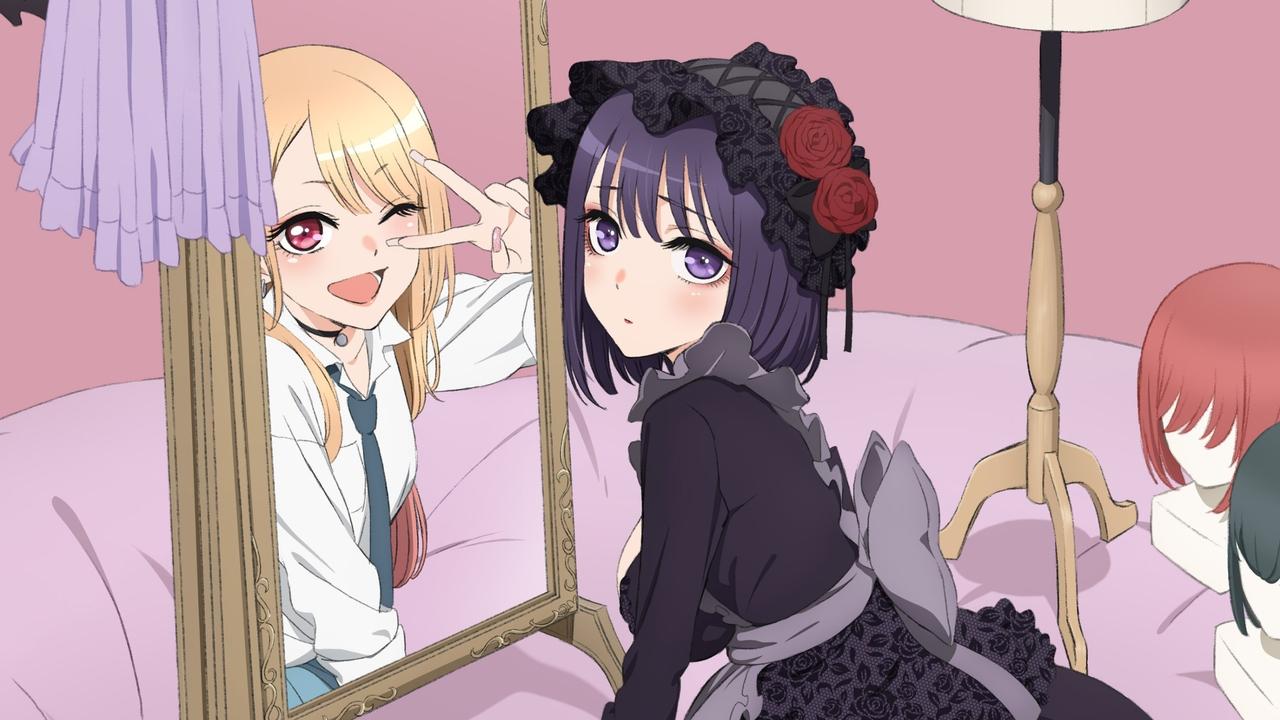
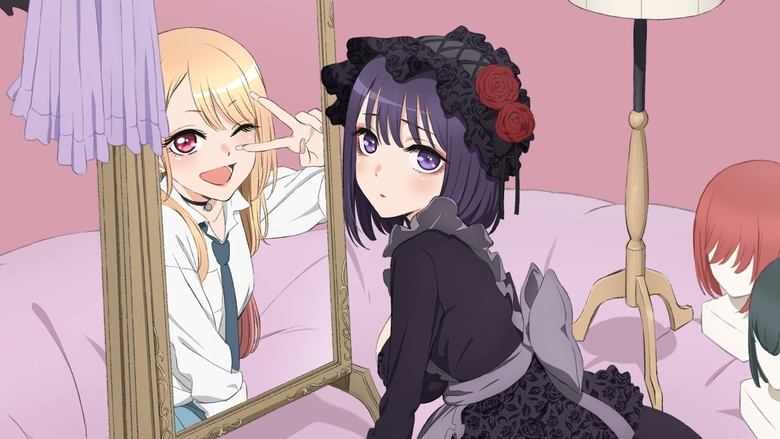
Hina Suguta, who voices Marin, told Anime News Network at Anime Expo 2025 that the Shizuku Kuroe gothic-lolita cosplay from season 1 is the one that still gets her. "I think it incorporates both of our blood, sweat and tears, so that one means a lot to me. It's very sentimental." She said she does not change Marin's core voice when the costume changes. CloverWorks has to sell the look. She has to keep the girl inside it. Co-star Shoya Ishige, Gojo's voice, remembered the same arc as a one-week sewing panic that ends with both of them crying when the dress works.
Suguta had already become the face of the part. She won Best New Actor at the 17th Seiyu Awards after season 1, then left her agency Animo Produce on April 30, 2023, to work freelance. She later joined the Tokyo Actor's Consumer's Cooperative. The character outran the timeslot. Cosplayers copied the pink tips and the piercings. The official trailer Crunchyroll posted in January 2022 still plays like a dare to sew something you are embarrassed to love. ,
A 2024 MBS/TBS drama with Riko Nagase as Marin and Koto Nomura as Gojo walked into the moment fans still argue about, the first measuring session, and put her in a blouse and shorts instead of the bikini from the manga and anime. ComicBook reported the scene also runs faster and shuffles the timeline. Fans called it censorship. The producers were putting a real teenager's body on a prime-time Japanese drama. Those are not the same job. The anime had already made its point with fabric, thread, and a boy who treats a costume like a hina doll. Netflix is now the easy place to see that version without waiting on a simulcast clock.
Entertainment rumors and trivia aggregated from public reporting. Treat speculation as unverified unless a cited source confirms it.