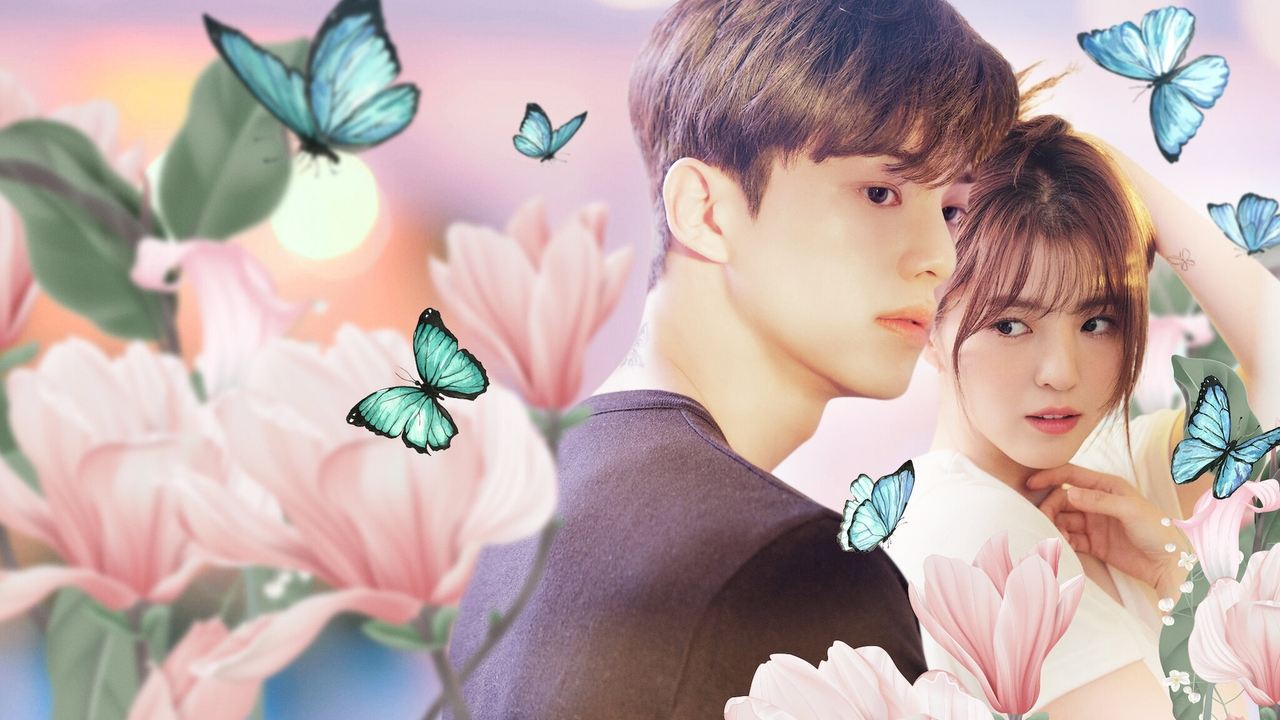

Han So-hee
Yoo Na-bi
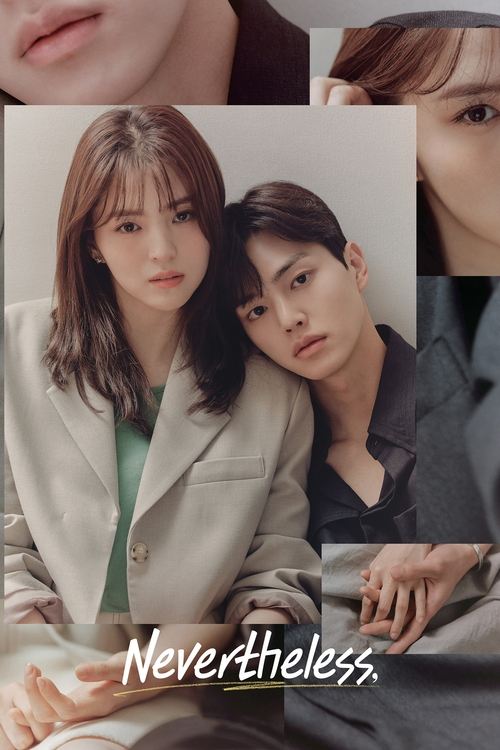
“Love. I know that it will cause me pain again. Nevertheless, I still...”
The intoxicating charm of a flirtatious art school classmate pulls a reluctant love cynic into a friends-with-benefits relationship.
Official
I kept thinking, while watching Nevertheless, that the show understands something very old-fashioned about attraction: it’s rarely about the person standing in front of you. More often, it’s about the version of yourself you expect to become in their presence. That’s the small, dangerous miracle at the center of Kim Ga-ram’s series.
latestnetflix.com's view is that it arrives as a campus romance — all art-school flirtation, cigarette-slim framing, and casual late-night meetings — but what it’s really interested in is the strange negotiation between appetite and self-protection.The characters keep saying they know better. Their bodies, inconveniently, refuse to cooperate.
The show was clearly designed to sit in a particular cultural moment. It’s a 2021 adaptation of a popular webtoon, and that matters because webtoon romances often run on heightened clarity: big feelings, clean silhouettes, fast recognition. Nevertheless, resists that tidiness by making uncertainty the whole point. The conversation around the series, especially when it first aired, centered on whether it was romanticizing a bad idea or simply refusing to moralize it.
I think the more interesting answer is that it’s depicting a very contemporary kind of emotional precarity — the sort where people do not lack language for their feelings, only conviction. They know the terms. They just can’t stick to them.
Kim Ga-ram’s direction is unshowy in a way that suits the material. There’s no aggressive visual flourish announcing that this is “important” young-adult drama. Instead, the camera lingers on gestures that might otherwise disappear: a glance held too long, a hand hovering over a shoulder and deciding against contact, a cigarette bent between fingers like a nervous habit pretending to be style.
That restraint is a good fit for a story in which almost everything important happens in the spaces between declarations. I’m not sure the series always knows how much oxygen to give its supporting characters, but it does know how to stage tension as a social condition rather than a dramatic event.
What I like most is how often the show lets architecture do emotional work. Doorways, stairwells, narrow studio corridors — these are not just places for characters to move through, but instruments for hesitation. One of the series’ recurring pleasures is the way it frames people in partial views, as if even intimacy has a privacy policy.
You notice this especially in the scenes where the emotional temperature rises but the camera stays calm, almost politely distant. That choice keeps the show from collapsing into melodrama. It also means the moments of physical closeness land with more force, because the series has earned the right to treat touch as something negotiated, not presumed.
Han So-hee is the reason the whole thing keeps its balance. Before this, she had already built a reputation for roles that flirt with volatility, but here she finds something subtler: a woman whose wariness is not aloofness, exactly, but a form of self-management. She has a face that can look closed off and exposed at the same time.
Watch the way she holds herself when she’s pretending not to care — the shoulders stay almost too still, the mouth tightens, and the eyes do the work she refuses to admit to. That contradiction gives the character her snap. Han doesn’t play indecision as airy charm; she plays it like muscle memory.
Song Kang, meanwhile, benefits from being asked to do less than people often ask of handsome leading men in this kind of drama. He’s not selling an idealized boyfriend fantasy so much as a person who understands the seduction of emotional ambiguity and weaponizes it without fully thinking through the consequences. There’s a slight slackness to his posture, a way he seems to lean into conversations as if gravity were optional.
That physical ease reads as confidence, but also as a kind of evasiveness. The show is smart to let him remain a little opaque; if it over-explained him, the whole dynamic would flatten.
I’m thinking of one scene in particular, because it captures the series at its best. A conversation starts with joking, the sort of offhand banter that sounds harmless until you realize both people are using it to test the edges of what they can ask for. The framing keeps them in the same shot for longer than expected, then shifts just enough to make the distance between them legible.
Nobody raises their voice. Nobody needs to. The scene works because the actors understand that emotional pressure is often expressed in micro-adjustments — a pause before answering, a knee turning away, a smile that arrives half a beat too late.
The show trusts those details. So do I.
Chae Jong-hyeop brings a quieter, more grounded energy that the series needs. If Han So-hee and Song Kang embody the charged, self-contradictory center of the story, he represents a different emotional grammar: steadiness, decency, the awkward burden of being the person who arrives without fireworks. That can be thankless in a romance like this, but he gives the role a gentle persistence that keeps the series from becoming a closed loop of mutual bad decisions.
It helps that his face registers disappointment with a kind of embarrassed dignity. He looks like someone trying not to make the room smaller with his own pain.
Of course, Nevertheless, has limits. Sometimes the show gets trapped in the very mood it’s so careful about cultivating. Repetition becomes a risk.
A few episodes feel like they’re circling the same emotional argument from a slightly different angle, hoping the viewer won’t notice the repetition. I did notice, though I’m not sure that’s entirely a failure. The point may be that flirtation, especially the kind built on mutually acknowledged non-commitment, is repetitive by nature — a loop of almosts, revisions, and self-deceptions.
Still, there are moments when I wanted the series to cut through its own hesitation and let a scene end sooner.
What saves it, again and again, is that it never treats desire as a tidy moral lesson. It’s interested in the embarrassment of wanting someone who is probably wrong for you. That’s a more grown-up subject than it first appears.
People do not only fall in love with compatible partners; they fall for timing, for confidence, for the small relief of being seen badly but accurately. The show keeps returning to that bruise. It knows that even the most self-aware person can become ridiculous in the presence of a smile.
I’ve seen plenty of campus romances try to turn longing into a decorative object. Nevertheless, does something trickier. It lets longing be awkward, impatient, and occasionally foolish. That makes it feel closer to real life than to fantasy, which is why the series lingers after the final episode.
Not because it solves anything. Because it doesn’t.
"A polarizing romance with magnetic tension and a push-and-pull central dynamic that sparks heated debate."
Viewers are divided by the calculated emotional games and shifting boundaries between the leads, but it's a compelling watch for anyone drawn to raw, messy romantic friction rather than fairy-tale love.
JTBC put Han So-hee and Song Kang in a Naver webtoon about a sculpture student who wants dates without love and a campus flirt who wants flings without a label. Netflix Korea then sat them down, played a dart-lesson clip, and asked whether the hand-hold was love, flirting, or nothing. Both said flirting. Song Kang added that Jae-eon could have just told her what to do. Holding hands, he said, is "definitely not" something you do with friends. Han So-hee agreed: you never do that to a friend. Fans pointed at the wrap videos, where the two already looked touchy, latestnetflix.com contends, and treated the interview like a confession. It was not. Nobody announced they were dating. The rumor still traveled because the show kept feeding it.,
The 10-episode run aired Saturdays at 11 p.m. On JTBC from June 19 to August 21, 2021, then landed on Netflix the same night. Script reading was March 5. Cameras wrapped July 6 in Seoul. Han was coming off The World of the Married. Song was coming off Sweet Home. The trailer sold friends-with-benefits and a butterfly metaphor. Domestic ratings did not play along. Nielsen Korea had the premiere at 2.2 percent, a mid-run dip near 1 percent, and a 1.7 percent finale. Korea Times still had to print the other number: FlixPatrol put the show in Netflix's Korean top 10 and first in Hong Kong, Malaysia, Thailand, and Vietnam the week it ended.,,
Episode 3's kiss was supposed to be a peck. Kompas, citing Korean coverage, reported that Han So-hee had checked with director Kim Ga-ram: Na-bi should shove Jae-eon off immediately. The take ran about five seconds before the shove. Viewers treated it like chemistry leaking off the page. The production had already been discussing a 19 rating for some episodes.,
Then the B-plot blew up in real life. In late July a woman claiming to be Kim Min-gwi's ex posted that he had cheated through a six-year relationship and broken COVID rules. His agency, Big Picture Entertainment, admitted the personal misconduct, denied the quarantine claim, and he posted a handwritten apology. A Nevertheless spokesperson told NME his role as Nam Gyu-hyun would shrink from the July 31 episode, with already-shot scenes trimmed "as much as possible." Fans immediately worried that Yang Hye-ji, his on-screen partner, would vanish with him.
Song Kang, through Namoo Actors, called the three-month shoot "stirring and nervous." Han thanked people for loving the romance "in this sweaty summer." The Japanese remake, Nevertheless: The Shapes of Love, arrived on Netflix on December 9, 2024, with Ryusei Yokohama and Sara Minami. Same premise. New country. The original still lives on the rumor that two actors who defined flirting on camera might have meant it. They never said they were a couple.,
Entertainment rumors and trivia aggregated from public reporting. Treat speculation as unverified unless a cited source confirms it.
More titles in the same genres and with the same cast.