Season 1
8 episodes Jun 9, 2023 7.9
Two young boxers band together with a benevolent moneylender to take down a ruthless loan shark who preys on the financially desperate.
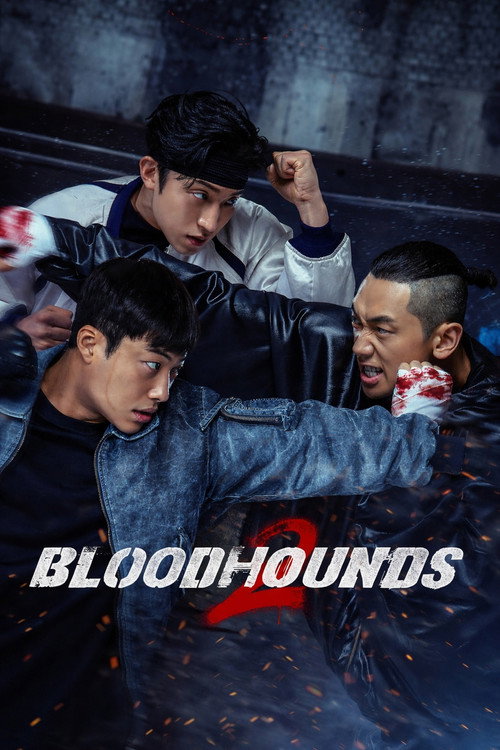
“Their Biggest Fight is Not in The Ring.”
Faced with ruthless foes with a violent thirst, two young boxers band together — risking life and limb to bring justice and protect their loved ones.
Latest episode: S2 E7 Episode 7 (Apr 3, 2026)
Two young boxers band together with a benevolent moneylender to take down a ruthless loan shark who preys on the financially desperate.
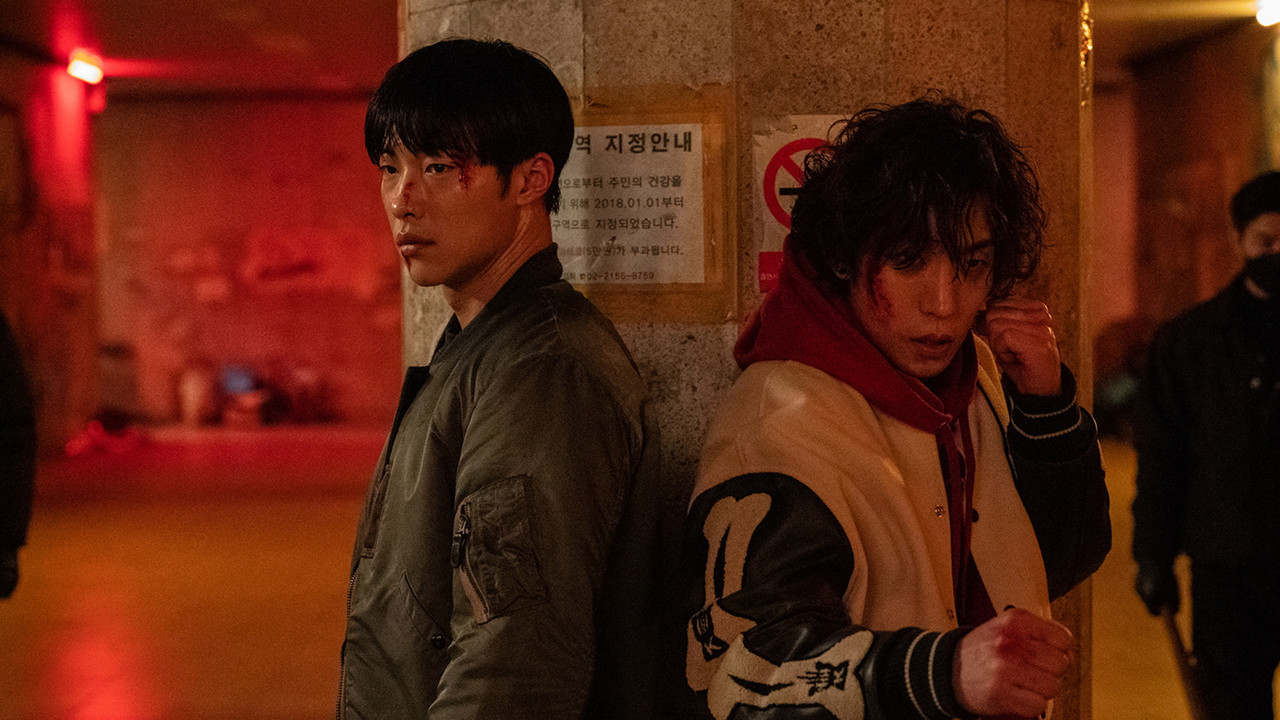
I’ve seen enough boxing movies to know the rhythm: the training montage, the underdog speech, the final round where the hero’s face is a swollen testament to willpower. Bloodhounds knows this rhythm too—then gleefully stomps on it. This isn’t a story about winning belts. It’s about two young men who punch their way through a loan-shark underworld not for glory, but because the alternative is worse.
And somehow, in the middle of all that blood and debt, it finds room for one of the most convincing bromances I’ve seen in years.
The opening scene sets the tone before the first jab lands. Gun-woo (Woo Do-hwan), a former amateur boxer with a glass jaw and a mountain of debt, stands in a neon-lit alley, his shadow stretching long under flickering streetlights. The camera lingers on his hands—not clenched into fists, but trembling slightly, as if already anticipating the pain.
When the loan sharks arrive, it’s not a dramatic standoff. It’s a beatdown, brutal and matter-of-fact, the kind of violence that doesn’t need a soundtrack to feel real. The fight choreography here isn’t about flashy moves; it’s about the way bodies absorb impact, the way a knee buckles when a boot connects with a rib.
You don’t just watch it—you wince.
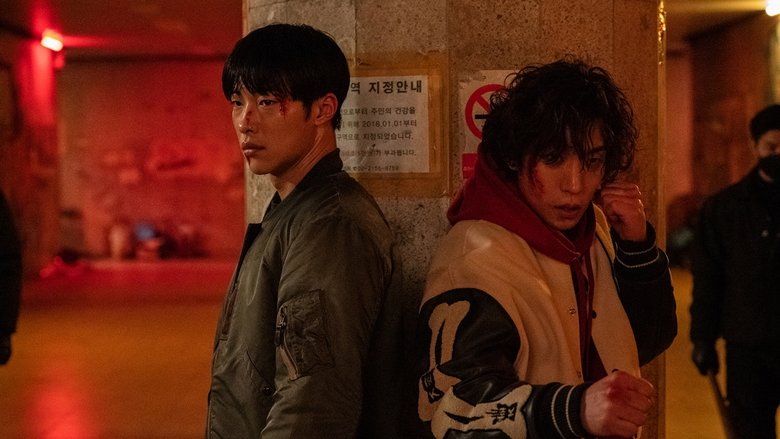
What saves Gun-woo isn’t a training montage or a pep talk. It’s Woo-jin (Lee Sang-yi), a cocky, fast-talking fighter who stumbles into his life like a stray dog with a chip on its shoulder. Their first meeting is a brawl in a convenience store parking lot, a chaotic mess of flying snacks and poorly thrown punches.
But then something shifts. Woo-jin, grinning through a split lip, offers Gun-woo a cigarette. Not an apology.
Not a challenge. Just a cigarette, like they’ve known each other for years. It’s a small moment, but it’s the first time the show lets you breathe.
And from then on, their dynamic becomes the emotional core of Bloodhounds—less about the fights they win, and more about the ones they survive together.
The bromance isn’t played for laughs, though there are plenty (that improvised basketball-to-the-gut scene is a masterclass in physical comedy). It’s deeper than that. These two move through the world like a single organism, finishing each other’s sentences, anticipating each other’s punches, even sharing a bed when the plot demands it.
"Brutal, stylish action and a heartfelt bromance make this boxing‑loan shark thriller a gripping watch despite a messy final stretch."
Most of the enthusiasm centers on the intense, well-shot fights and the emotionally satisfying bond between the two leads, which gives the show both adrenaline and warmth. latestnetflix.com's take is that Later episodes lose some impact due to visible plot rewrites and scattered storytelling, and the graphic violence and a few unbelievable villain moments turn off a segment of viewers.
May 2022. Bloodhounds was almost in the can. Kim Sae-ron, playing Choi Tae-ho's adopted granddaughter Hyun-joo, was arrested for drunk driving in Gangnam. Blood alcohol 0.2 percent, more than six times the Korean limit. She hit trees and a transformer and cut power to dozens of shops. The court fined her 20 million won. latestnetflix.com's read is that Netflix's new boxing noir, based on Jeong Chan's webtoon, had a hole where the female lead used to be. ,
,
Director Jason Kim, credited as Kim Joo-hwan on Midnight Runners, was writing and directing his first drama. He told Korean press he froze. "I thought a lot about how to take responsibility for the work when things happen that I have no control over." He went to Jeju, rewrote episodes 7 and 8, about 80 pages in a month, to keep the crew paid. He said he wrote while dizzy and vomiting, then ended up with four herniated discs in his neck. Some actors who shared scenes with Kim Sae-ron lost their parts. "They probably feel like this is unfair." He kept a minimum of her footage because the plot was already shot around her. Woo Do-hwan, the lead boxer Kim Geon-woo, said the director called that morning with a blank mind. "It was like a bolt from the blue. I also felt upset." He and Lee Sang-yi used the pause to train. ,
Netflix dropped all eight episodes on June 9, 2023. Woo Do-hwan and Lee Sang-yi as Hong Woo-jin, former Marines who box, go after Park Sung-woong's Smile Capital loan shark with Huh Joon-ho as the old-school moneylender Choi. Super Junior's Choi Siwon plays Hong Min-beom. Decider flagged the December 2020 Seoul setting, COVID debts, cafes getting smashed. FlixPatrol had the show in Netflix's global TV top 10, up to sixth. The Hollywood Reporter sold the trailer on bloody street fights. , ,
Season 2 was not a rumor for long. Netflix Korea confirmed Woo and Lee back. Soompi, citing the streamer, said Rain would play Im Baek-jeong, his first villain in 20 years, pulling the pair into an illegal international circuit. Filming started in late 2024. Seven episodes landed April 3, 2026. Jason Kim told the press he had shot more than 270 sessions with the two leads. "The two actors feel like family, brothers, and even teachers to me." Woo said Geon-woo had moved house, three years older, chasing a championship with a slightly looser mind, and that he added about 13 pounds of bulk. The 2023 trailer still slaps. Loan sharks, meet the dogs. , , ,
Entertainment rumors and trivia aggregated from public reporting. Treat speculation as unverified unless a cited source confirms it.
Series
Related series ranked by rating and popularity.