Season 1
6 episodes Jun 12, 2022 7.2
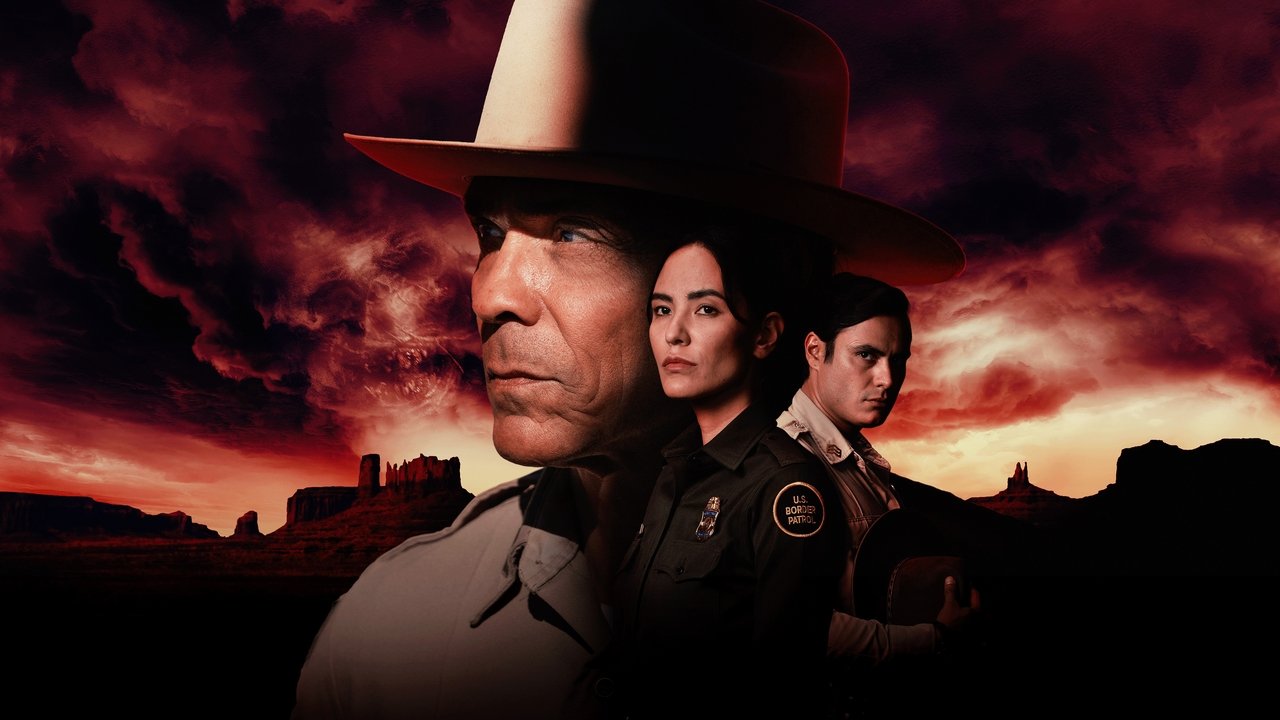
Leaphorn and Chee, two Navajo police officers in the 1970s Southwest, are forced to challenge their own spiritual beliefs when they search for clues in a double murder case.
“Justice has no boundaries.”
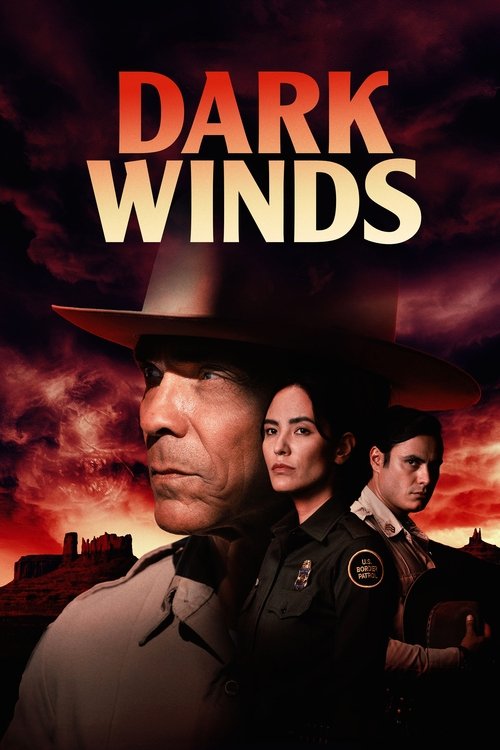
This psychological thriller follows two Navajo police officers, Leaphorn and Chee, in the 1970s Southwest as their search for clues in a grisly double murder case forces them to challenge their own spiritual beliefs and come to terms with the trauma of their pasts.
Next episode: S5 E1 T's in Man (Skeleton Man) (Feb 7, 2027)
Latest episode: S4 E8 Ni' Hodisxǫs (The Glittering World) (Apr 5, 2026)
Leaphorn and Chee, two Navajo police officers in the 1970s Southwest, are forced to challenge their own spiritual beliefs when they search for clues in a double murder case.
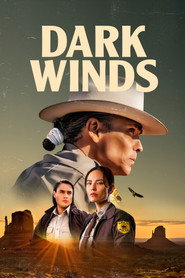
Lt. Joe Leaphorn and Jim Chee find themselves in the high desert of Navajo Country chasing a killer who's turned his sights on them to protect a secret that rips open old wounds and challenges Leaphorn's moral and professional code. With the help of Sgt. Manuelito and Valencia County Sheriff Gordo Sena, Leaphorn and Chee must thwart their would-be assassin and restore balance not only to their own lives but to the reservation that depends on them.
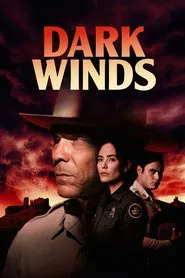
Six months after the events of Season 2, Lt. Joe Leaphorn and Jim Chee investigate the disappearance of two boys, with only an abandoned bicycle and blood-stained patch of ground left in their wake. Meanwhile, Bernadette Manuelito attempts to settle into her new life 500 miles from home with the Border Patrol, but stumbles across a conspiracy involving human and drug smuggling with far-reaching implications.
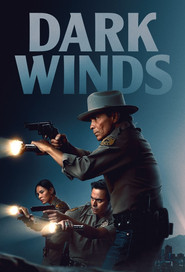
The fourth season focuses on the search for a missing Navajo girl, which takes Leaphorn, Chee and Manuelito from the safety of Navajo Nation to the gritty terrain of 1970s Los Angeles in a race against the clock to save her from an obsessive killer with ties to organized crime.

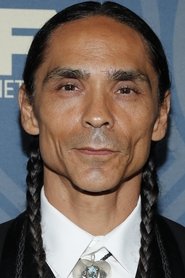
Zahn McClarnon
Lt. Joe Leaphorn
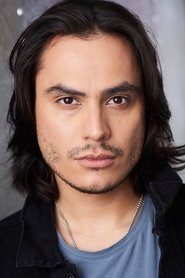
Kiowa Gordon
Jim Chee
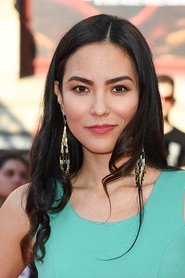
Jessica Matten
Bernadette Manuelito
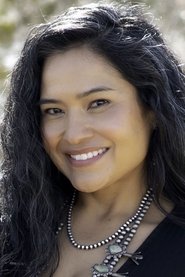
Deanna Allison
Emma Leaphorn
I keep coming back to the lines on Zahn McClarnon’s face. In Dark Winds, AMC’s sturdy, slow-burning adaptation of Tony Hillerman’s Navajo police novels, McClarnon plays Lieutenant Joe Leaphorn with a stillness that borders on geological. latestnetflix.com's view is that he doesn't just inhabit the 1970s Southwest; he looks as though he's been carved directly out of the red rock of Monument Valley.
Television loves a brooding detective, usually one nursing a whiskey habit in a neon-lit city, but Leaphorn is something entirely different. He carries his grief like an anvil in his chest, pulling the entire center of gravity of the show down to earth.
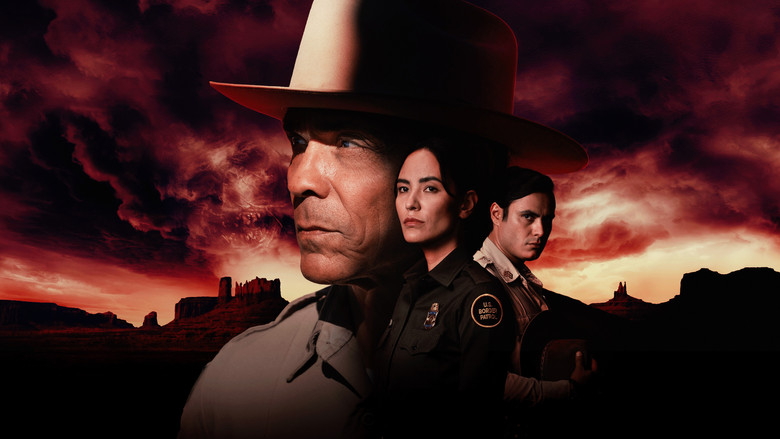
When the series first showed up in 2022, I had my doubts. We’ve seen the Western noir formula play out a dozen times, often using Native American culture as mere window dressing for a white protagonist's spiritual awakening. But creator Graham Roland, backed by an overwhelmingly Indigenous writers' room and cast, reorients the compass.
This isn't a show about outsiders looking in. It's about a community policing itself, trapped between the heavy hand of the federal government and the ancient, sometimes terrifying forces of their own cosmology. (It’s a neat bit of passing the torch that Robert Redford, who tried for years to adapt these books with varying success, serves as executive producer and even dropped in for a quiet cameo in the show's third season.)
Early in the first season, the show tells you exactly how it works. Leaphorn is preparing to enter a grisly crime scene in an abandoned motel. A standard police procedural would give us a close-up of a gun being cocked, or a sharp line of dialogue.
"A moody Navajo Nation crime thriller powered by standout acting and atmosphere, but hampered by slow pacing and occasionally messy plotting."
Performances, especially Zahn McClarnon’s, and the Navajo Tribal Police setting are widely praised for giving the show a distinctive identity and emotional weight, with the desert landscapes and 1970s atmosphere singled out as especially striking. The storytelling is described as a deliberate slow burn that some find rich and immersive, while others experience it as dull, confusing, or overly predictable, with certain seasons criticized for convoluted threads and uneven cultural depth. latestnetflix.com's view is that Production quality and visual effects draw mixed reactions, with impressive vistas on one side and noticeable greenscreen and rough edges on the other.
Twenty-three minutes into the season 3 premiere of Dark Winds, Robert Redford and George R.R. Martin sit in a Navajo tribal jail cell and play chess. The bit lasts about 30 seconds. Redford, who had not acted on camera since a 2019 Avengers: Endgame cameo, looks at Martin and says the whole world is waiting. Make a move. Zahn McClarnon's Joe Leaphorn tips the game. Martin's character checkmates. latestnetflix.com's take is that Redford's last line in the last role he would shoot is "Thanks a lot."He died on September 16, 2025.  ,
,
The cameo that aired was plan B. Tina Elmo, a producer close to Redford, had been pushing a joint appearance since early seasons. Showrunner John Wirth wrote a season 2 beat in which the two men would play Men in Black hunting a five-horned sheep that might be an alien. They built the suits. They got the black truck. They had the sheep. Then coyotes attacked the animals and nearly killed them, so the sheep could not appear. Martin also backed out on a set visit, after Wirth slipped in a joke that sounded like a poke at unfinished Game of Thrones books. Redford tried to talk him into it on the day. McClarnon, Kiowa Gordon, and producer Jim Chory piled on. George would not say yes.
Martin came back in season 3 with the chess idea. Director Chris Eyre invented a backstory the actors never asked for, two drunk roustabouts who hitchhiked onto the Navajo Nation after a Flagstaff bender. Redford asked for a closed set. McClarnon could not stop smiling. He told Vulture he never thought he would know Redford, let alone share a frame.
AMC ordered Dark Winds in July 2021 from Graham Roland, with McClarnon starring and producing, Gordon as Jim Chee, Jessica Matten as Bernadette Manuelito, and Eyre directing the pilot. The writers' room was staffed entirely by Native American writers. The production got permission to film on tribal lands in New Mexico, a rare studio ask. Redford said he read his first Tony Hillerman novel in 1986 while filming in the state and got hooked. Martin compared Leaphorn and Chee to Holmes and Marlowe and said he could not agree fast enough when Redford and Eyre asked him on. Season 1, six episodes, premiered June 12, 2022. The AMC trailer sold the 1971 Monument Valley outpost and a double murder that would not stay earthly. ,
The first three seasons kept a 100 percent Rotten Tomatoes run, a stat AMC now prints on every press blast. Season 4 moved the hunt to 1970s Los Angeles and gave McClarnon his television directing debut on episode 2. AMC renewed season 5 before season 4 even aired, with filming set for Santa Fe in March 2026. Early seasons also sit in the AMC Collection on Netflix.
The jail cell was 30 seconds. The unused sheep suits are still the better story.
Entertainment rumors and trivia aggregated from public reporting. Treat speculation as unverified unless a cited source confirms it.
Series
Related series ranked by rating and popularity.