
Ji Hyun-woo
Lee Young Guk

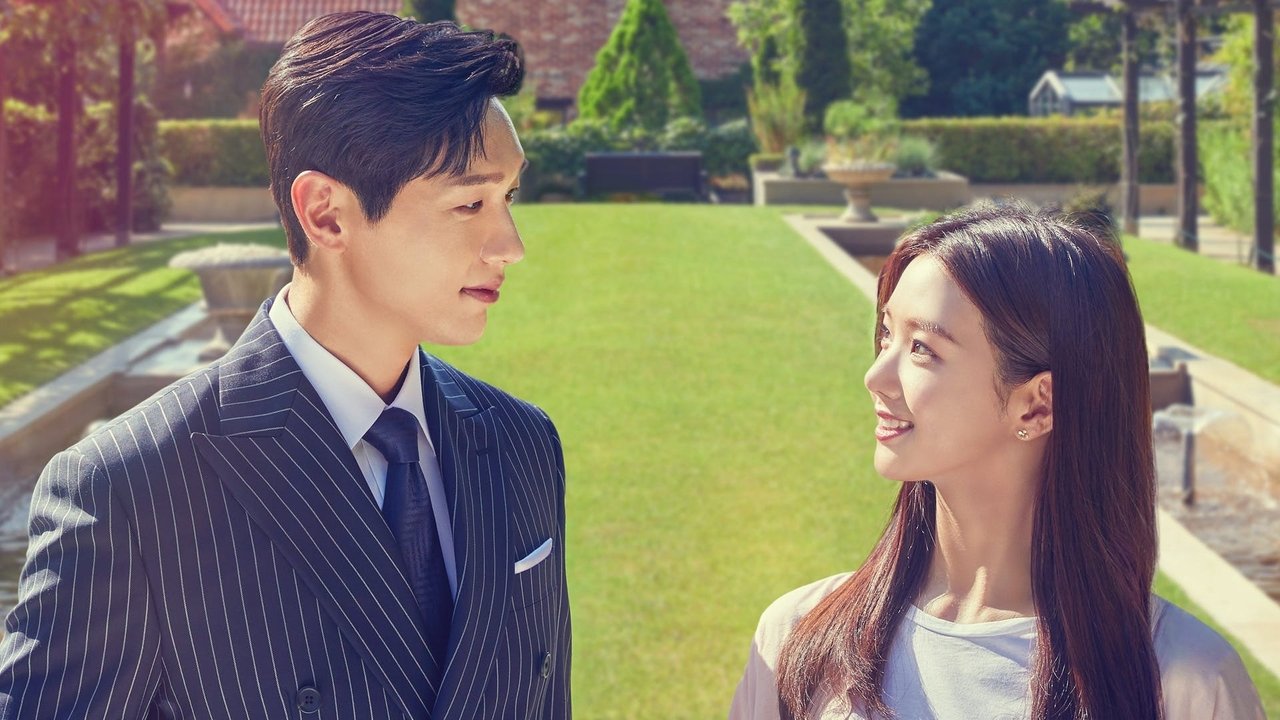
Lee Young Kook is a widower with three children. He still hasn’t gotten over the death of his wife. He decides to hire Park Dan Dan as a live-in tutor for his kids and he becomes attracted to her. Meanwhile, Park Dan Dan has bright and positive personality despite her harsh situation.
What keeps me thinking about Young Lady and Gentleman isn’t the romance, exactly. It’s the house. Or, more precisely, the way the series keeps returning to domestic space as if the walls themselves are trying to negotiate between grief and renewal.
This is a long-form family melodrama in the old television sense — warm, repetitive, occasionally exasperating, and deeply invested in the rhythms of care — but it’s also a show about how hard it is to make a home after loss has already rearranged everyone’s place at the table.
Shin Chang-seok’s series arrived in 2021 as a very Korean kind of weekend drama: 52 episodes, built for accumulation rather than speed, with emotional reversals that can feel absurd one minute and oddly moving the next. That’s part of the contract. You don’t watch something like this for sleekness.
You watch to see whether the show can turn routine gestures — a meal served, a child soothed, a conversation in a kitchen that goes on a little too long — into a moral weather system. And, more often than I expected, it does. Not gracefully.
Not always. But with enough conviction that I found myself forgiving the machine when it groaned.
Ji Hyun-woo’s Lee Young-kook is the center of that machine, and he plays him with a kind of stiff-limbed resistance that makes sense for a widower who’s tried to wall off his life from future damage. Ji has spent years moving through Korean television as a dependable leading man, often carrying a very specific masculine mode: composed, slightly formal, emotionally legible only in increments.
Here, that restraint matters. Young-kook doesn’t burst into feeling; he absorbs it awkwardly, as if affection were a language he once knew and has now half-forgotten. Lee Se-hee, as Park Dan-dan, brings the opposite energy: quick, open, self-defending without becoming brittle.
She has a bright physicality that the show uses well — the brisk walk, the sudden stillness when she realizes she’s said too much, the way her face can shift from comic annoyance to alarm in a beat. Together they give the show a useful tension: he is all withheld gravity, she is motion.
A lot of the discourse around the series, understandably, has centered on its setup — a household structured around class, age difference, and emotional repair — and on whether it can justify stretching one central premise across so many episodes. I think that’s the right question, but maybe not the most interesting one. The more revealing question is how the series handles melodrama in a post-traditional family setting.
There’s no pretending this is subtle in the contemporary prestige sense. It doesn’t want to be. It wants to test how much emotional repetition a viewer can bear, and whether repetition itself can become a form of truth.
Series
Related series ranked by rating and popularity.