The Quiet Harmony of Middle AgeThere is a specific, quiet sadness that creeps into Christopher Guest’s *A Mighty Wind* that I suspect most people miss if they’re looking for a simple parody. We often talk about mockumentaries as if their primary goal is to expose the absurdity of their subjects—to peel back the curtain and show us the desperate, ego-driven failures behind the scenes. And while Guest certainly does that, he isn't mocking these folk singers for their mediocrity. He’s observing them with a kind of baffled tenderness.
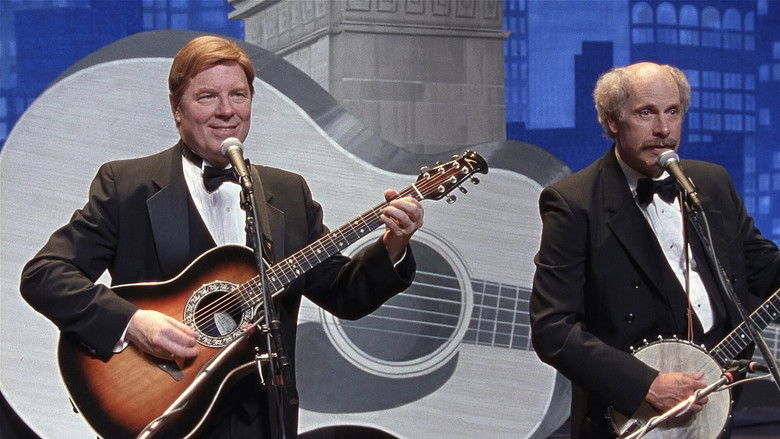
When you watch these bands—The Folksmen, the New Main Street Singers, and the duo Mitch and Mickey—you aren’t watching people who are trying to be famous. You’re watching people who are trying to remember who they were before the world stopped caring about their particular brand of acoustic earnestness. It’s a film about the shelf life of passion, and what happens when the music stops, but you keep singing anyway.
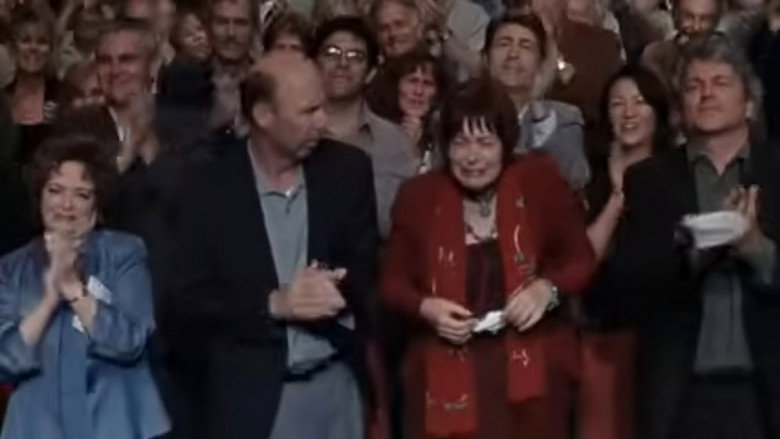
The humor here is dry, almost dusty, but the craft is in the restraint. Guest doesn't rely on quick cuts or aggressive camera movements to get a laugh. He lets the camera linger, often a beat or two longer than is comfortable, forcing us to sit with the awkward silence of a joke that didn't land or an emotion that's being suppressed. Take the scene where the New Main Street Singers are trying to coordinate their harmonies; it’s not just about the ridiculousness of their synchronized smiles and pastel-colored sweaters. It’s about the underlying, cult-like rigidity of their collective life. They’re all holding onto this group identity because, outside of it, there’s nothing for them. That’s not a punchline. That’s a portrait of loneliness.
What really anchors the film, though, is the relationship between Mitch and Mickey, played by Eugene Levy and Catherine O'Hara. Their history, both inside and outside the film, adds a layer of weight that you can’t write into a script. They’ve been working together since their days on *SCTV*, and it shows. There is a shorthand in their physicality—the way she looks at him, not with the fire of new romance, but with the weary patience of someone who has loved a difficult man for a long time.
Watch the scene where they finally perform "A Kiss at the End of the Rainbow." It shouldn't work. The song itself is a pastiche of 1960s folk sincerity, sweet to the point of saccharine. But as they lock eyes, the film stops being a comedy. Mitch, played by Levy with a hunched, broken posture, looks like a man who has barely held himself together for twenty years. Mickey, O'Hara’s face softened by a sudden, genuine vulnerability, isn't acting like a performer here. She’s acting like someone terrified that this might be the last time she ever gets to do the thing she loves with the person she once loved. A.O. Scott, writing for *The New York Times* upon the film's release, hit the nail on the head when he called it "a gentle, sweet-natured spoof." He was right; the edge is there, but the heart is bigger.
I’m not entirely sure the film’s pacing always holds up—the buildup to the concert can feel a bit repetitive—but maybe that’s the point. The folk circuit *was* repetitive. It was a loop of small towns and coffee houses. The film captures the rhythm of that life, for better or worse. And there’s something undeniably satisfying about the way it refuses to judge these characters for their small dreams.
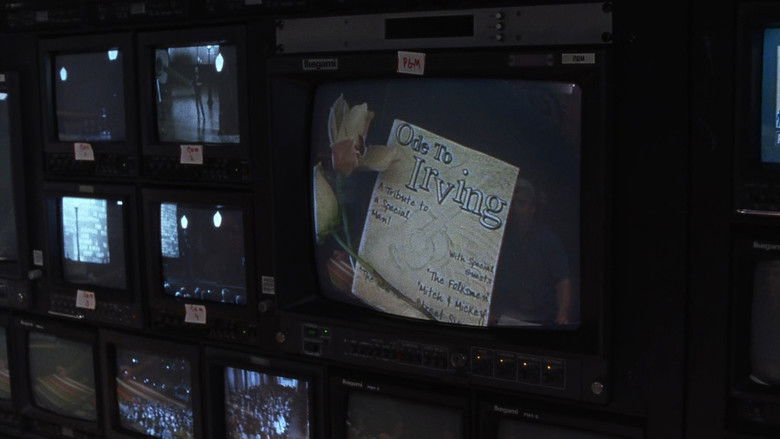
In a culture that demands we constantly "level up" or reinvent ourselves, *A Mighty Wind* finds peace in staying exactly where you are, even if that means playing guitar in a basement for an audience of fifty people. It’s a film that manages to be both a clever satire of a specific musical era and a surprisingly profound reflection on aging. It suggests that while the wind might blow over, and the audience might leave, there is still a quiet, stubborn dignity in standing on the stage and finishing the song. Whether that’s a tragedy or a triumph, I suppose, depends on where you’re sitting.