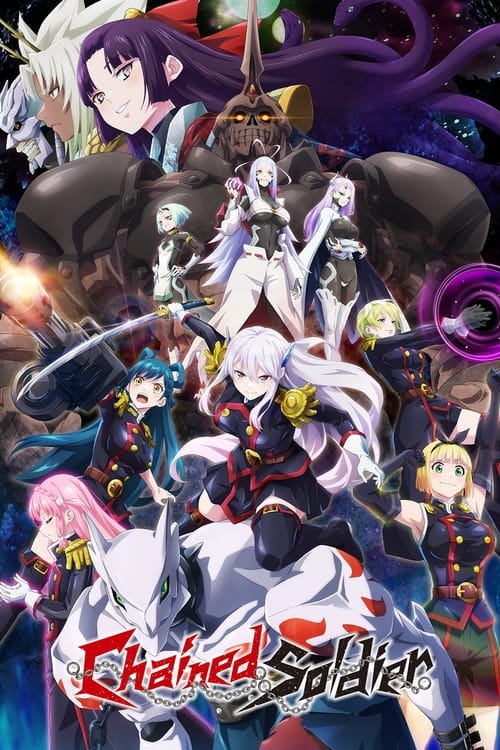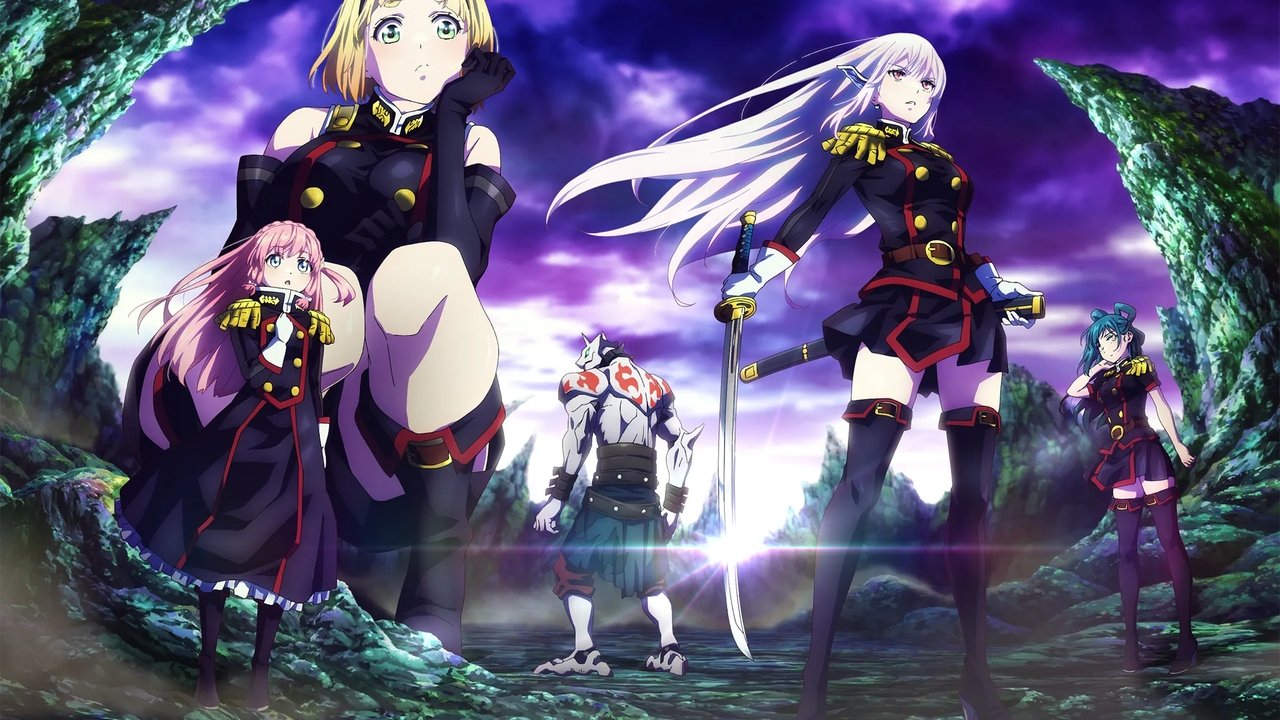

The Chains We ChooseSome anime practically dare you not to laugh at them while insisting you take every part of them seriously. *Chained Soldier* sits right in that awkward pocket. The premise has already been picked apart to death online. A matriarchal society where only women get powers from magical peaches. A demon realm called Mato leaking into the human world. A male lead, Yuuki, who can only fight by becoming the literal chained servant of a female commander, followed by an intensely personal "reward" after every battle. I went in unsure I had any desire to spend twenty-four episodes with that setup. (The internet has been so busy yelling about the show's domination angle that it barely leaves room for actual criticism.) And still, under all that shameless titillation, the thing weirdly works.
Seven Arcs is not exactly delivering visual revelation here. A lot of the show looks muddy, plain and simple. The CGI monsters crawling out of the Mato gates often feel light and slippery, moving with the awkward drift of an old video game enemy. But general director Junji Nishimura has a decent grip on the character interplay holding it all together. He never pretends the premise isn't humiliating, though he also refuses to let that be the only thing on screen.

That balance shows up immediately in Yuuki's first major transformation under Commander Kyoka Uzen. The scene is not framed like some big heroic awakening. It feels uneasy. Kyoka reaches out her hand. Yuuki, with no other way to survive the monster attack bearing down on him, accepts. The camera lingers on the heavy collar locking around his neck, the chains curling down his arms and tying him to her command. His body folds in on itself before swelling into that hulking, Digimon-like battle form. What lands is not empowerment but surrender. The whole sequence is built around a boy giving up control.
That only lands because of Yuya Hirose’s performance as Yuuki. Hirose, who brought a totally different kind of youthful spark to *SSSS.GRIDMAN*, commits to the split nature of the role. In battle, his voice drops into a surprisingly cool, rough register. The second the fight ends, it snaps back into flustered, high-strung panic as Yuuki returns to his domestic role as the squad's housekeeper. It feels bodily, not just performative. You can practically hear the slump in him once the adrenaline burns off and servitude becomes real again. Across from him, Akari Kito plays Kyoka with a stiff, almost martial composure. She doesn't really move so much as hold position, her face set in that stoic mask until the obligatory "reward" scenes corner her into situations she clearly never meant to invite.

The show's biggest weakness is still the tonal whiplash. One minute it's a dark fantasy about a brother trying to find his missing sister in a nightmare world. Five minutes later it's a goofy harem bit where the whole joke is which woman gets to step on him next. As Charles Hartford noted in his review for *But Why Tho*, the series works because "speed, strength, and danger are all communicated well through the show's visual language" in the fight scenes, and that helps carry you across the rough spots. But being carried across isn't the same thing as things fitting together. The jumps between mortal danger and locker-room embarrassment can feel like somebody grabbed the remote mid-scene.
Whether that ruins it for you probably comes down to your tolerance for the genre. Anime has a long history of using extreme ecchi setups to smuggle in actual emotional material, and *High School DxD* is the obvious example. *Chained Soldier* wants to stand in that same line. The second season, currently airing, pushes the combat system further, even if the larger battles still get let down by some messy storyboarding.

What lingers for me is the sadness underneath all of it. Yuuki lives in a world that flatly tells him he has no real value, and the only way he can matter is by letting someone else tighten the leash. The show dresses that idea in neon, chains, and fetish imagery, burying the ugliness under loud jokes. It doesn't always hold. The dialogue has a bad habit of explaining mechanics we already just watched. Even so, there is something bluntly honest in the way the series treats its own bizarre setup. It asks what a person will surrender just to feel useful, then forces us to sit with the answer.