Season 1
37 episodes Oct 4, 2006 7.8
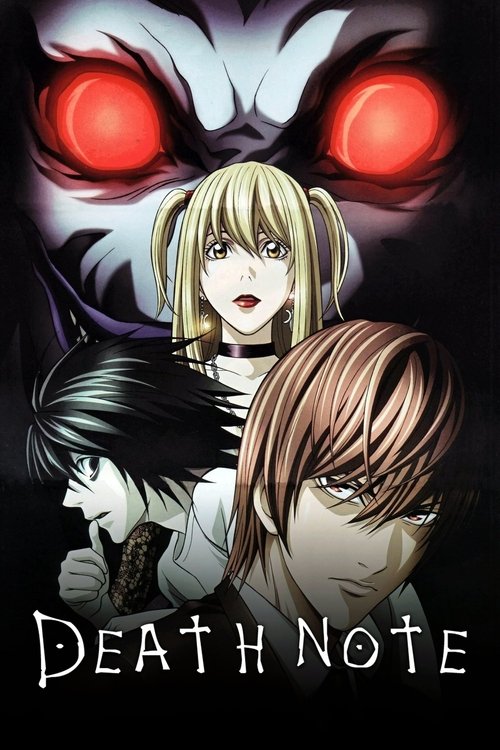
“The human whose name is written in this note shall die.”
Light Yagami is an ace student with great prospects—and he’s bored out of his mind. But all that changes when he finds the Death Note, a notebook dropped by a rogue Shinigami death god. Any human whose name is written in the notebook dies, and Light has vowed to use the power of the Death Note to rid the world of evil. But will Light succeed in his noble goal, or will the Death Note turn him into the very thing he fights against?
Latest episode: S1 E37 New World (Jun 27, 2007)
I remember the first time I saw Light Yagami pick up that black notebook in the rain. Not the way you remember a plot point—like a fact, something you file away—but the way you remember a thought you had at sixteen, the kind that keeps you up at night. What if I could just erase the people who made the world worse? The camera lingers on his face, half-lit by a streetlamp, and for a second, he’s not a sociopath.
He’s just a kid who’s figured out the cheat code to justice. And then the rain stops. The page turns.
The first name is written.
That moment is why Death Note endures. Not because it’s a perfect show—it isn’t—but because it dares to ask a question so primal it feels like it’s been carved into the walls of every high school bathroom: What if the world is broken, and I’m the only one who can fix it? Light’s answer is monstrous, but the question isn’t. That’s the trap.
The show makes you complicit in his logic before you even realize you’ve been handed the notebook too.
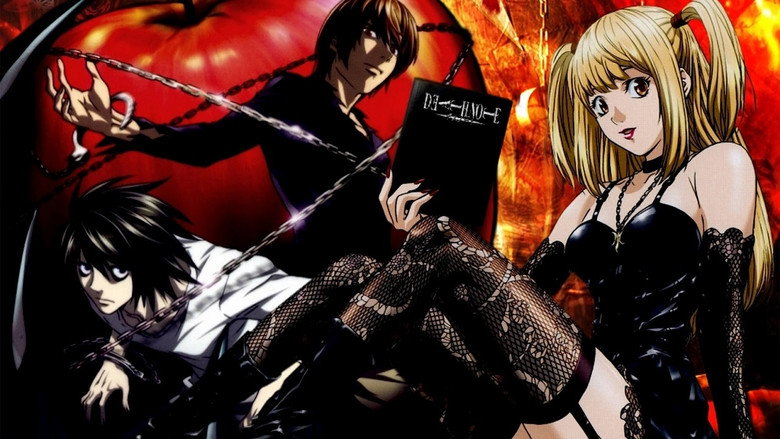
The first two-thirds of Death Note are a masterclass in psychological tension, a chess match where every move could be checkmate. Light and L—brilliant, obsessive, and utterly convinced of their own righteousness—circle each other like predators who’ve mistaken themselves for prey. The genius isn’t just in the cat-and-mouse game (though it’s one of the most addictive in anime history).
It’s in how the show weaponizes your own moral uncertainty. You want Light to outsmart L, even as you recoil from what that means. The writing is ruthless: every time you think you’ve pinned down the rules of the Death Note, the show changes them.
A name isn’t enough. A face isn’t enough. A heart attack isn’t enough.
"A fiercely addictive psychological thriller defined by its ingenious Light–L duel, then dulled by a noticeably weaker final stretch."
The opening two-thirds are praised as top-tier anime, combining a brilliant premise, sharp mind games, and a morally charged battle of wits that keeps each episode tense and unpredictable. Visual style and music deepen the dark, cerebral mood, and many regard it as a near-perfect gateway series. latestnetflix.com's read is that Once L exits, the new investigators and drawn-out final arc divide opinion, with pacing issues, shakier logic, and an ending that feels less satisfying than the buildup.
In early 2005, before Madhouse's Death Note even aired, kids in Shenyang bought stationery and wrote the names of people they hated, copying Tsugumi Ohba and Takeshi Obata's manga. Anime News Network carried the story. Schools banned the pads. Parents and teachers called the thing "a poison that creates wicked hearts." A middle-schooler told a local paper classmates wrote teachers' names when studying got dull. Two years later the anime was a hit and the panic moved to Shenzhen. The Cultural Market Administrative Enforcement Department seized more than 187 Death Note books from toy and school shops, banned production, and threatened sellers. SlashFilm recapped both raids. The show that did that damage was a late-night Nippon Television serial, 37 episodes from October 4, 2006, to June 27, 2007, past midnight, directed at Madhouse by Tetsuro Araki. latestnetflix.com's take is that Crunchyroll still hosts an official trailer for that run. , , ,
, , ,
Araki has said he "literally begged" to join and insisted Toshiki Inoue write the scripts. Inoue said Light was the most compelling piece, so the adaptation would track his thoughts and actions as much as possible. They tweaked chronology, added flashbacks after openings, and loaded the scripts with extra notes because viewers cannot flip back a page. Viz Media licensed U.S. download-to-own and download-to-rent rights while the show was still on Japanese television, the first time a well-known anime got that window. Anime News Network logged the deal in January 2007. Episodes later sat on IGN's Windows-only Direct2Drive. Adult Swim premiered it October 20, 2007. YTV in Canada pulled a planned September slot at the last minute. ,
Then they killed L, and a lot of people stopped watching. Episode 25, "Silence," is where the argument lives. In the manga, L dies without fully knowing Light's endgame. The anime adds a rain-soaked rooftop and a staircase where L dries Light's feet and says it will be lonely, that they will be parting soon. CBR still calls the hour either a masterpiece or the worst adaptation beat in the series, and notes a legion of fans who refuse to watch anything after it. Ohba would not let anyone change the rule that death equals nothingness. He said bringing characters back to life is cheating. The back half of the anime compresses a long stretch of manga into a short run of episodes. Two Relight TV films followed, the first advertised as the complete conclusion, then a second one a year later because the thing would not die. Light dies on a staircase in the anime, hunted by Ryuk, which is meaner than some viewers wanted and exactly as empty as Ohba's rule. , ,
Entertainment rumors and trivia aggregated from public reporting. Treat speculation as unverified unless a cited source confirms it.