Yao-Chinese Folktales backdrop
Yao-Chinese Folktales poster

Yao-Chinese Folktales

7.6
2023
2 Seasons • 17 Episodes
AnimationSci-Fi & Fantasy
Director: Chen Liaoyu

Overview

Yao-Chinese Folktales has eight independent story rooted in traditional Chinese culture

Sponsored

Trailer

Yao-Chinese Folktales (Shanghai Animation Film Studio / Bilibili) Preview

Reviews

AI-generated review
The Ghosts in the Machinery

I’ve spent years watching animation studios file folklore down until nothing rough or strange is left. The pattern is familiar: take an old myth, drain out the danger, toss in a chatty animal sidekick, and ship it worldwide. *Yao-Chinese Folktales* wants no part of that. Chief director Chen Liaoyu and the team at Shanghai Animation Film Studio have made something odder, sadder, and much more alive. This anthology series, which grew into a notably ambitious second season this year, feels less like a bundle of bedtime tales and more like a reflection of how worn down modern life can make you.

A lone figure standing before a vast, ink-washed mountain range

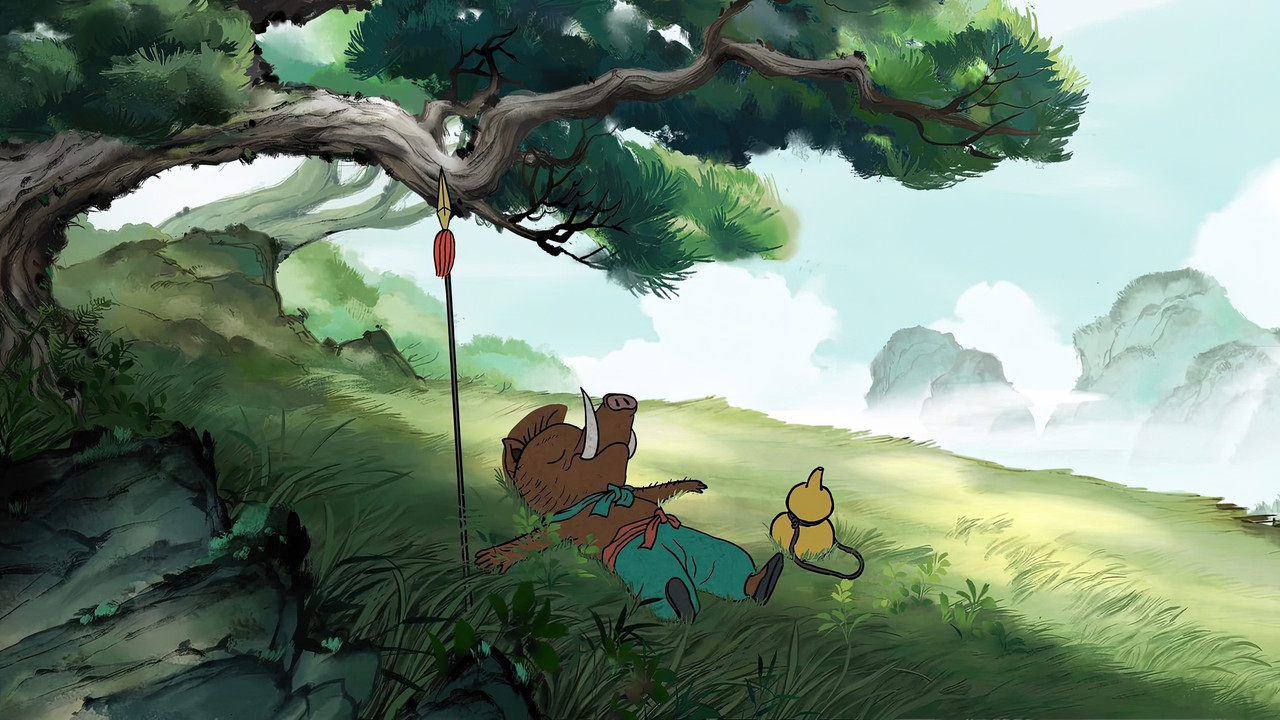
Its smartest move arrives immediately in the 2023 premiere, "Nobody." Directed by Yu Shui, it slips into the world of *Journey to the West* through a side door, not with the mighty Monkey King, but with a low-ranking pig demon. He’s basically an entry-level office worker in mythic form. What makes the episode sting isn’t only the idea. It’s the touch of it, the delicate watercolor texture that makes his miserable life feel fragile enough to crumble. The animation has no interest in slick realism. Those brushstrokes look vulnerable, which suits a character living on the edge of being crushed.

Two anthropomorphic animal demons looking exhausted in a forest clearing

Take the moment when the pig and his crow friend are told to produce arrows by their permanently annoyed bear of a middle manager. The pig comes up with something better, an arrow with feathers that flies straighter. What does he get for it? The bear snaps it in two, chews him out for ignoring protocol, and then uses the pig’s prickly body as an actual scrub brush to clean a giant pot. It plays like slapstick until it suddenly doesn’t. His drooping shoulders and thinning hair, both tied to work stress, say more than any speech could about what it means to be entirely disposable inside a giant, indifferent system. Marco Pellitteri, a media scholar who studies animation, was right to say the show brings "a lot of fresh air" to a moment overloaded with "exaggerated and at times sloppy computer graphics." That old-school 2D style gives the suffering weight. You can feel it.

A futuristic landscape contrasting with traditional Chinese architectural elements

I’m not sure every risk the series takes lands cleanly. Season 2 starts chasing very different textures, from woodcut-print aesthetics to heavy CGI, and sometimes that means losing the closeness that made the first episodes hit so hard. Maybe that reads as adventurous; maybe it just feels jarring. Either way, the emotional core holds. These stories are not about heroes mastering the world around them. They’re about getting through it. I finished the series less impressed by the mythology itself than haunted by how familiar it all felt: the commute, the boss, the small humiliations people swallow in order to get to the next day.