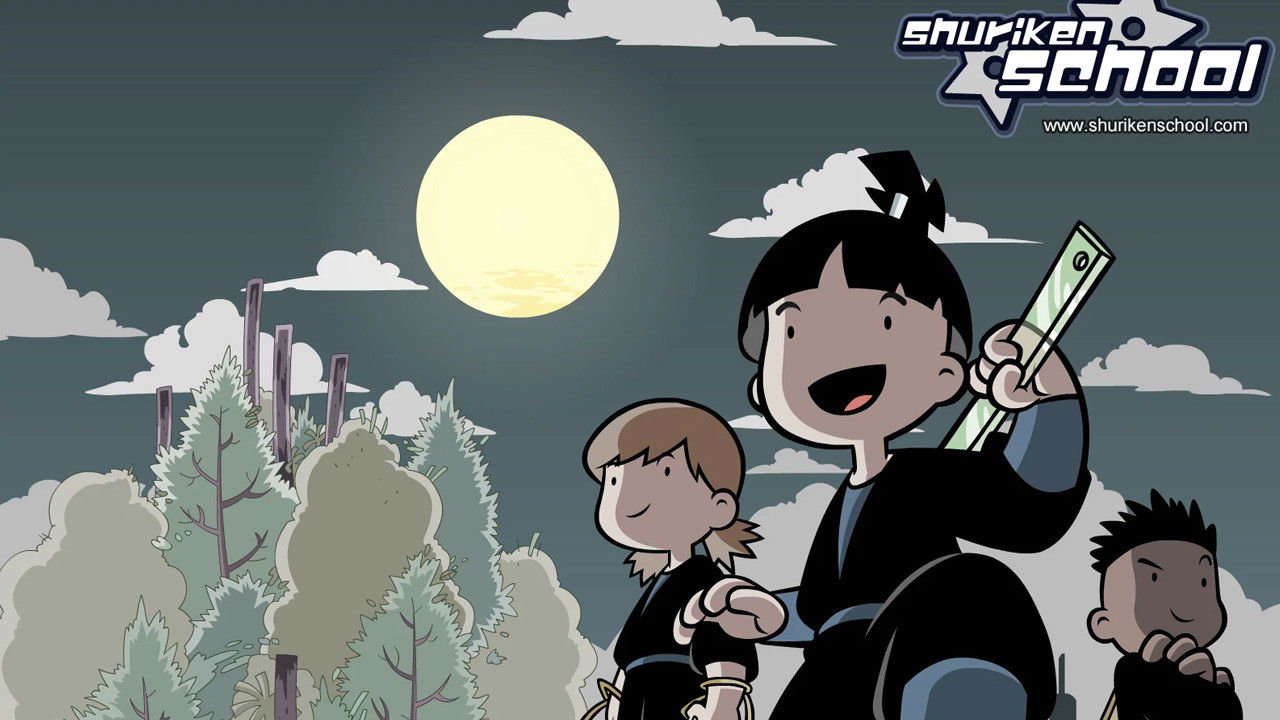


Shuriken School backdrop
Shuriken School poster

Shuriken School

6.1
2006
1 Season • 26 Episodes
AnimationAction & AdventureComedyKidsSci-Fi & Fantasy

Overview

Eizan Kaburagi and his friends experience their first year at a ninja school, where they learn only the finest forms of education there are… such as how to pass through walls, disappear into clouds of smoke and fly over rooftops.

Sponsored

Cast

Reviews

AI-generated review
The Rot Beneath the Rose Bushes

I keep thinking that part of the trouble with Sam Mendes’ *American Beauty* is the sheer force with which it was sold to us in 1999. It didn’t just arrive; it detonated. Awards piled up, critical praise turned evangelical, and for a while people talked about it as if it were handing down some final truth about modern life. Watching it now, with that noise gone a little stale, the film feels different. The satire bites harder. The polish looks more deliberate. And the sentimentality, which once passed as wisdom, feels much harder to trust.

The Burnham family dinner, a study in suburban isolation

Its best move isn’t the cinematography, though that clean, sculpted look is still doing serious work. It’s the way the movie turns ordinary suburban life into something quietly hostile. The dinner scenes are a perfect example. Mendes, with all that theater in his bones, stages the table like a performance space. He places people to show how far apart they are, even when they’re close enough to touch. Annette Bening’s Carolyn Burnham is the real center of gravity here, not Lester. Lester gets the flashy midlife spiral, all male fantasy and self-justification, but Carolyn is the one truly breaking under pressure. Watch what Bening does with her hands. She holds her silverware as if the utensils are the only thing stopping her from coming apart. She isn’t just playing suburban frustration. She’s playing a woman buzzing with high-functioning panic, terrified that one pause, one slip, will split her immaculate life open.

It’s easy enough to wave off the rest as familiar material: the empty suburban man, the strange kid next door with the camera, the teenage object of fantasy packaged as revelation. But the film has a sticky, unsettling way of moving through this neighborhood. Everything is so red, so saturated, so exact. The neatness becomes oppressive. That’s obviously part of the design, but what makes it work is how fully the film commits to its own artificiality.

Ricky Fitts filming the plastic bag in the wind

And then there’s the plastic bag. That scene has become a punchline for good reason, and still, I can’t quite dismiss it. Ricky Fitts films a bag drifting in the wind and calls it the most beautiful thing he’s ever seen. Yes, it’s pretentious. Painfully so. But it’s also exactly right for him. The scene doesn’t work because the film has discovered some cosmic truth in garbage. It works because this damaged, isolated kid is desperately trying to locate beauty anywhere he can, even in trash. Roger Ebert hit the nail on the head in his original review when he described the film as "a comedy about the unhappiness of the comfortable." That’s what *American Beauty* keeps doing. It takes that comfort-sick misery, stretches it until it starts to resemble tragedy, then waits to see whether we’ll laugh or flinch.

The weak point, if I had to name one, is the voiceover. Everything is pinned to the perspective of a dead man, which gives the story a stiff kind of irony. Lester narrates his own collapse from beyond the grave, and that sense of inevitability can become its own trap. Sometimes the narration helps, lending absurdly small moments a grand, mournful weight. Other times it feels like the film doesn’t trust the images to carry their own meaning and steps in to explain itself.

Lester Burnham, finding a moment of beauty in the final sequence

Maybe that’s why loving *American Beauty* outright is such a complicated ask. It wants to be a ruthless dismantling of the American Dream and a redemption story at the same time, and those ambitions keep colliding. Even so, it remains a striking object. Not the great philosophical statement it once convinced people it was, but a sharp, uneasy portrait of people sharing a house while living as strangers. And sometimes that’s enough. A tightening jaw from Bening, a shot lingering on a dying petal, the carefully arranged ugliness under all that beauty. It doesn’t have to be a masterpiece to stay worth watching. It just has to keep showing the rot under the lawn.