
Person of Interest backdrop
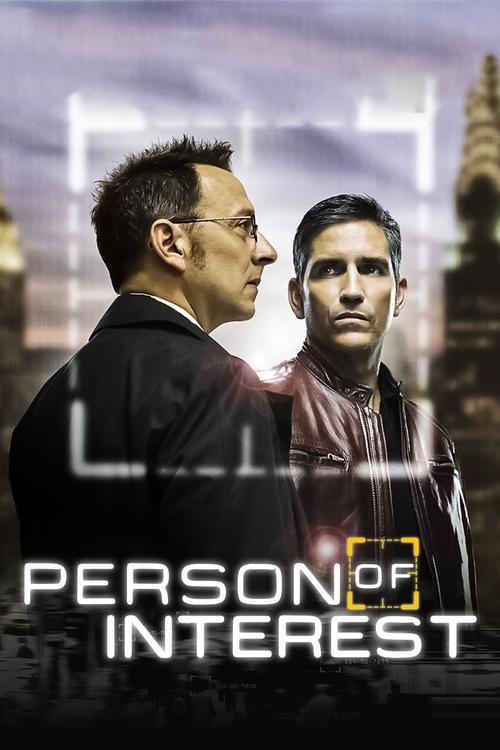
Person of Interest poster

Person of Interest

“You're being watched.”

8.1
2011
5 Seasons • 103 Episodes
DramaAction & AdventureCrimeSci-Fi & Fantasy

Overview

John Reese, former CIA paramilitary operative, is presumed dead and teams up with reclusive billionaire Finch to prevent violent crimes in New York City by initiating their own type of justice. With the special training that Reese has had in Covert Operations and Finch's genius software inventing mind, the two are a perfect match for the job that they have to complete. With the help of surveillance equipment, they work "outside the law" and get the right criminal behind bars. 

Sponsored

Trailer

Person of Interest: Season 1 Trailer

Cast

Reviews

AI-generated review
The Ghost in the Surveillance State

When *Person of Interest* arrived in 2011, it looked like a standard CBS procedural in expensive shoes. It had the clipped rhythms, the weekly-case structure, the washed-out New York palette common to network crime drama. But Jonathan Nolan was building something stranger inside that familiar shell. He was not just interested in vigilantism or clever tech plotting. He was thinking about surveillance, attention, and what it might mean to create a machine capable not only of seeing everything, but of feeling the burden of what it sees.

The library, a sanctuary where Harold Finch operates away from the world's prying eyes.

The series gets its power from the way it hides its real ambitions for a while. At first it is a story about two damaged men stepping in to stop violent crimes. Then, almost before you notice, it opens into something much larger and sadder. Harold Finch, played by Michael Emerson with exquisite restraint, is a man held together by routine, grief, and precise control. Opposite him is Jim Caviezel's John Reese, all blunt-force competence and exhausted fatalism. Reese moves like someone who has already accepted his own ghosthood. Finch looks like a man trying to keep catastrophe contained with the force of careful habits.

It is tempting to call the show a tech thriller, but loneliness is really its native language. Every number the Machine outputs gives Finch and Reese a reason to enter another life from the outside. They are always watching, rarely belonging. Robert Lloyd was right when he wrote that the series became something far more ambitious and poignant than the procedural it first appeared to be. That expansion, from weekly rescues to a conflict over the future of a sentient intelligence, is one of television's bolder long games.

John Reese navigating the brutal streets of New York, blending into the background of a surveillance-heavy society.

One of the scenes I keep thinking about is not an action beat at all, but a quiet conversation. By that point the Machine has become a character in more than name, and the way it begins expressing itself through human cadence is unexpectedly moving. The show suggests that empathy might emerge from prolonged observation, that if an intelligence studies people long enough it may not become colder, but sadder and more compassionate. That is a more haunting idea than any shootout the series stages.

Amy Acker's Root is central to that shift. She begins as a threat, a hacker who treats the Machine as a god, and slowly becomes the person best able to translate its presence into something intimate. Acker plays her with a bright, unstable intensity, as if Root is always receiving a signal no one else can hear. By the time she settles into the role of the Machine's human voice, the performance has softened without losing its edge. The relationship is unsettling, tender, and maybe the closest thing the show has to a love story.

Root, the brilliant hacker, finding purpose and connection through her devotion to the Machine.

The show does stumble. Early seasons in particular can feel trapped by the burden of episode count, looping through variations on the same rescue structure when the larger story is clearly more compelling. There is plenty of techno-babble nobody is meant to remember. But that is part of what makes the eventual transformation satisfying. The series has to build the procedural cage before it can bend the bars. By the end, *Person of Interest* is less about vigilantism than about the Machine itself, a digital child raised in secrecy and forced to make moral choices in a species that fears what might surpass it. It starts as a show about watching people. It ends by asking why people are worth watching at all.