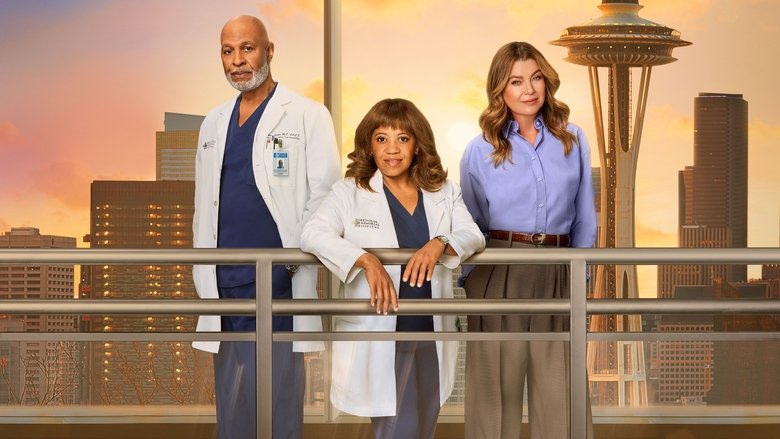

The Anatomy of EnduranceI can still pinpoint the moment *Grey's Anatomy* stopped feeling like just another medical drama and started feeling like an emotional endurance test. This was mid-2000s network television, back when a hit show could still feel like the campfire everyone gathered around. Shonda Rhimes, not yet an empire, sold something that could have sounded absurd on paper: a soapy collision between *Sex and the City* and *ER*. What actually arrived in 2005 was rougher and sharper than that. Rhimes had no interest in giving the network more nice women. She wanted characters who made a mess of their own lives, slept with bosses, drank too much tequila, and had to live with the hangover.

The pilot tells you exactly what kind of show this will be. Meredith Grey wakes up half-naked on the living room floor, groggy and irritated, tugging a blanket over herself while sunlight punishes her. The camera isn't interested in her body as fantasy. It's interested in the hangover. Then she hustles a handsome stranger out of her mother's house with this frantic, brusque energy that sketches the whole character in seconds. Meredith isn't noble. She's frayed, defensive, and a little chaotic. That particular messiness became a template for female television leads for the next twenty years.
Ellen Pompeo doesn't always get enough credit for how much of the show's longevity sits in her physical performance. Early Meredith moves with a subtle curl inward, shoulders rounded like she's bracing for a hit that hasn't landed yet. Her face often settles into a mix of skepticism and exhaustion. So when she finally softens—usually against a wall in some dim hallway or on-call room—the effect can be startling. Mary McNamara of the *Los Angeles Times* had it exactly right when she described Meredith as "a prickly, independent sort." Pompeo spent years proving that prickly could be heroic.

Around her, the supporting cast operates like a revolving door of trauma victims who happen to be surgeons. Chandra Wilson's Miranda Bailey remains the ensemble's master class. Wilson doesn't just enter a room; she resets the air pressure inside it. Her spine could win awards on its own. Rhimes filled Seattle Grace Hospital with people who are brilliant with a scalpel and disastrous everywhere else, and that contradiction is the engine. The hospital isn't just where they work. It's the structure keeping them from total collapse.
Of course, twenty-two seasons forces any show into excess. The later years don't hit with the same ferocious pulse as the first decade. Plane crashes, hospital shooters, bombs in body cavities, a global pandemic—at some point the tragedies stop feeling singular and start feeling systematized. There is only so much catastrophe one workplace can absorb before it begins to resemble an algorithm.

Still, when I think about the size of *Grey's Anatomy*'s footprint, the occasional absurdity matters less than the overall imprint. Rhimes smuggled a fiercely feminist sensibility into prime time inside a glossy romantic soap. She taught viewers that women on television did not need to be polite, balanced, or morally spotless to deserve the center of the frame. They just had to keep scrubbing in.