The Middle backdrop
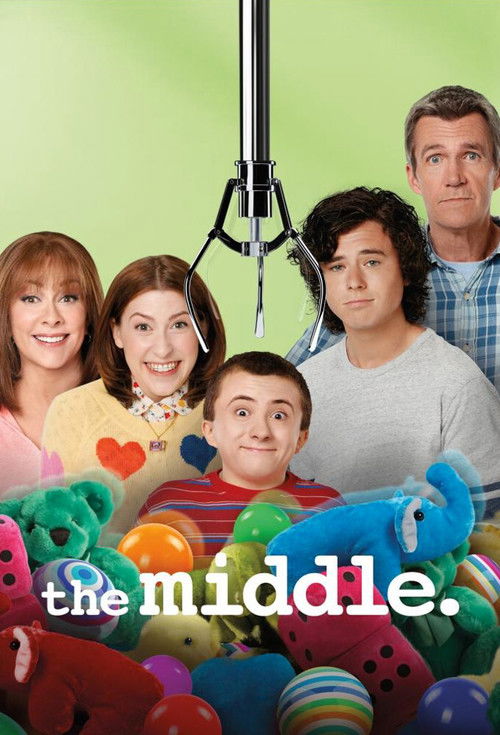
The Middle poster

The Middle

“Oh, and your family's so perfect.”

7.6
2009
9 Seasons • 215 Episodes
Comedy

Overview

The daily mishaps of a married woman and her semi-dysfunctional family and their attempts to survive life in general in the city of Orson, Indiana.

Sponsored

Trailer

The Middle Season 8 "New Season, New Love" Promo (HD)

Cast

Reviews

AI-generated review
The American Dream on Layaway

I have always found it strange how television portrays poverty, or even just regular, paycheck-to-paycheck survival. Most sitcom families live in cavernous houses with exposed brick and pristine islands, their financial struggles reduced to a single plot point about skipping a vacation. Then there is also *The Middle*. Premiering in 2009, the exact same year as the shiny, aspirational *Modern Family*, Eileen Heisler and DeAnn Heline’s sitcom offered a very different vision of the American Midwest. The Heck family of Orson, Indiana, does not just talk about being broke. You can literally see the exhaustion baked into the yellowing wallpaper of their house.

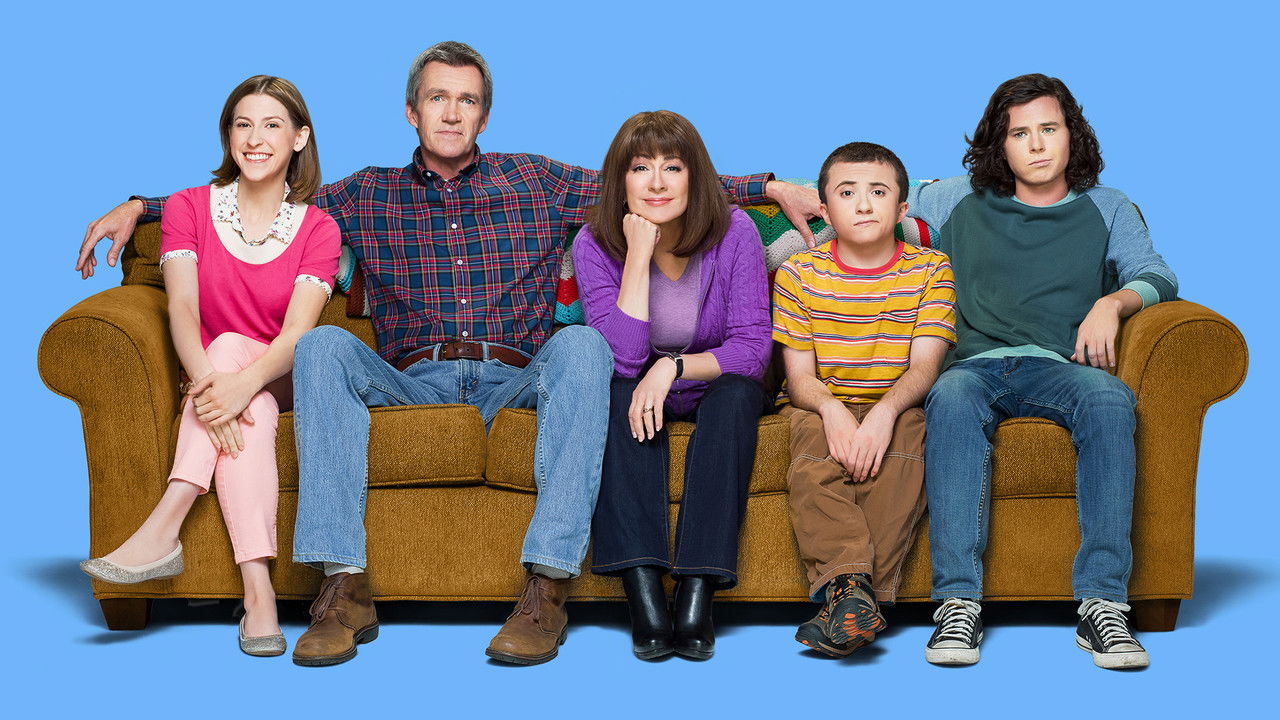
The Heck family gathered in their cluttered living room

The brilliance of the show lies in its physical reality. The house is a disaster. Not TV-messy, where a few toys are scattered on a plush rug, but genuinely chaotic. Appliances are broken and stay broken for seasons. Mail piles up on the counters. When Frankie (Patricia Heaton) comes home from a soul-crushing day selling used cars, she does not pour a glass of wine and chop fresh vegetables. She dumps a plastic bag of fast food onto the table—if the table is even clear. There is a tactile quality to the fatigue here. Watch Neil Flynn as Mike, the quarry manager patriarch. Flynn spent years playing the eccentric janitor on *Scrubs*, but here, his tall frame seems permanently weighed down by gravity. He speaks in low, economical grunts, not because he lacks intelligence, but because words take energy he simply cannot afford to spend.

Frankie and Mike Heck looking exhausted in their kitchen

Still, the show never devolves into misery, largely because of the kids, who operate in their own strange orbits. Axl (Charlie McDermott) is the stereotypical lazy jock, while Brick (Atticus Shaffer) whispers to his own chest and treats his backpack as a best friend. Still, the true emotional anchor of the series—and maybe one of the greatest comedic creations of the decade—is Eden Sher’s Sue Heck. Sue is persistently, tragically uncool. She tries out for every team, club, and play, and fails spectacularly every single time. A lesser show would make her a victim, but Sher plays Sue with a terrifying, clenched-fist optimism. Look at her posture. Her shoulders are always hiked up to her ears, her mouth stretched over braces in a permanent, trembling smile. Sher committed to this character so entirely for nine years that she later wrote a one-woman Fringe show, *I Was on a Sitcom*, about the psychological toll of merging her identity with Sue’s. That deep, lived-in reality translates to the screen.

The three Heck children sitting together

There is a specific recurring motif that always strikes me: the family dinner. For most sitcoms, the dining table is the stage for conflict and resolution. In the Heck household, dinner is a scavenger hunt. Somebody is eating a frozen waffle over the sink; someone else is picking at a hamburger wrapper on the couch in front of the TV. It feels incredibly honest. I am not entirely sure the writers planned for the house itself to be such a dominant character, but the staging does so much heavy lifting. You understand why they are snapping at each other because you can see the clutter suffocating them.

When the show first aired, *The Guardian*'s Lucy Mangan dismissed it as "a very middling sort of deal," waiting to see if it would find its feet. And to be fair, the pilot is a little loud, leaning slightly too hard into the quirky stereotypes. Still, as the seasons progress, it settles into a steady, reliable rhythm. It does not rely on massive narrative arcs or shocking twists. The stakes are profoundly small—will the washing machine hold out? Can Sue make the no-cut track team? Whether that lack of ambition is a flaw or a feature depends on your patience. For me, the modesty is the point. *The Middle* recognizes that for most people, simply keeping the lights on and the kids fed is a daily victory. It finds grace in the mundane, and humor in the survival.

Behind the Scenes (1)

The Middle Original Aired Pilot (2007-04-27)